


Note: The Lawrence Times runs opinion columns and letters to the Times written by community members with varying perspectives on local issues. These pieces do not necessarily reflect the opinions of the Times staff.
Would you like to send a letter to the Times? Great! Here’s how to do it.
The city of Lawrence has a deep, rich Black historical past. Lawrence’s substantial Black population, coupled with its proximity to Kansas City and Topeka, has fostered a long list of prominent Black intellectuals and public figures who have visited the city and the University of Kansas. However, these individuals have often received limited historical recognition or commemoration.
Notably, Ida B. Wells delivered a speech at St. Luke A.M.E. Church in 1895 as part of a multi-stop Kansas leg of her anti-lynching speaking tour in which she also promoted her recent publication, “The Red Record.”
Additionally, Paul Laurence Dunbar visited the city after a speaking engagement at Baker University in 1903 near the time of the publication of his “Lyrics of Love and Laughter.”
In the subsequent years, Ella Fitzgerald performed in Lawrence in 1957. H. Rap Brown (Jamil Abdullah Al Amin) delivered a speech on KU’s campus in 1969. Bob Marley and the Wailers also played Hoch Auditorium in 1979, and Jesse Jackson delivered a speech in Lawrence in 1989.
Amid this historical activity and more, a visit of W. E. B. Du Bois stands out. Over the years, many have mentioned Dr. Du Bois’ stop in Lawrence, yet most do not know the topic of his address. More importantly, many often make claims about his reason for being in town that misrepresent the historical record.
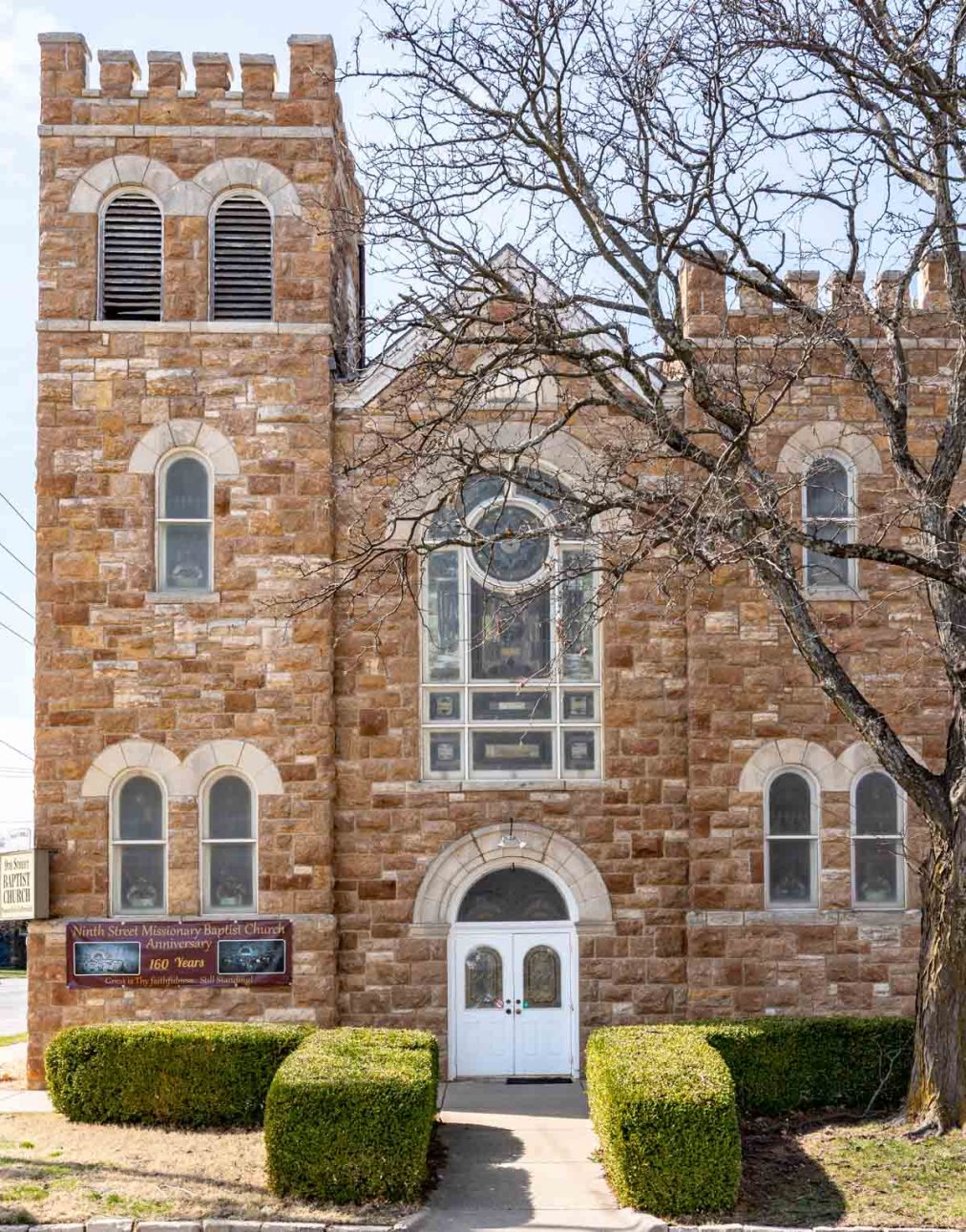
In 1921, Du Bois embarked on a brief lecture tour through Kansas. Lawrence was the final location for the National Association for the Advancement of Colored People (NAACP) activist and editor’s wheat state tour. Four days before he started in Wichita, he then proceeded to Topeka, Leavenworth, Atchison, and Kansas City, Kansas, before coming to Lawrence, where he would offer a lecture at Ninth Street Baptist Church.
His Kansas excursion was part of a larger lecture tour where he was speaking and preparing for the second Pan-African Congress. The Congress was to be held in August and September in London, Brussels and Paris. The doctor used the speaking tour to practice and develop some of the key points to his Congress address, titled “To the World.”
At each stop, he recounted the first Pan-African Congress, held in Paris in 1919, and the aspirations of himself and other delegates for the second Congress. Du Bois also addressed the conditions faced by Black people in Liberia, Abyssinia, Haiti and Jamaica. He spoke of the “English and French colonies of Africa, the English West Indies, and the United States.” He urged his audience to recognize that in a global context, the “darker people of the world” constituted the majority, and if they united, they possessed immense power.
Du Bois believed that events like the Pan-African Congress laid the groundwork for such organization; the demands arising from these coming meetings, he explained, would serve as a starting point for collective organization and action.
Du Bois’ theme at Ninth Street was along the same lines. On March 18, 1921, Ninth Street Baptist Church was buzzing in anticipation to hear Du Bois. The visit and address had not received as much publicity and news coverage as some of his other stops, but the pews were full, and Lawrence’s Black community, and a few white supporters, had turned out to see the author of “The Souls of Black Folk” and “Darkwater.”
On the stage, Lawrence’s mayor, George L. Kreek, sat next to Ninth Street’s pastor, Rev. G. N. Jackson, and other noteworthy guests. Preceding the main event, there were musical performances by church and community members, and Dr. Frederick Douglas Grant Harvey presided over the evening’s proceedings.
When Du Bois addressed the audience, like other stops he centered his discussion around Pan-Africanism, internationalism and the imperative need for organization among Black people globally. His nearly hourlong speech, described as “one of the most interesting ever heard in the city,” conveyed to his audience that “if the present race hatred persists, it will engulf the entire world in a catastrophe.”
He implored the “colored folks to organize for their own advancement and with the objective of persuading the world to reason, rather than perpetuating prejudice.” He urged the audience and the community to “make every effort … to avert the impending disaster through reasoned discourse.”
Du Bois only briefly touched upon the NAACP, the organization for which he was one of the founders. This contradicts Lawrence’s oral history. Over the years, many individuals have claimed that Du Bois visited Lawrence to celebrate or acknowledge the establishment of a local branch of the national civil rights organization. However, it appears that the opposite occurred: Du Bois visited Lawrence as part of a national speaking tour to discuss Pan-Africanism, and his presence and address inspired community members to “organize for their own advancement” and create a NAACP branch.
Less than a month after Du Bois delivered his speech at Ninth Street, local residents convened to establish the organization. Out of this gathering, 50 individuals signed the charter application. These signees represented a broad spectrum of Lawrence’s community, including ministers, common laborers, physicians, university students, housewives, porters, plumbers, cooks, hairdressers and farmers.
Mrs. Shirley Hamilton, a KU student, was elected the first president of the branch, and Mrs. J. T. Smith, an evangelist and the wife of Rev. J. T. Smith, pastor of St. Luke A.M.E. Church, served as the vice president. This branch of the NAACP existed in Lawrence for more than 20 years before internal conflicts forced the group to disband briefly in the 1940s.
Following the organizational meeting, the local branch started to meet monthly, frequently alternating between Ninth Street and St. Luke for their business gatherings. In October 1921, the group received official approval from the national office, prompting an immediate expansion of the organization in Lawrence and Douglas County through a membership drive in November.
The NAACP in Lawrence experienced rapid growth, and their efforts bore fruit. Nearly a year after Du Bois visited the city and the local branch was established, another prominent NAACP official, William Pickens, the organization’s assistant field secretary at the time, arrived in Lawrence as part of the organization’s anti-lynching campaign.
Twenty-seven years after Ida B. Wells delivered a speech at St. Luke addressing the heinous nature of lynching, Pickens visited Lawrence and Ninth Street, at the invitation of the local branch, to discuss the abhorrent practice and advocate for the NAACP’s efforts, in conjunction with Missouri Republican Rep. Leonidas Dyer, to introduce an anti-lynching bill before Congress.
The events in the city and the activities of its residents exemplify the active, politically and worldly connected community that once thrived in Lawrence. It is imperative that we preserve and celebrate this profound and rich historical legacy. We must ensure that it is not erased or misrepresented. Furthermore, we should draw inspiration from those who have come before us and dare to envision a better world. We should organize to create such a place for ourselves and future generations.
As Du Bois articulated in his address before the Pan-African Congress and his audience in Lawrence, there exists an “absolute equality of races.” And to Du Bois, this belief and understanding serve as the cornerstone “of world peace and human advancement.”

About this column
“The Way of the Wide, Wide World” is a regular column about race, history and politics by Shawn Leigh Alexander, professor of African & African-American Studies at the University of Kansas. Dr. Alexander is the author of, among other titles, “An Army of Lions: The Struggle for Civil Rights before the NAACP” (2012) and “W. E. B. Du Bois: An American Intellectual and Activist” (2015). He is also a frequent consultant and contributor on PBS documentaries, including “Reconstruction: America After the Civil War” (2019) and “Niagara Movement: The Early Battle for Civil Rights” (2023).
Read more of “The Way of the Wide, Wide World” at this link.
If this local platform matters to you, please help us keep doing this work.
Don’t miss a beat … Click here to sign up for our email newsletters
Click here to learn more about our newsletters first


