
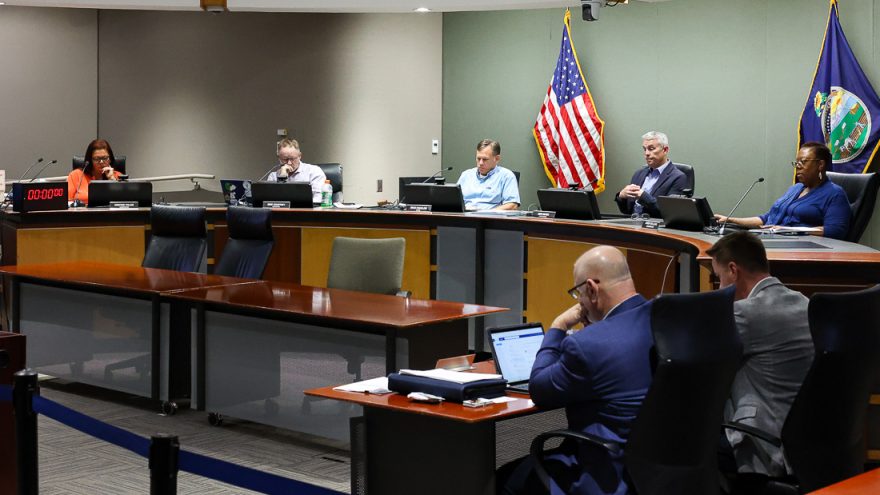
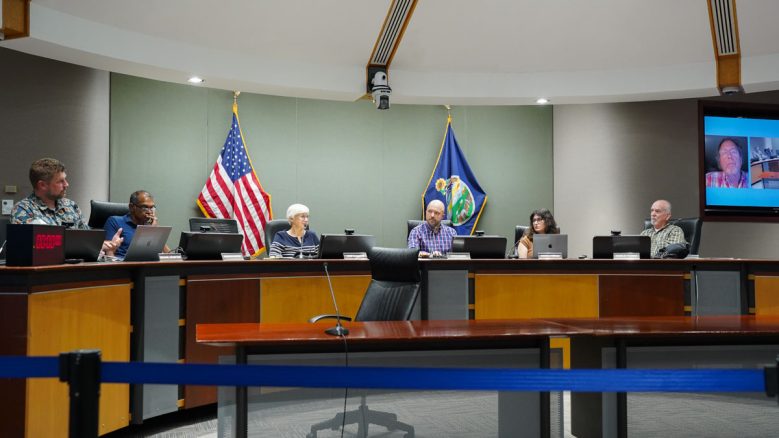
Although they supported some aspects of the development, Lawrence city commissioners on Tuesday said they were opposed to using sales tax revenue from the new Costco store to fund a pair of developments along Kansas Highway 10.
The proposal was for two large developments around the edge of town, which the developers wanted to link together with a STAR bond district, which would direct new sales tax revenue in the district to pay for the project.
Of discussion Tuesday night was a proposal to include the new Costco, which is unrelated to the proposed developments, in the STAR bond district. The developers argued they needed to use Costco tax revenue to get the project started.
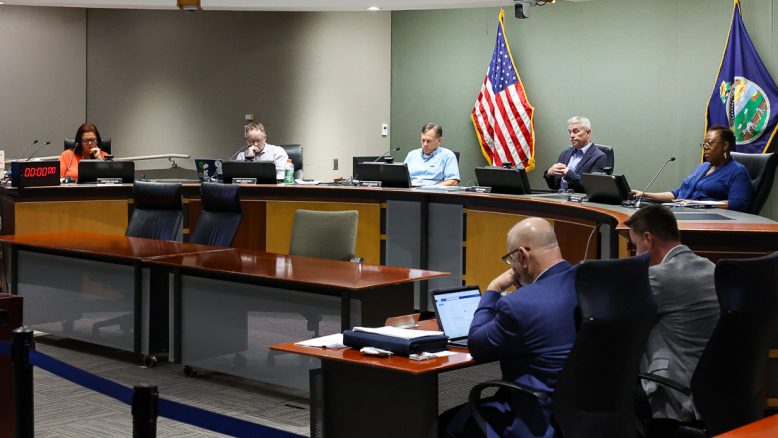
The commission unanimously voted against a resolution to set a public hearing for the project and directed city staff not to pursue a STAR bond district that includes Costco.
Get daily news in your inbox: Sign up for our email newsletters
Learn more about our newsletters first at this link
Commissioners said they supported some of the ideas in the development, but were worried about giving up Costco’s sales tax revenue to pay for it.
Please support
The Lawrence Times!
Subscribe here.
“I am in support of this growth,” Commissioner Kristine Polian said. “I very much am. I approved the annexation for it. I just can’t see it with Costco.”
Vice Mayor Mike Courtney said the Costco developer built the store without any city support. He said it bothered him that another developer would come in and use that tax revenue.
Commissioner Mike Dever said it was a “monumental time in our life as a city” to have a Costco opening. He said he was uncomfortable with the city losing that sales tax money.
“We’ve made commitments to build infrastructure out west,” he said. “This is not an if; it’s a when, and we don’t need help. We just need to do it fast. And I think the best thing about this project is it possibly could happen fast, faster than we could ever do it on our own.”
Commissioner Amber Sellers said there were parts of the project that would be great, but it didn’t make sense overall.
The two developments would have included a soccer complex, a flight school, a velodrome arena, a walking trail, a wildflower park, thousands of single-family homes and more.
Beacon Landing was proposed to include 1,200 single-family homes, 500 rental units and a series of attractions, like an arena and wildflower park.
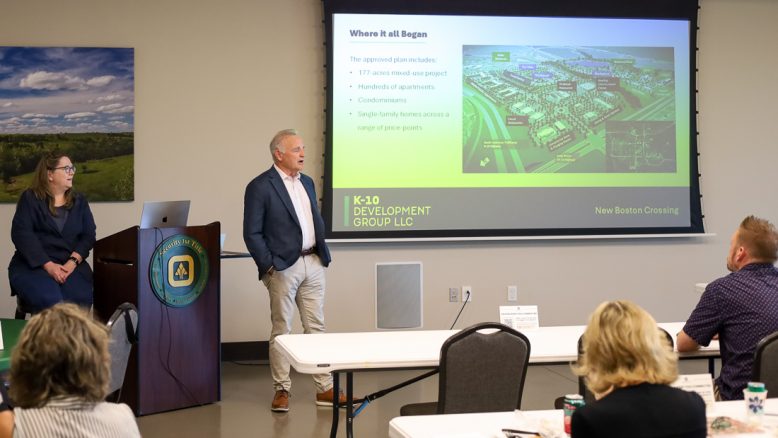
The other project, 1059, is south of the K-10 and Iowa, a project long debated and formerly known as the New Boston Crossing. It would have been home to a large soccer complex operated by Sporting Kaw Valley, a nonprofit youth soccer program. Original plans for high-density housing were met with strong community opposition due to the development’s location in the Wakarusa River Valley floodplain.
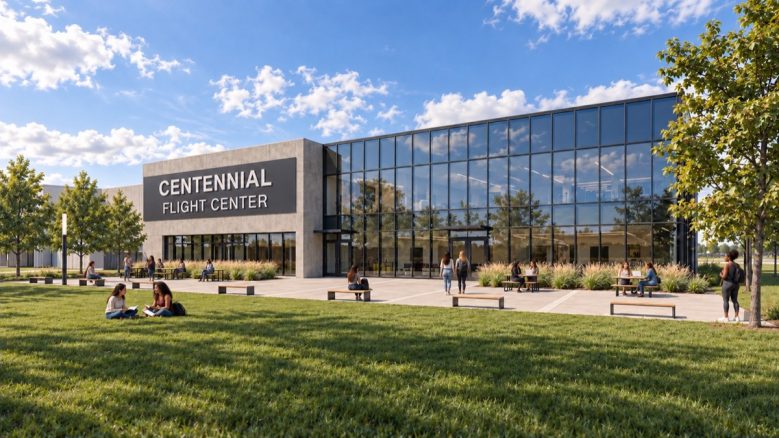
The developers have also floated the idea of a flight school for women by the Lawrence Airport.
STAR bonds, or sales tax and revenue bonds, entail using new sales tax revenue generated within a set district over a maximum of 20 years to pay back bond debt that was used for a project. You can read more about the project and STAR bonds at this link.
Curtis Petersen, an attorney who spoke on behalf of K-10 Development Group, said the major question was whether the city is better off with the proposed K-10 projects being built and directing tax revenue from the Costco away from the city general fund than it is without the projects.

The discussion Tuesday was in part because the developers wanted to establish the STAR bond district quickly. That’s because under state law, the base tax revenue level for the incentives is set when the district is established. If the developer wants to use revenue from the Costco as new revenue eligible for the project, they need the district to be established before the Costco opens at the end of the month.
Petersen said part of the plan is for the developers to pay the city $2.5 million each year in 2027 and 2028 to help recoup the lost Costco sales tax revenue for the city.
“We’re trying to make the city way better off from private money in our pockets,” Petersen said.
Kevin Wempe, an attorney who represents the city as bond counsel, said state statute meant creating the district would have forever prohibited the city from creating a different STAR bond district on the same land, even if the projects don’t go through.
Jeff White, who works for Columbia Capital, the city’s third-party financial advisers, said this project had a curveball compared to other STAR bonds: the inclusion of revenue from an outside development, in this case Costco.
White said a Costco is a “unicorn” for a city in terms of sales tax generation. The risk of this proposal, he said, was that the city could dampen the potential value of the Costco by directing those revenues to another project.
“It feels rushed. It feels underdescribed,” White said.
The city’s third-party advisers projected the STAR bond district would collect $144 million over the life of the incentive, while the developers projected $182 million.
White said that difference was because the developer used a lower interest rate for the bond debt, which he called “materially too aggressive for what the market would be today.”
During public comment, multiple community members said they were worried about the city giving up tax revenue from the Costco, especially if the money was to support a development in the wetlands.
Melinda Ball said Costco was already about to open, having paid for its development without any incentives.
Ball reviewed the mixed results of STAR bonds across the state, where some projects have thrived and others have defaulted on debt.
“Why open the city to such risk while the private entity evades?” Ball said.
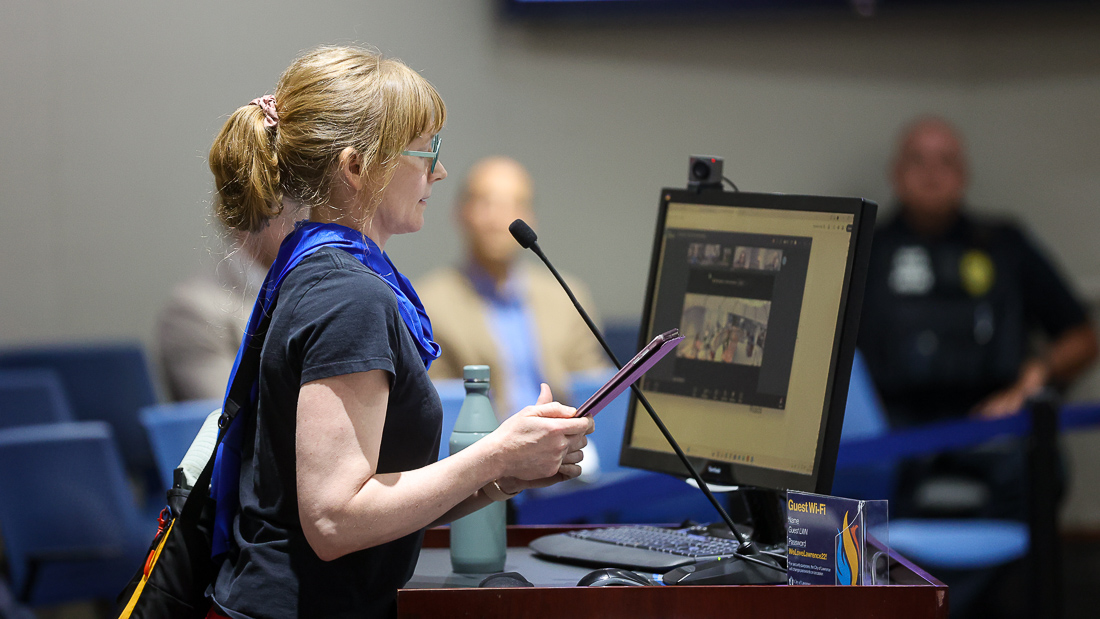

Holly Krebs, who leads the Coalition for Collaborative Governance, said the city needs the sales tax boost from Costco because of diminished sales tax collections in recent years and could not risk forgoing that revenue to support a different project.
“I hope that this development is successful in growing the Lawrence economy, but I believe our community’s immediate needs outweigh the developer’s request to capture Costco’s tax revenue,” she said.
Christina McKenna said the city should consider the developments separately, rather than linking them with the STAR bond district.
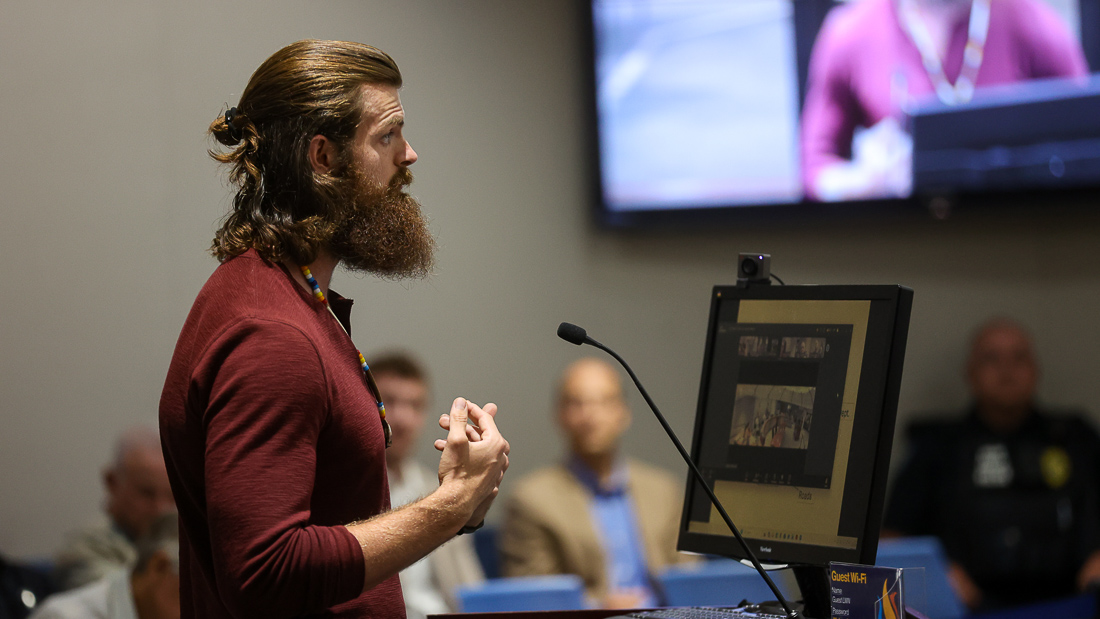
Tyler Moore, a citizen of the Cherokee Nation of Oklahoma, said the incentive plan felt like a “life preserver thrown to 1059.” He said the developments should all be evaluated separately.
“The money that would be coming from this Costco should not go to allowing that development,” Moore said.
Other commenters said the city needed more housing and the commission shouldn’t reject the development yet.
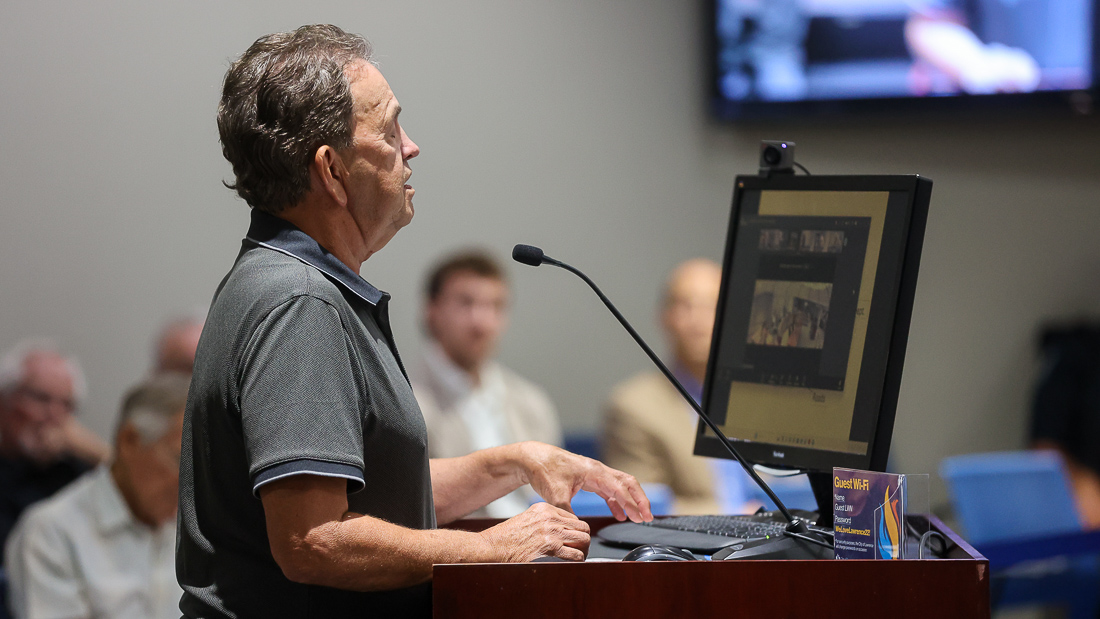
Steve Kelly, vice president of economic development for the chamber of commerce, said he doesn’t think there is enough known about the project yet. He said he wanted the public hearing to go forward so more conversions could happen.
“This allows the city and the community to start to address some of the housing issues,” Kelly said. “This is the largest annexation that we’ve had in many, many years.”
Trent Santee, a local home builder, asked the commissioner not to kill the project yet. He said the development being on the outskirts of town comes with infrastructure costs that the city may have to fund in the future. He said the STAR bonds would allow the city to partially fund those improvements with state sales tax money.
Tuesday’s vote was not a rejection of the development, and the developers can still pursue the projects, although they had indicated the incentives were key to feasibility.
If local news matters to you, please help us keep doing this work.
Don’t miss a beat — get the latest news from the Times delivered to your inbox:
Click here to learn more about our newsletters first

Cuyler Dunn (he/him), staff reporter, has worked with The Lawrence Times since April 2022. He can be reached at [email protected].
Read his complete bio at this link. Read more of his work for the Times at this link.
More coverage: Expanding Lawrence
 Cuyler Dunn/Lawrence Times
Lawrence City Commission opposes including Costco tax revenue for developments along K-10
 Cuyler Dunn/Lawrence Times
Latest Lawrence news:

 Nathan Kramer / Lawrence Times
 Nathan Kramer / Lawrence Times