
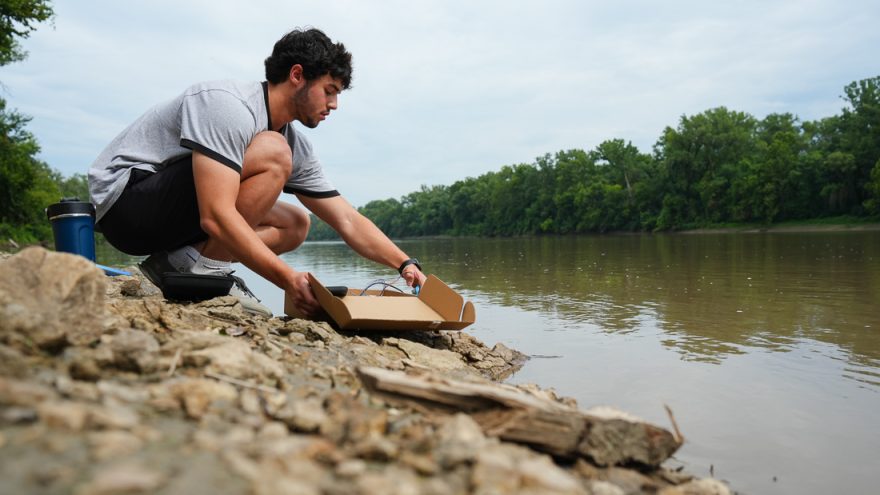
In May, Liam Sturm had an idea, a box of electronics, and a plan to create a network of low-cost water monitors for Lawrence rivers.
By late July, the Lawrence High School senior had a working prototype that could measure water temperature, acidity (pH), water clarity (turbidity) and dissolved materials.
The device is not yet a permanent public monitoring system. He has tested the device in river water and is working toward a system that could allow him to check Kansas River conditions from home.
“I would like to be able to look up something on my phone and then just read the data instantly and see water quality in real time,” Sturm said.
Don’t miss a beat … Click here to sign up for our email newsletters
Click here to learn more about our newsletters first
His project, called Lawrence WaterWatch, is intended to become a network of monitoring devices in the Kansas and Wakarusa Rivers. Each device would collect water quality information, send it wirelessly to a central receiver and eventually display it on a public website or app.
Please support
The Lawrence Times!
Subscribe here.
Sturm first began thinking about the project after trying to find easily accessible water quality information for places where he might fish or spend time near the water.
He also grew up watching his mother, Belinda Sturm, doing research on Lawrence’s wastewater. In eighth grade, he designed a water-flow component for a research project involving nitrogen in water.
His original plan was to use a small computer board and memory card to record measurements, but he realized that setup would require someone to retrieve data from a device on the riverbank.

He replaced the original board with one that can send information wirelessly to a browser-based dashboard. The dashboard, which is not yet public, now displays readings from all four sensors at once and updates every two seconds.
The project has become a financial commitment for Sturm. He started a job at Raising Cane’s to help pay for the equipment. By early June, he had spent more than $270 on WaterWatch.
The device measures different parts of water quality.
A thermometer measures temperature, which can affect fish and other river life. A pH probe measures how acidic or basic the water is. A water-clarity sensor measures how cloudy the water is from particles like mud and rock.
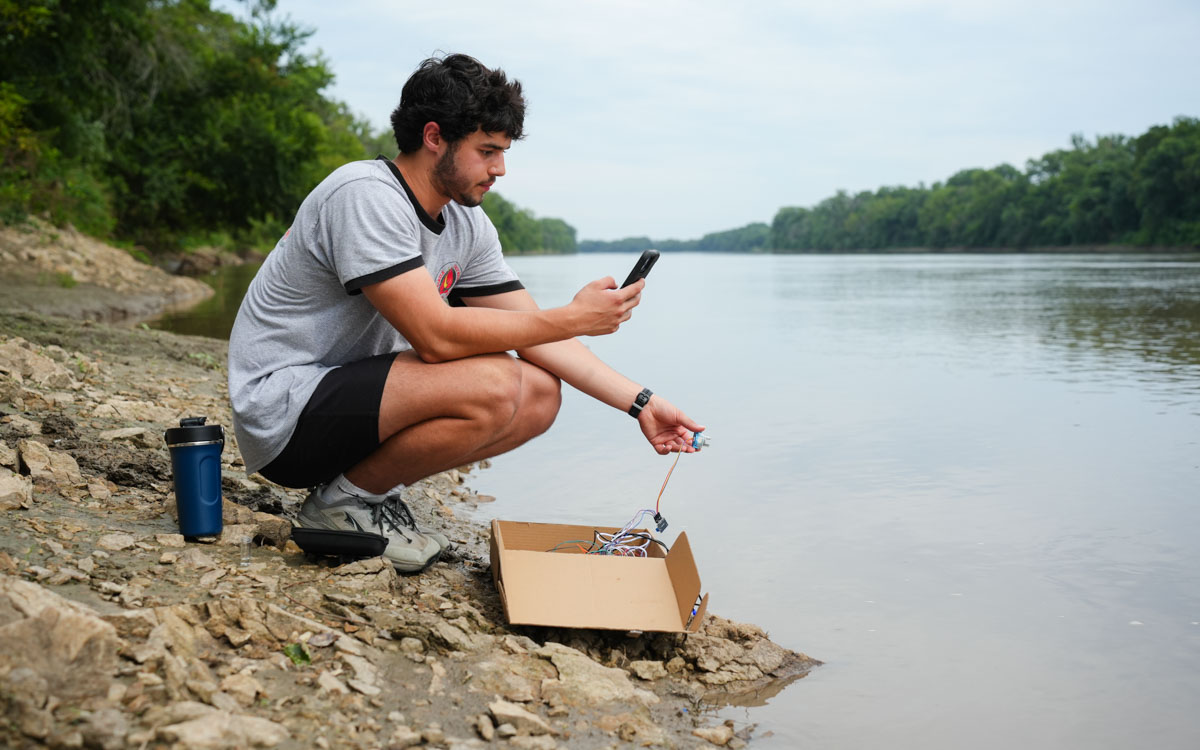
The final sensor measures the total dissolved solids, or TDS: material dissolved in water that cannot necessarily be seen.
Sturm described the difference with saltwater. If salt dissolves in a glass of water, the amount of dissolved material increases even though the water remains clear. Similarly, fertilizer washed from a field into a river could increase the dissolved-material reading without making the river look muddier. A rainstorm that carries soil into the river, however, could make the water murkier and raise the water-clarity reading.
The distinction is important to Sturm’s larger goal of helping people understand changing river conditions. Still, the device cannot by itself identify every pollutant in the water.
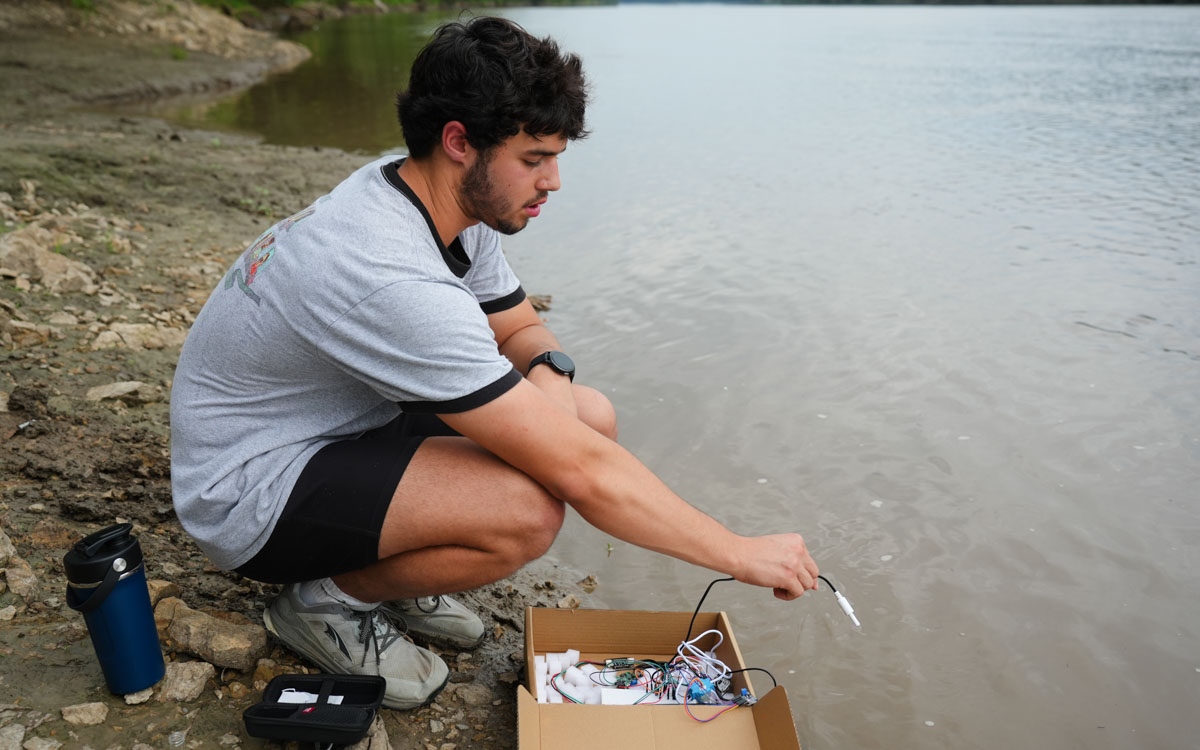
The first river test showed why a prototype that works indoors may perform differently outside. During a July field test at Mutt Run on the Wakarusa River, Sturm’s temperature and dissolved-material readings were consistent. But sunlight affected the water-clarity sensor, which uses light to measure particles in water.
At home, the sensor worked as expected when Sturm tested it in cloudy water. In the river, however, sunlight reflecting through the water made the river appear clearer to the sensor than it actually was. He is considering placing the sensor inside a cylinder to block outside light and improve accuracy.
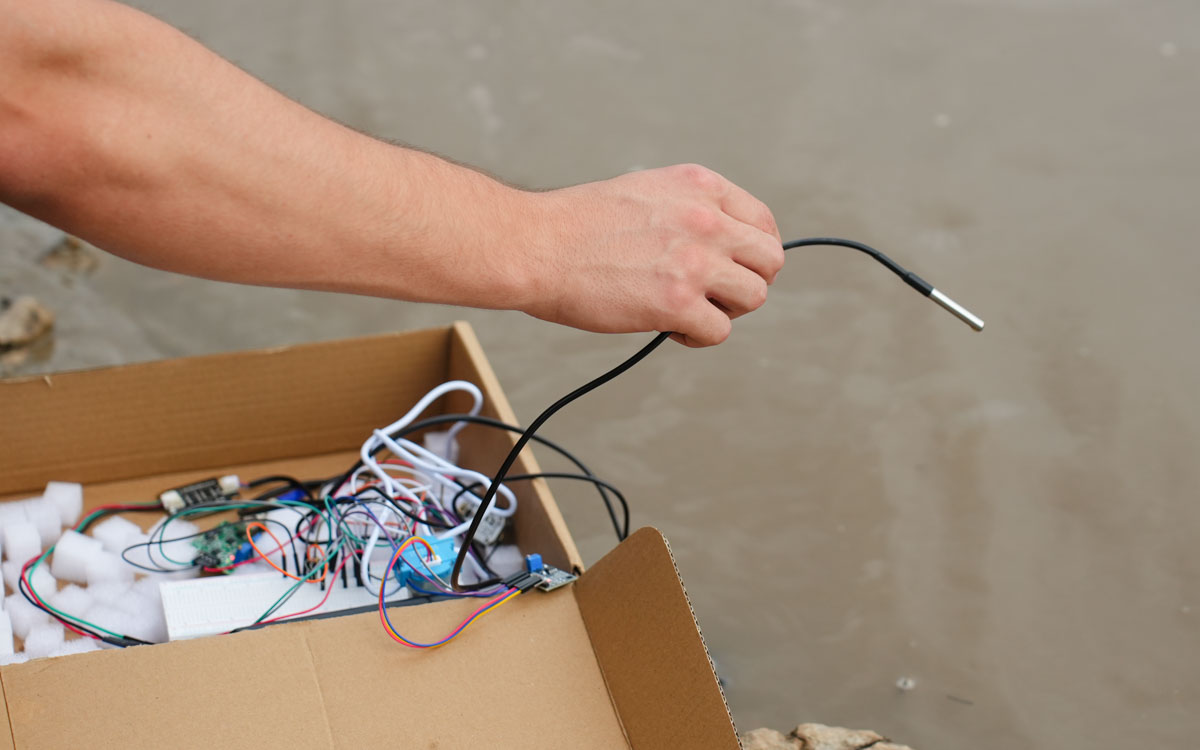
The temperature sensor also has unresolved wiring issues. Sturm said it can read accurately, but loose connections sometimes cause it to display an obviously incorrect below-zero temperature.
Sturm plans to place the future sensors in weatherproof boxes that can move up and down a pole as river levels change. His current battery lasts about three weeks, he said, but he hopes to add a solar panel so the system can recharge without frequent battery replacements.
He also has a central receiver designed to collect signals from sensors placed farther away and send their information to the internet. His next step is to test that receiver from home. He plans to put it at his house while taking a sensor to nearby locations to learn how far the system can send information.
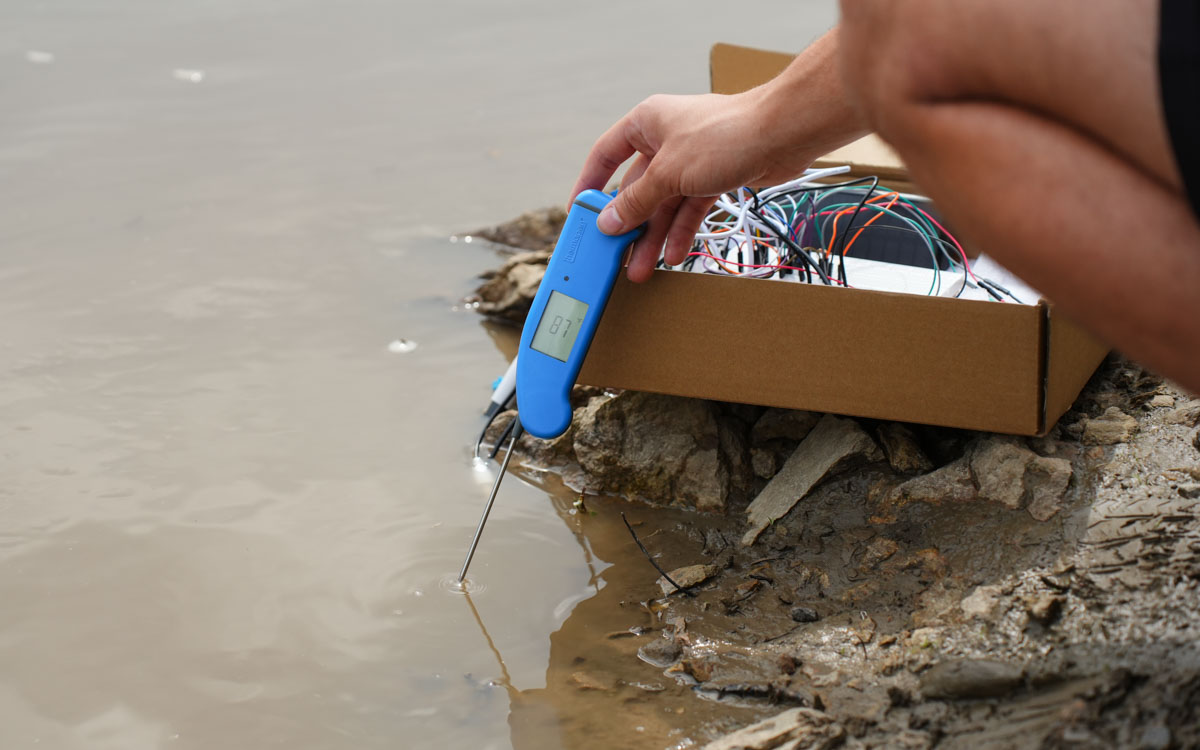
He said he hopes that by the end of September, sensors on the Kaw will send readings he can view from home.
For now, Lawrence WaterWatch remains a work in progress — a student-built prototype still being tested, weatherproofed and prepared for outdoor use.
But Sturm’s goal is unchanged: making river information easier for Lawrence residents to see and use.
If local news matters to you, please help us keep doing this work.
Don’t miss a beat — get the latest news from the Times delivered to your inbox:
Click here to learn more about our newsletters first

Courtney Lane (she/her), reporting correspondent, has worked with The Lawrence Times since April 2026. Originally from Arkansas, she’s a graduate of KU’s Journalism school, where she worked as a reporter, opinion section editor, and eventually editor-in-chief for The Kansan.
Read her work for the Times at this link, and see her photography for the Times at this link.
Latest Lawrence news:

 Cuyler Dunn/Lawrence Times

 Nathan Kramer / Lawrence Times