

Lawrence city commissioners agreed Tuesday for the city to participate in a pilot program to rehabilitate vacant and blighted homes to create affordable homeownership opportunities.
The program uses the Kansas Abandoned Housing Act, a legal mechanism for nonprofits to petition the court to take control of residential properties. Homes that meet certain legal requirements related to abandonment, tax delinquency and serious code violations could meet the criteria.
Under the program, Neighborhood Legal Support, a nonprofit legal firm based in Kansas City, Missouri, will work with Lawrence nonprofits Habitat for Humanity and Tenants to Homeowners to work through the litigation. The housing nonprofits would evaluate properties, complete and coordinate rehabilitation, identify potential buyers and place rehabbed properties into affordable homeownership.
Lea Roselyn, director of affordable housing, said the city has identified about 3,200 vacant residential units.
Don’t miss a beat … Click here to sign up for our email newsletters
Click here to learn more about our newsletters first
For perspective, the city’s recently completed housing study projected that the city will need 6,315 additional units — 2,920 for sale and 3,395 for rental — over the next 10 years.
Roselyn told the commission that she knows some residents have been concerned about investors coming in, demolishing homes and putting up $700,00 houses. She said that’s not what they’re talking about — this program is about investing in and rehabbing homes that maintain the character of the neighborhood, and providing a mechanism for homeownership.
Please support
The Lawrence Times!
Subscribe here.
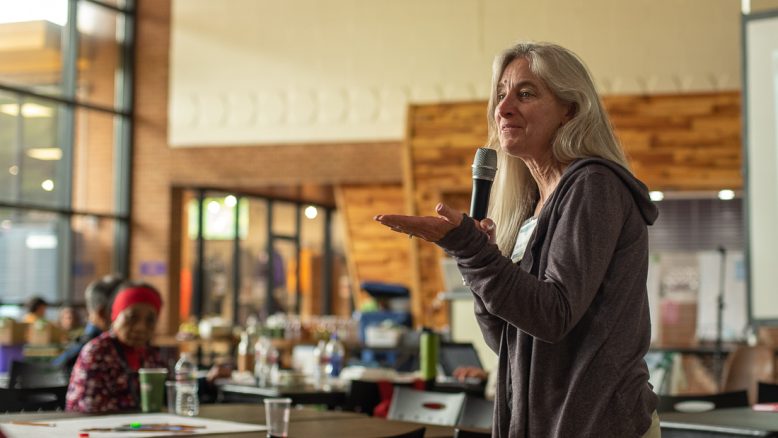
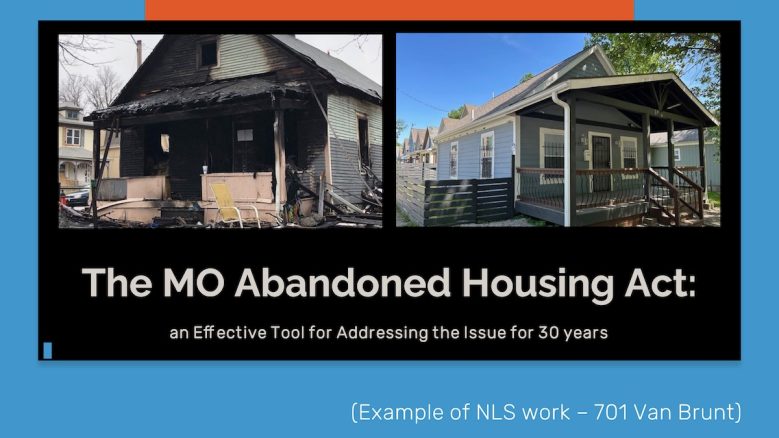
Gregg Lombardi, special project director with Neighborhood Legal Support, presented to the commission about some properties the program has rehabbed in Kansas City, Missouri.
He said NLS has brought about 100 cases in Kansas City so far; he estimated that for about 50% of those homes, the legal group’s nonprofit partners end up rehabbing them; for about 30% to 40% of those, the owners end up rehabbing the properties, and a small percentage end up having to be demolished.
Mayor Brad Finkeldei asked why the legal group was involved and what that process might look like.
Lombardi said the law requires that a property be unoccupied for at least 90 days before a lawsuit is brought. He said the group is very careful that if there’s a property owner who has an interest in rehabbing a property, the group works with them to make sure that’s the outcome.
He said the litigation is simple: The group files a lawsuit on behalf of Habitat for Humanity or Tenants to Homeowners, or potentially on behalf of the city in rare nuisance cases.
He said the process to take possession of a property usually takes about six months, and the rehab takes six to nine months, for about 15 months altogether.
“All we have to do is prove that the the property is tax delinquent and has not been legally occupied for at least 90 days, and that we have a plan to rehab it,” Lombardi said. “The owner of the property has a right under the statute to come forward and propose their own rehab plan, and if they do that, that’s an affirmative defense, and the court will allow them to do that.”
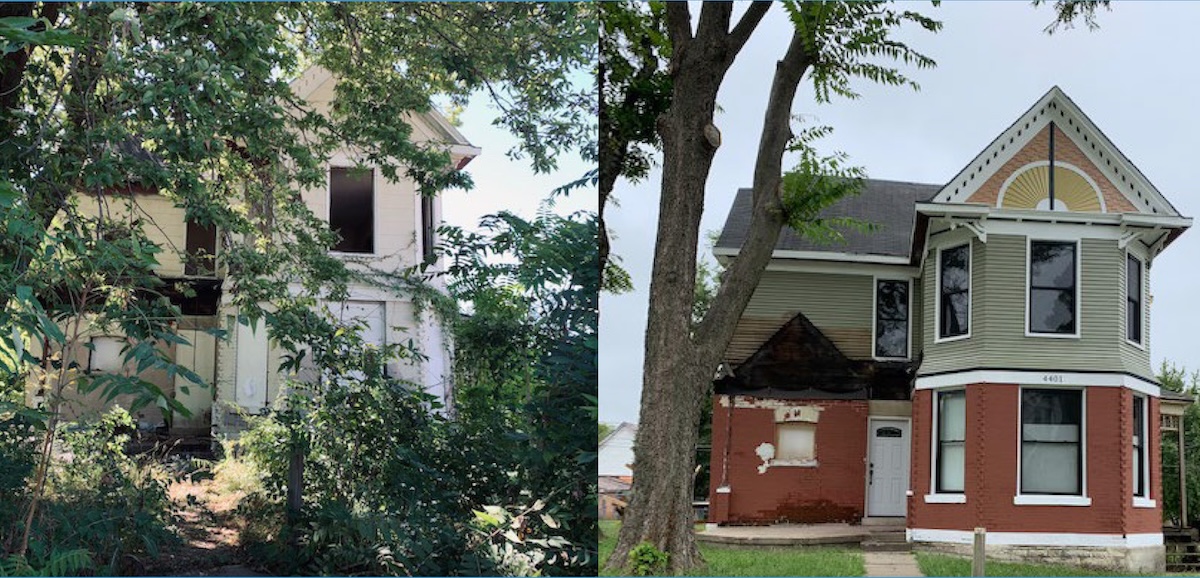
Erika Zimmerman, executive director of Lawrence Habitat for Humanity, said the partners had discussed rehabbing three houses over the next 12 to 18 months.
The city is not being asked to invest any funding for the pilot program, though there will be some staff time involved to help identify houses and coordinate with nonprofits.
A few public commenters expressed optimism about the potential to address housing shortages but also raised questions about the program, the details of what it would look like in practice and what it would end up costing the city.
Some raised concerns about the 90-day timeframe, raising the hypothetical that perhaps a property is part of a probate case, and a family is trying to deal with a death. Finkeldei clarified that properties would have to be 90 days vacant but also two years tax delinquent, and Lombardi said when property owners come to court and present their own rehab plans, the court will allow them to do that.
One public commenter asked for a definition of “affordable.”
Roselyn said affordability is defined as a household paying 30% or less of their income to a mortgage and utility costs combined. Sale prices for Habitat for Humanity or Tenants to Homeowners properties are set based on the income of the homebuyer — not based on the actual cost of the house or the value it’s appraised at.
Commissioner Amber Sellers asked if the city would be creating a registry of abandoned and vacant properties. Roselyn said the city has identified vacant properties through utility billing data that shows zero usage; however, that doesn’t give staff much information about the reason for the zero usage.
“We do have a proposed vacant structure ordinance that would achieve that goal. That is working through the process, so we hope to see that forthcoming,” Roselyn said.
Sellers said private developers aren’t doing this kind of work because it’s not profitable for them.
“You all are doing the work to address the gaps for these programs, and this is the way to start it,” Sellers said.
Finkeldei, Sellers, Vice Mayor Mike Courtney and Commissioners Mike Dever and Kristine Polian voted 5-0 to approve the city’s participation in the program.
If local news matters to you, please help us keep doing this work.
Don’t miss a beat — get the latest news from the Times delivered to your inbox:
Click here to learn more about our newsletters first

Mackenzie Clark (she/her), reporter/founder of The Lawrence Times, can be reached at [email protected]. Read more of her work for the Times here. Check out her staff bio here.
Latest Lawrence news:
 Nathan Kramer / Lawrence Times
 August Rudisell/Lawrence Times