

When construction starts, businesses owned by Black and Brown people in Lawrence can face a tougher climb toward recovery. One city commissioner says we must “do the work” to keep building opportunities for local establishments.
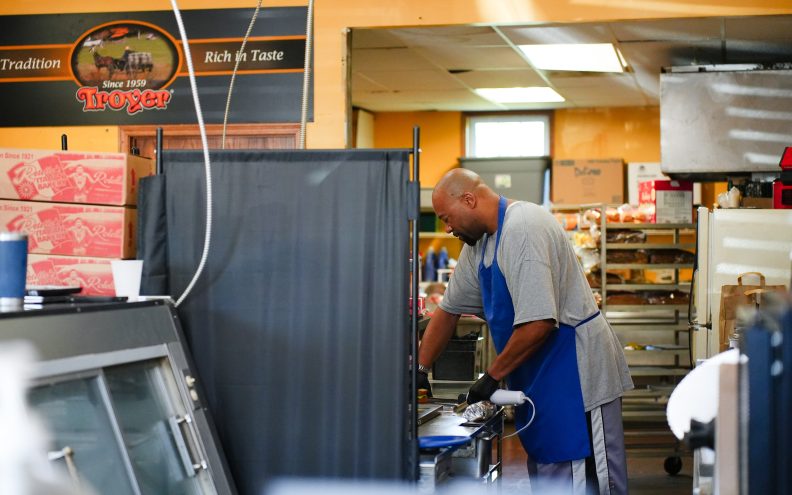
Folks know Hazim Alexander as “Chef H,” the man behind the sandwiches, soups, sweet treats and more at Auntie Em’s Deli & Bakery at 2311 Wakarusa Drive.
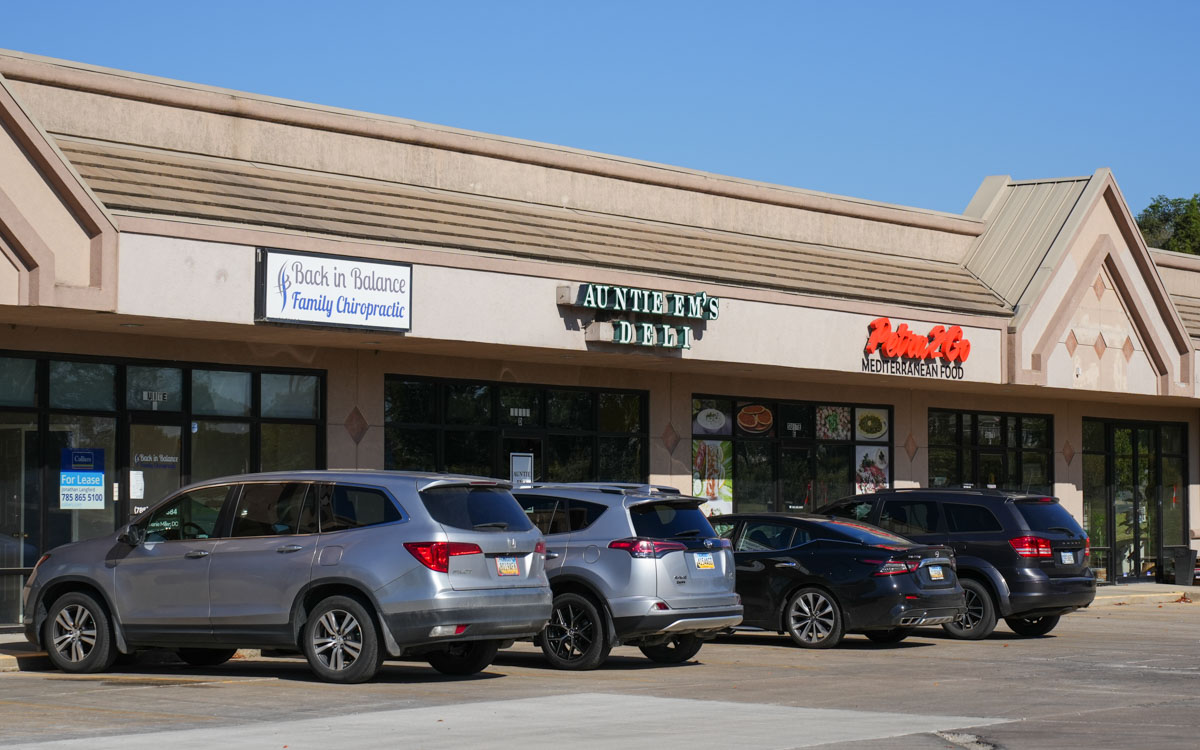
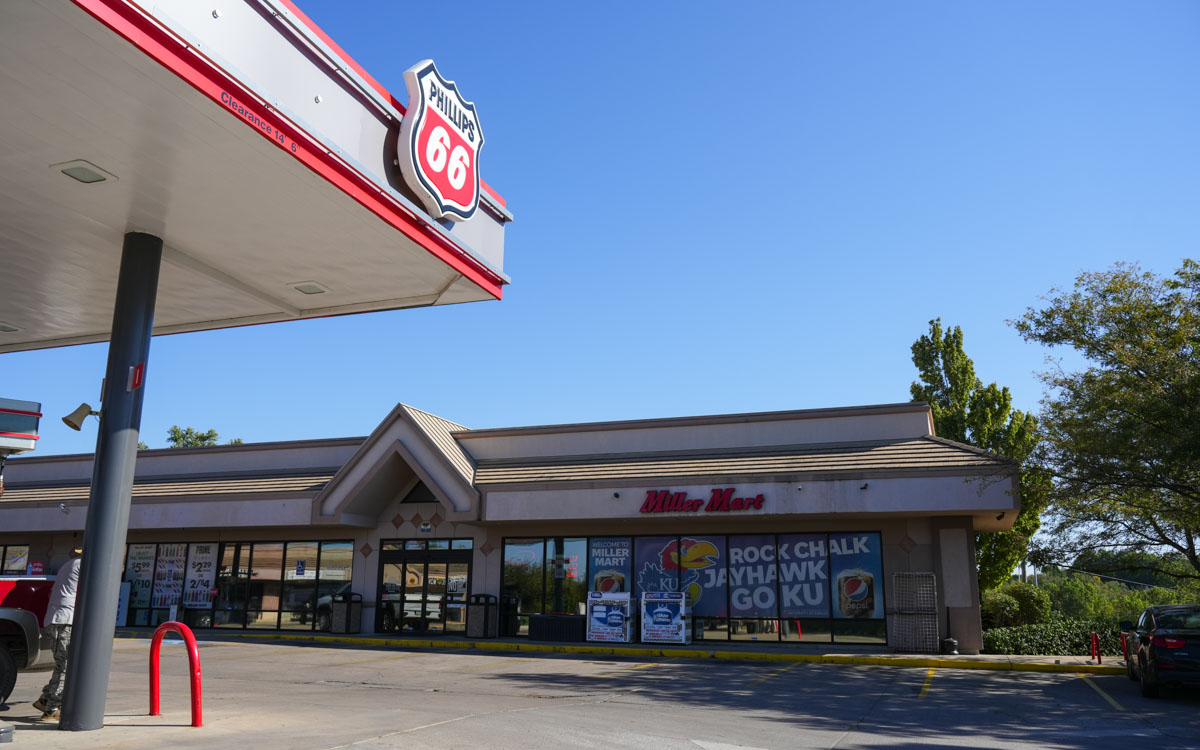
Auntie Em’s has served customers in the Miller Mart shopping center — a turn-off from Clinton Parkway and less than a block from the South Lawrence Trafficway — since the late 2010s. Alexander bought the joint a few years ago to build up the business for his teenage son as a high school graduation gift.
“I was trying to get it up and running and turn it into a much busier place so he would be able to sell it to buy a house or use it for school,” he said.
Don’t miss a beat … Click here to sign up for our email newsletters
Click here to learn more about our newsletters first
Alexander describes business ownership as both a joy and a Sisyphean struggle: he pushes at every turn only to encounter a setback. Construction caused the latest tumble of the boulder.
In September, Alexander said the K-10 and Southwest Lawrence Trafficway project kneecapped Auntie Em’s whole business.
Please support
The Lawrence Times!
Subscribe here.
The project, led by the Kansas Department of Transportation, started in fall 2024 to turn K-10 into a four-lane freeway. Crews moved and closed Wakarusa Drive south of Clinton Parkway on Aug. 19, cutting off access to the Miller Mart shopping center from the north.
That closure was supposed to last 45 days, but crews encountered unexpected private and city utilities underground, and the work halted.
Many businesses in the area reported that profits were down and customers struggled to reach them, and Alexander was concerned for all of his fellow businesses.
For his part, he saw an 80% profit drop the first week of construction, leveling out to 50% as construction was stalled. In September, he thought he had two months before Auntie Em’s faced a death sentence.
KDOT approved revised plans and reconstruction resumed Oct. 9. Word also spread around the Lawrence community to check out Auntie Em’s, which Hazim called a godsend.
“I’m very pleased with the current level of growth, the amount of new people that didn’t even know I was here,” Alexander said Wednesday. “… I’ve made a lot of friends.”
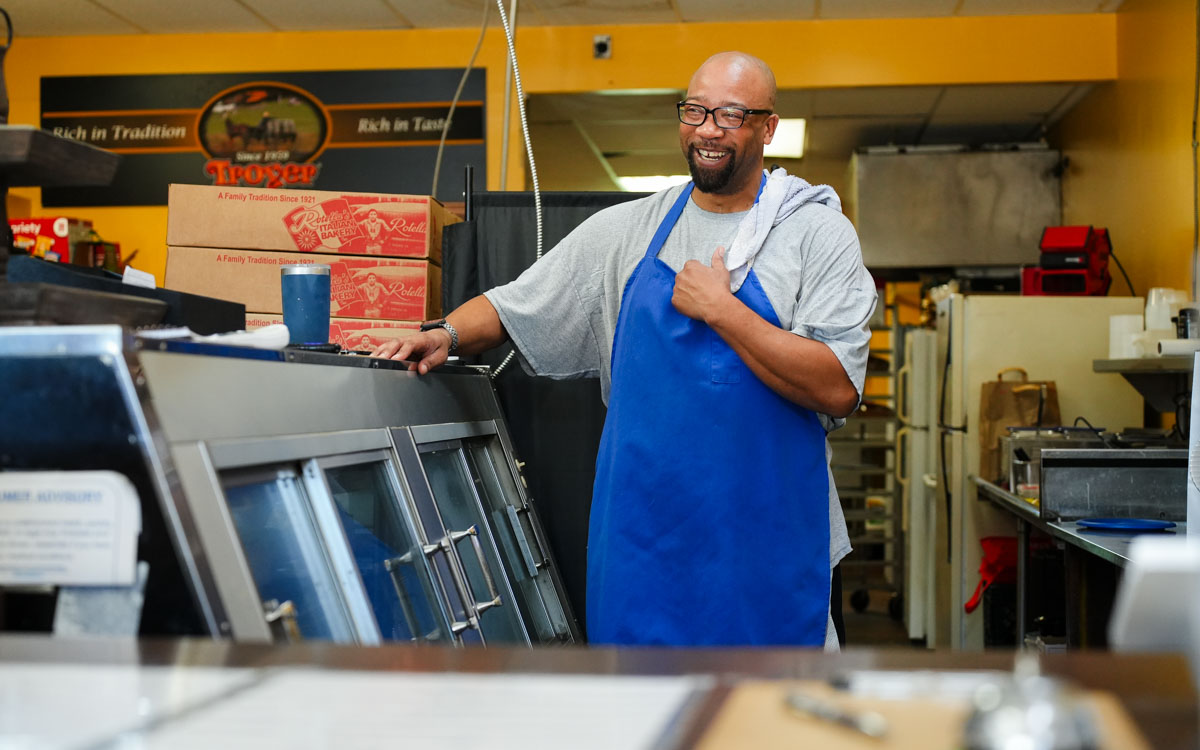
Auntie Em’s is now stable, but it’s hard to predict long-term profits. Some days outpace his wildest expectations, and some fall far behind. The bump in sales hasn’t made up for the loss from the first 60 days of construction, “but it’s at least steady enough to not bleed out further,” Alexander said.
Steve Kelly, the vice president of economic development with the Lawrence chamber of commerce, said the group has consistently heard from business owners over the years concerned about construction impacts.

“The old adage that there’s some inconvenience in progress — I think that certainly has been the case with some of these road construction projects, because a lot of them have been really significant and have completely blocked the street or necessitated lane changes and lane disruptions,” he said.
He referenced projects on Second Street in North Lawrence, Sixth Street, 23rd Street, and most recently, Ninth Street. At least two businesses closed during construction on the latter project: Fork & Tumbler and 9th Street Mexican Tacos.
Kate Craft, a KDOT spokesperson, said 50% of the overall K-10/SLT project is complete. Crews opened one southbound lane on Wakarusa Drive, accessible from eastbound Clinton Parkway, Tuesday.
Craft said the entire project will be done by fall 2028.
‘Who knows where I’d be at this point?’
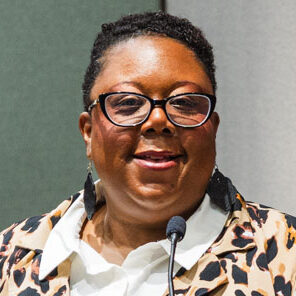
Amber Sellers, Lawrence city commissioner and business advocate, turned to historical context to explain the challenges businesses owned by Black and Brown people face in Lawrence.
For example, Lawrence lacks programs that help Black and Brown businesses in other communities thrive, like community development financial institutions (CDFIs) and Community Reinvestment Acts. The 2026 affordable housing study the city contracted recommends exploring a CRA policy.
“Historically, Black and Brown businesses have had limited voices as it relates to access to capital, opportunities,” Sellers said.
She said many populations of business owners share the same challenges, but they fall disproportionately on Black and Brown communities.
“Oftentimes, Black and Brown business owners when they are starting up — they don’t have the luxury of a safety net to just be able to put all of their energy and focus into their business,” she said.
The generational impacts of systemic racism manifest in everything from health to education in Black and Brown communities, and lead to a racial wealth gap.
A study from the Federal Reserve showed in 2022 that “The typical White family had about six times as much wealth as the typical Black family, and five times as much as the typical Hispanic family” nationwide.
The 2023 Douglas County Community Health Assessment indicated that the median income for white people in Douglas County was about $66,000. Meanwhile, for Black and Asian people, it was $43,000; $41,000 for Hispanic people; and $40,000 for Native American people.
Alexander was keenly aware that he faces a tougher uphill battle than his white counterparts who have generational wealth to fall back on. He said race ties into every situation he encounters as a business owner.
“There’s just a lot of hatred left in the world,” he said. “… (That) attitude is still in the banking system. It’s still in the hierarchy of the government, hierarchy of the states. It’s still there.”
He said that to make it, he’s learned that he needs to find his own way to generate wealth. Owning a business was the solution, but Alexander hasn’t had a day off since 2022.
Part of the problem was his inability to get a loan to buy Auntie Em’s.
“If there was a bank loan or a loan that would have given me more leeway to make more money and extend business hours differently, or buy different equipment or whatever, then who knows where I’d be at this point?” he said.
Alexander is currently trying to get a loan through the bank to grow the restaurant.
“You give all the information that you have, all your tax information, all your sales information, then they need more,” he said. “… Clearly, I can afford to do this, so why can’t they? What’s the hang-up? And there’s never an answer, a direct answer.”
‘We have to do the work’
Sellers acknowledged the labor it would take to get a CDFI headquartered in Lawrence. CDFIs are mission-driven lenders that aim to support underserved communities.
“But we have to be willing. We have to do the work,” she said.
Kelly said the chamber has worked with the Economic Development Corporation of Lawrence to create the Diversify Douglas County Loan Program.
DDC loans go up to $15,000 with a 4% interest rate for 48 months. Only businesses and nonprofits that are majority-owned by a non-white person qualify.
“It’s based on the principle that there are aspiring entrepreneurs in the minority community who, for a number of reasons, may not have the access to capital, may not have the network, may not be comfortable maybe even talking to folks in a bank,” he said. “This is a less intense, low-barrier kind of a loan program.”
He also recommended the Small Business Development Center at the University of Kansas, which offers one-on-one advising services.
Sellers and Kelly each said construction doesn’t have to equal suffering for all businesses by default.

Sellers spitballed ideas for Auntie Em’s, like challenging the chamber to contract the restaurant for their monthly events for half a year. She also saw opportunities for universities to contract with local businesses hit by construction, and said the city has been working to educate existing businesses on what incentives are available to them.
“I think there’s an opportunity for us to build those relations and build those accountability partners out,” Sellers said.
Alexander said that micro-loans could have helped area businesses avoid such a rapid loss. Now that they’ve gotten past the worst of the closures, it’s a question of whether hungry Lawrencians will keep going out of their way to support the other Miller Mart establishments.
“There’s not enough of a thank-you that I can give to the community. The people of Lawrence are phenomenal,” Alexander said.
He continued, adding, “If it wasn’t for the extra efforts that they had to do to navigate through all the ‘fun,’ we wouldn’t have made it, and so, amen.”
The shopping mall that is home to Auntie Em’s includes many other local businesses, including Miller Mart, Glass House Liquor, Shear Perfection, Nails by Holly and more.
Craft encouraged people to stay up-to-date on construction by checking the project page and by following @NEKansasKDOT on Facebook and Twitter.
If local news matters to you, please help us keep doing this work.
Don’t miss a beat — get the latest news from the Times delivered to your inbox:
Click here to learn more about our newsletters first

Wulfe Wulfemeyer (they/them), reporter and news editor, has worked with The Lawrence Times since May 2025. They can be reached at [email protected].
Read their complete bio here. Read their work for the Times here.
Latest Lawrence news:

 Jacob Rice / Lawrence Times
 Logan Pierson / Lawrence Times
 Jacob Rice / Lawrence Times


