
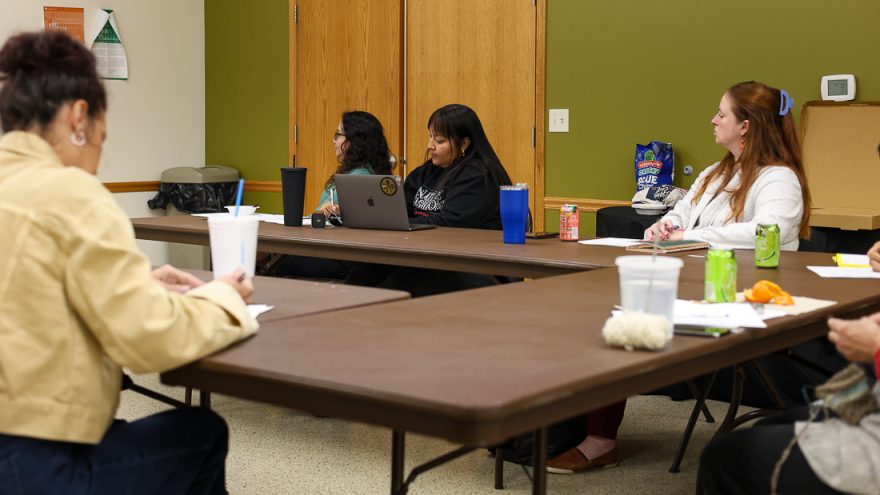
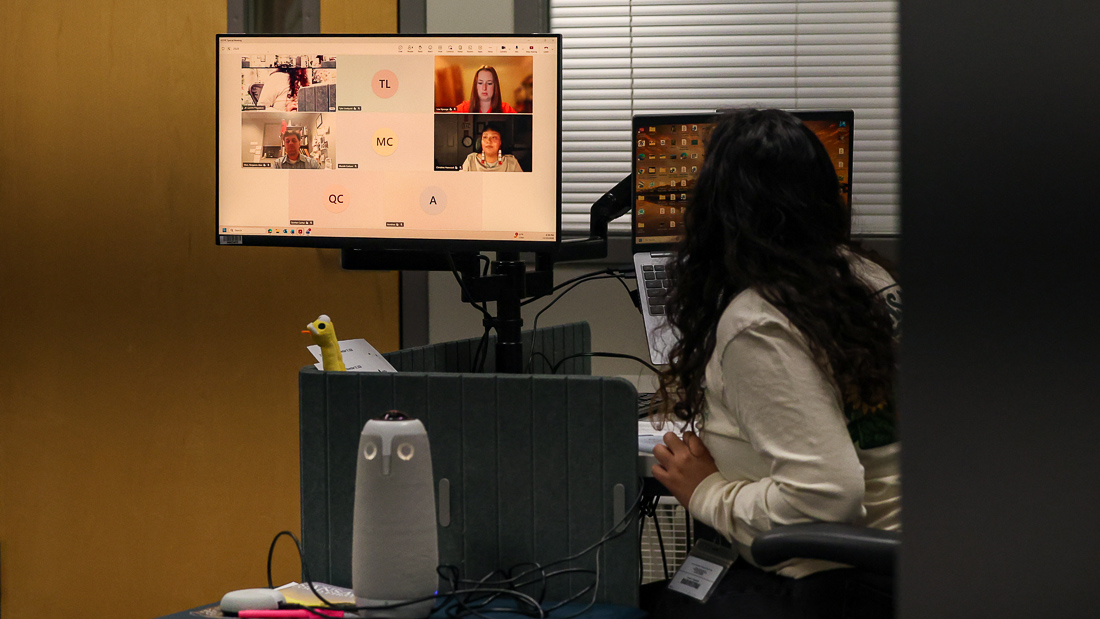
The Douglas County Food Policy Council voted to back policy goals from the statewide food action network, with the stipulation that Indigenous food futures should be a county priority.
Douglas County is a member of the Kansas Food Action Network, which is a “statewide network of food and farm councils advocating for equitable access to healthy, affordable food,” according to the county’s 2026 legislative statement.
Each year, policy council members review KFAN’s advocacy priorities to decide if those aspirations align with the county’s Food System Plan.
“If the council chooses to recommend this for the legislative statement, in a way they’re also approving this work as their own advocacy work for the council,” Connie Fitzpatrick, the county’s food systems specialist, said during a special meeting on Tuesday.
Don’t miss a beat … Click here to sign up for our email newsletters
Click here to learn more about our newsletters first
The group unanimously voted for the county to support KFAN’s policy platform in the upcoming 2027 legislative statement, while also advancing Indigenous food futures.
Fitzpatrick said KFAN’s priorities arose from a statewide food policy survey it sent to all food and farm councils. The top six results were to advance school meals for all, thriving local food economies, health and individual dietary needs, dignified food assistance, Indigenous food futures, and affordability and local access.
Support for Indigenous foodways
Council member Tyler Lindquist was one of a few members who attended the annual Kansas Food Action Network convention last week. He said that during that meeting, KFAN staff mentioned they would likely narrow the list down to the first three items, which would leave out the item on Indigenous foodways.
Please support
The Lawrence Times!
Subscribe here.
“I want to make sure that the Indigenous food futures is also included because that is very county-specific,” Lindquist said. “So if it doesn’t make KFAN’s top list, I think it should be still included on ours.”
The county’s 2017 Food System Plan has a policy to promote diverse food traditions as part of public health campaigns.
“Opportunities exist to pursue local food system development through intentional engagement with diverse cultural organizations and residents,” the plan reads. “Actions can include building new markets and directing community economic development efforts to benefit entrepreneurs from traditionally marginalized populations.”
The council is actively working on an Indigenous Food Systems Study and Action Plan. They’ve hosted multiple world cafes events to engage the public, and will now set to the task of writing the plan, according to Fitzpatrick.
“I was pleasantly surprised the Indigenous food future made it into the list of priorities,” said council member Christina Haswood, Diné. “I think the work that we’re doing here in the county is really, I don’t know, groundbreaking. No one else, I feel like, in our state is doing Indigenous food systems, which is cool. And hopefully it’ll inspire other communities to look into working on Indigenous food systems.”
Haswood said she and Fitzpatrick have heard excitement from city leaders who want the initiative to succeed.
“Politics is timing and timing is everything, so it just feels like it’s a good time that these initiatives make strides,” Haswood said.
Price equity in grocery shopping
KFAN is also looking into concerns about potential surveillance pricing at local chains of corporate grocery stores.
Surveillance pricing is when a store gathers individual shoppers’ data and offers them unique prices or discounts. That could mean some shoppers get a better deal or coupon on a certain item. At other times, the algorithm could determine that a shopper is willing to pay more money for an item and charge them accordingly.
Although the Federal Trade Commission has found evidence of this practice with data companies that count grocers as their clients, the council did not discuss conclusive proof that surveillance pricing is at play in Lawrence or Douglas County.

“We do not yet know how widely Kansas stores use personal data to raise prices for individual shoppers,” a document from the KFAN meeting provided on Tuesday reads.
The council’s vote to adopt KFAN priorities meant they are in favor of preventive measures against surveillance pricing.
Possible advocacy angles
Here’s a breakdown of what statewide and thus local policy initiatives might look like for the top three items on KFAN’s list, according to their handout.
• School meals for all: This could include universal free breakfast and lunch, eliminating school meal debt, finding sustainable school nutrition funding, and creating local purchasing incentives with farm-to-school programs.
Miranda Miller-Klugesherz, executive director of KFAN, spoke to the council in October about the ties between good nutrition and learning.
“We know students who participate in school nutrition programs have better health outcomes. There’s better test scores, fewer absences, fewer behavioral referrals, fewer visits to the nurse’s office,” she said.
Miller-Klugesherz highlighted that as more Kansans are losing their Supplemental Nutrition Assistance Program benefits — known as SNAP or, formerly, food stamps — kids can lose free breakfast and lunch at school as a domino effect.
She said strong school nutrition programs are also a critical step to ending hunger.
• Thriving local food economies: Under this priority, “More food is grown, processed, distributed, and purchased in Kansas, supporting viable farm businesses,” according to a KFAN document shared at the Tuesday meeting. This could include action items like supporting specialty crop production and farmer livelihoods, while improving soil health, decreasing food waste and backing compost reuse.
• Health and individual dietary needs: This priority treats food as medicine to support health, chronic conditions and various medical needs. It would also ensure folks have food that is allergy- and celiac-safe when appropriate, and that food assistance is integrated into healthcare.
If local news matters to you, please help us keep doing this work.
Don’t miss a beat — get the latest news from the Times delivered to your inbox:
Click here to learn more about our newsletters first

Wulfe Wulfemeyer (they/them), reporter and news editor, has worked with The Lawrence Times since May 2025. They can be reached at [email protected].
Read their complete bio here. Read their work for the Times here.
Latest Lawrence news:
 Wulfe Wulfemeyer/Lawrence Times