

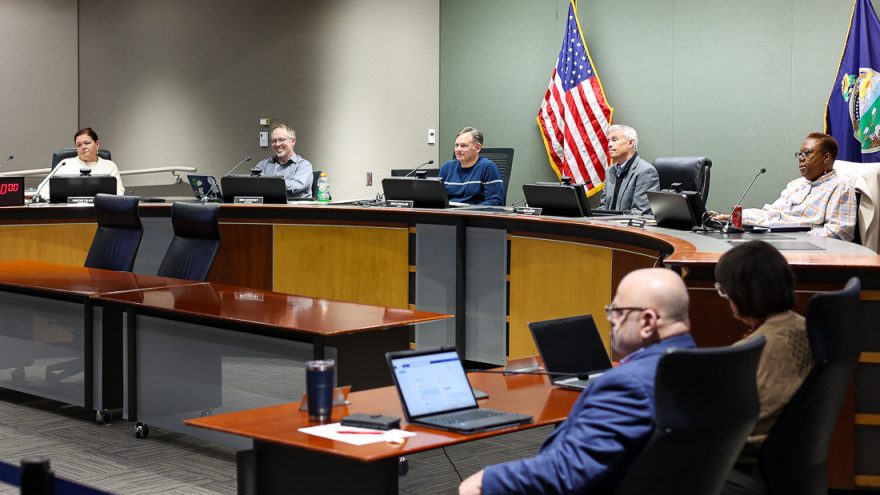
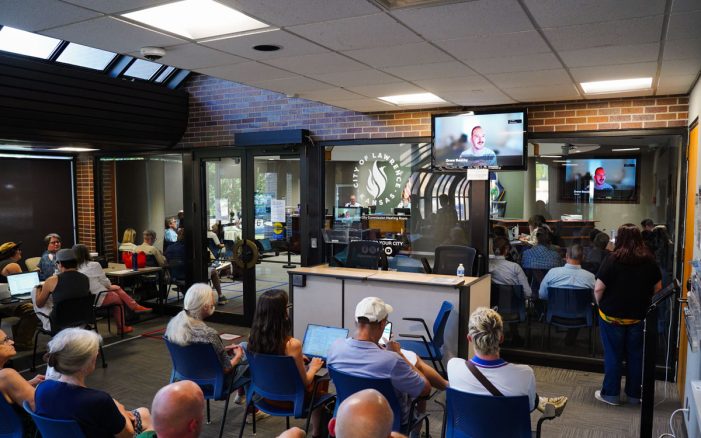
Lawrence city commissioners decided Tuesday that they want to stick with the current form of government for now, but they floated ideas and suggestions for how the system may change in the future in a wide-ranging discussion.
Among the topics commissioners discussed were how long commissioner terms should be; whether the mayor should be elected by the public or selected by the commission; how long the mayor should serve; and how any of these changes would be made.
But members of the commission took time to advocate for how the commission could look different in the future.
Commissioner Mike Dever said he thinks the community would be well served by having more members of the commission. Commissioner Amber Sellers said the commission should get rid of its current system of assigning the role of mayor based on votes in the previous election.
And commissioners broadly agreed four-year terms are necessary because they give new commissioners more time to learn how to govern. They also agreed not to rush any changes and that continued conversations would be needed.
Get daily news in your inbox: Sign up for our email newsletters
Learn more about our newsletters first at this link
Discussions about the city’s form of government have been brought up multiple times in recent years, starting with an ad hoc task force the commission created in 2021.
The commission voted in February 2023 to make all five commission terms four-year terms. Previously, three commission seats were elected every two years, with the third-place candidate receiving a two-year term. That meant that voters could replace a majority of the commission in every election.
Please support
The Lawrence Times!
Subscribe here.
City voters in 2024 narrowly rejected a change to the form of government that would have meant the five-member city commission would have become a six-member city council with a directly elected, nonvoting mayor. Four of the council seats would have represented districts that had yet to be drawn; the other two and the mayor would have been elected at large, meaning they’d represent the entire city. The mayor would have only voted if needed to break a tie.
Representatives of the The Chamber of Lawrence Kansas this year asked commissioners to put a question on voters’ ballots to determine whether the city should have a directly elected mayor.
After hearing from several members of the public in July that they’re not interested in making that change, commissioners generally agreed they didn’t want to move forward with any changes at that time, but they wanted to discuss it further ahead of the November 2027 election to determine whether to put another ballot question in front of city voters.
Mayor position
Currently, the mayor position is a one-year term that essentially rotates among commissioners who received the most votes in their elections. Typically, following a city election, commissioners choose the person who received the most votes as the vice mayor, and the following year, the person who received the second most votes is chosen as the new vice mayor while the current vice mayor advances to mayor.
Dever said the system voters rejected in 2024 with a nonvoting mayor wasn’t appealing because the mayor would only have their votes on the record in rare circumstances when the other commissioners tied on a vote.
“I don’t think that’s a good thing,” he said. “I think leaders need to lead all the time, and I think they need to be a part of discussions all the time, and not only when it’s convenient or when it’s a matter of urgency when people can’t agree.”
Mayor Brad Finkeldei said if the commission were to consider asking voters to change the form of government again, the mayor should be a voting member of the commission, and he wouldn’t add districts for commission members. He recommended having the four non-mayor commission members be elected to two-year terms with the mayor elected to a four-year term.
Finkeldei said he thought the city would be better off having a mayor serve longer than one year to help set more direction over a four-year term.
Commissioners wouldn’t have to make any ordinance changes for that, or put the question to voters. They could just change the way they select the mayor, moving away from the current formality and widening the discussion to select the person the commission thinks is most qualified.
Commissioner Amber Sellers said it was good to ask why the commission was using its current rotating mayor system and whether it was the best option for the future. She called the current system “traditional chicanery” and advocated for the mayor to be selected by the commission based on qualifications, not by votes received in the prior election.
“If we are electing someone to be a mayor and a vice mayor, you are electing two individuals that you believe will work in collaboration with each other to guide and facilitate the agenda and the policy work of the governing body,” she said.
The next question, Sellers said, is whether the commission would decide who was best suited to fill that role, or whether it should be a position voted on by the public.
Commission term lengths, districts
Finkeldei said he had heard the public desire a return to the previous system where one commissioner each election had a two-year term so that the public could vote on a three-person majority of the commission every election.
“I think that’s the most pressing question,” he said, noting that the commission would have to make a decision about that prior to the June 1 filing deadline to run for the office.
But he said he was in favor of all commissioners having a four-year term because it can take a while to learn how to do the job.
Vice Mayor Mike Courtney said he liked the way four-year terms allow more time to learn how to govern, but said he would be in favor of reverting to the old system where three commissioners are on the ballot every election until the commission could put any recommendations for changes to terms or the form of government to a public vote.
But other members also advocated for retaining the current four-year term structure.
Sellers said the system of one candidate getting a two-year term could create odd situations for voters as they decide whether to vote for three candidates, or choose just one or two with the goal of elevating their preferred candidate into one of the top two slots and thus getting a four-year term and a chance to be mayor.
“The seats are all the same,” Seller said. “Why does it make a difference what the votes were?”
Commissioners also discussed whether having members of the body that serve specific geographic districts would be good.
Dever said the value in having geographic districts is for people who may not want to represent the broad interests of the entire city, but could represent their specific neighborhood or part of town.
“Sometimes they’re not great at serving the whole of the community, but they’re really good at their one section, and they’re a needed part of government,” he said.
He said the current form of government was adopted in 1951, and the city has outgrown it.
Polian said she was a proponent of putting any changes to a public vote, even if it wasn’t required.
She said commissioners may have some concerns about the form of government, but asked whether they had heard any concerns about the form of government from the public.
Commissioners eventually decided not to start the process for any changes now but to continue the conversation.
Tuesday’s work session was for information and discussion only, and the commission did not take any formal action.
If local news matters to you, please help us keep doing this work.
Don’t miss a beat — get the latest news from the Times delivered to your inbox:
Click here to learn more about our newsletters first

Cuyler Dunn (he/him), staff reporter, has worked with The Lawrence Times since April 2022. He can be reached at [email protected].
Read his complete bio at this link. Read more of his work for the Times at this link.
Related coverage:
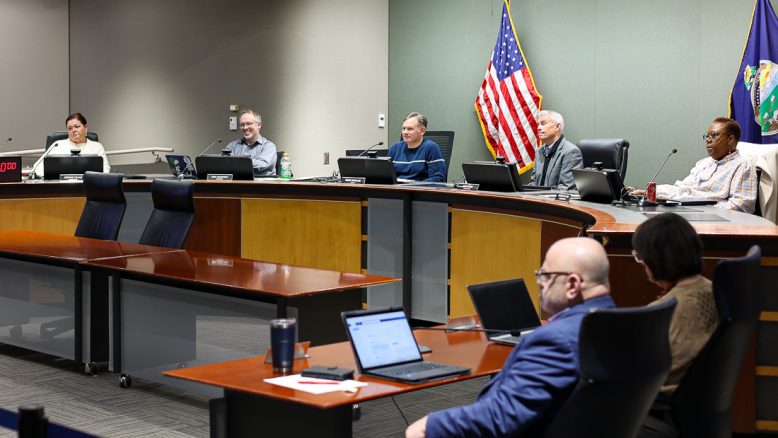 Cuyler Dunn/Lawrence Times
Lawrence City Commission floats ideas but tables changes to city’s form of government
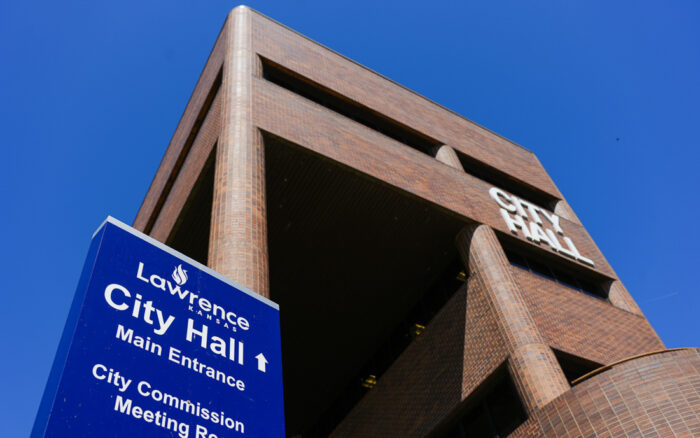 Jacob Rice / Lawrence Times
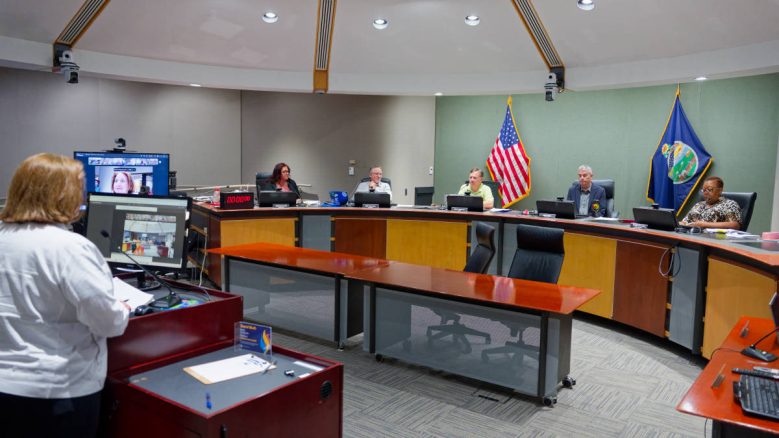 Nathan Kramer / Lawrence Times
Latest Lawrence news:
Cuyler Dunn/Lawrence TimesLawrence City Commission floats ideas but tables changes to city’s form of government
 Cuyler Dunn/Lawrence Times