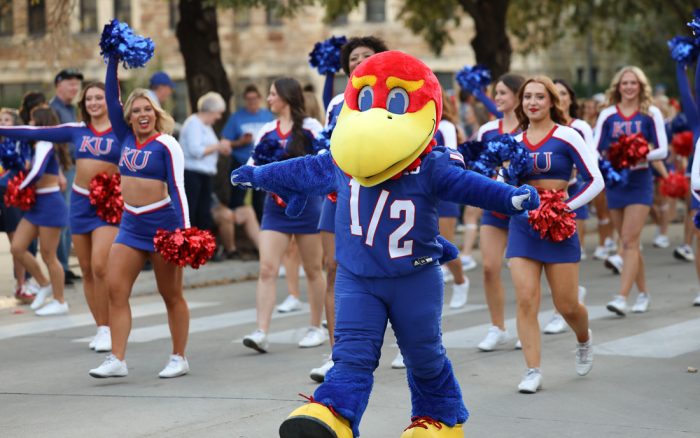


A lot of people recall a promise from the city that when Sports Pavilion Lawrence opened, it would forever be free to use.
But a dozen years later, there appears to be no solid proof that such a pledge was made.
The city commission voted in September to add fees to access SPL and the Holcom Park and East Lawrence recreation centers to help address a $6.6 million city budget shortfall. Those fees will take effect in January.
Despite claims from community members, city staff members have said the city never codified a promise not to charge fees. Sports Pavilion Lawrence and the other rec centers have never charged entrance fees for Douglas County residents to date, but that is set to change in January.
Don’t miss a beat … Click here to sign up for our email newsletters
Click here to learn more about our newsletters first
The issue is a big topic in this year’s city commission election. Candidate Bob Schumm was mayor when the commission approved SPL in 2013. He has been adamant that he made a promise to the community to encourage support of the project: The city won’t charge you to use the facility.
Now, more than a decade later, he says that promise has been broken.
Schumm received the most votes in the primary election in August. He will face three other candidates — Kristine Polian, Bart Littlejohn and Mike Courtney — for two open seats. Polian and Courtney have joined Schumm in opposing the addition of fees. Littlejohn, who voted for the fees as an incumbent commissioner, did not respond to a request for comment for this article but has said fees are needed to prevent further cuts to the Park and Recreation department.
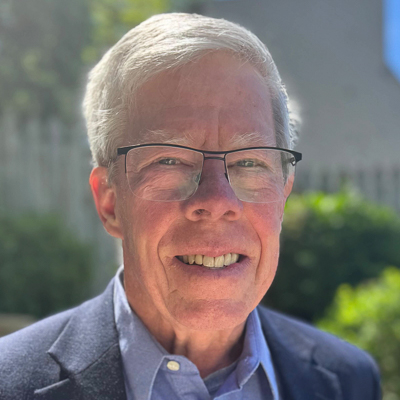


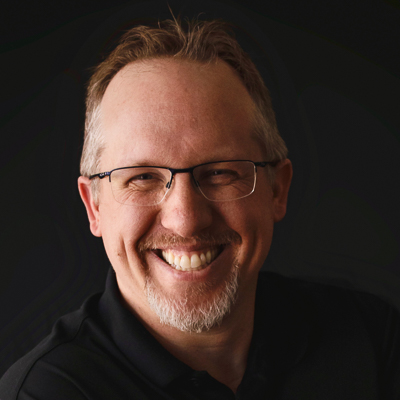
If Schumm is elected, he would rejoin one of his former commissionmates on the governing body. Current Mayor Mike Dever, who supported the project in 2013, has taken a different position on fees. Dever, alongside most of the current commission, has supported implementation of fees. In an interview, he said he was committed to making city developments sustainable.
Community members and some members of Lawrence’s Parks and Recreation Advisory Board have pushed back against the fees, arguing the center is already funded through community taxes. They say fees will add barriers to use.
More than 80% of respondents to a city-conducted community survey earlier this year opposed adding fees. SPL — a 181,000-square-foot facility with courts for basketball, volleyball and pickleball, plus a weight room and an indoor walking track — is the most-used city recreation center.
No-fee promise hard to pin down
Sports Pavilion Lawrence was the topic of much government and community discussion when it was proposed in 2012. Multiple public officials and community members from the time recall a promise being made before the project was approved in 2013 that entrance fees would not be charged for the use of the facility.
But it’s difficult to track down hard evidence that such a pledge was made, and there apparently was never any official statement or approval of the promise.
The Lawrence Times reviewed commission meetings from 2013 and did not find any formal promises made by commissioners during the meetings. Holly Krebs, the lead organizer for the Coalition for Collaborative Governance, said she spent hours trying to track down official documentation of a promise and was unsuccessful.
Mike Amyx, who was on the city commission in 2013 and now is a state legislator representing Lawrence, said he couldn’t recall any formal actions around fees at the time, but said it was the intention of the commission at the time that residents would not be charged entrance fees. Dever said he did not recall saying in 2013 there would be no user fees.
The closest statement made about fees in a public meeting was in an exchange during a March 5, 2013 meeting, when then-City Manager David Corliss told commissioners that “We don’t have any plans to charge for admission. In some of my earlier hopes of revenue, I’ve probably mentioned that as a possibility, but that is not part of our plans.” He said there would be charges for tournaments, leagues and classes.
Regardless of what was said, free access for residents was never made official.
Support local news
Please subscribe to support The Lawrence Times so we can keep doing this work.
The idea of a promise for no entrance fees goes as far back as 1994, when Douglas County residents approved a 1% sales tax to support parks and recreation facilities and public health.
Craig Weinaug, who was Douglas County administrator for about 26 years before retiring in 2018, said that when that tax was passed, it was with the intent that projects built with the tax would not be subject to additional fees. However, he said he made sure at the time to not say it was a promise that could never be changed.
Even if that was the goal, he said, future commissions would need to make different decisions based on different information.
“They wanted to make that commitment, but they could not,” Weinaug said.
He said that although residents may feel a promise has been broken, he doesn’t believe anyone is intentionally breaking a promise — they are just dealing with different circumstances.
Schumm said there was not an effort made to put the promise in writing, but it was said repeatedly to the public and he didn’t think the city would ever go back on the promise.
“Yes, in retrospect, if there had been a written agreement, it would be easier to establish that a promise of free play had been made,” Schumm said. “But doesn’t my statement matter that I made the promise of no fee to play when I was acting in the official capacity of the mayor of Lawrence?”
‘It’s an easy target’
Sports Pavilion Lawrence was developed through a complicated and controversial public-private partnership that included a sprawling KU athletics complex, Rock Chalk Park. It was a deal between KU, the City of Lawrence and Thomas Fritzel, a local real estate developer who was later found guilty of falsifying tax returns and illegally disposing of asbestos related to other Lawrence projects.
The City of Lawrence owns the land and building for SPL and built the facility for $22.5 million. Initially, the entire project was supposed to be built without bids, but that was reversed after vocal community objections and the rec center ultimately went through a normal bidding process. Fritzel did receive a $12 million, no-bid construction contract for Rock Chalk Park infrastructure.
Schumm said the thinking in 2013 was that fees wouldn’t be needed for the rec center because city projections showed that most of SPL’s budget would be generated by program fees. Now, he says, the city overspent its overall budget during COVID-19 and is trying to make up the shortfall by charging residents to use the facility.
“It’s an easy target,” Schumm said. “Other cities do it. So it’s kind of like, well, everybody else is doing it. Why can’t we do it?”
Other former and current city officials suggest that the problems now requiring recreation center fees date back to the original development in 2013.
Rob Chestnut, a former city commissioner who in 2013 was a member of the city’s advisory board charged with making recommendations on projects that involve tax abatements, said he was skeptical at the time about the entire Rock Chalk Park project and the financial analyses that were presented to the commission to support it.
He said Sports Pavilion Lawrence was intended to generate more revenue from tournaments and other events than it actually has. That shortfall, he said, is why the city proposed charging entrance fees.
Adding fees is not the only change that’s been made to SPL’s original plans. For years, SPL has allowed tournaments at the facility to block access to free play on all courts, which was a shift from the original plans for the facility. When it was developed, the plan was for one court to always be open for free play. Commissioners voted in 2016 to allow tournaments to use the entire facility, in part to boost revenue.
Because of complex city financial systems, it has been difficult to get a detailed, accurate accounting of SPL’s revenue and income. (See this article for details about that.)
Mayor Dever said he is committed to ensuring city developments are sustainable.
“Building things is the fun part, but sustaining them is hard,” he said. “People want shiny new things, so elected officials sometimes focus on those items. I am more focused on caring for the long-term needs of the old and new infrastructure we have, and making sure they outlast their expected useful life.”
Election issue
The recreation center access fees have become a significant issue in Tuesday’s city commission election.

“The real question is how did we get here in the first place?” said Polian, a city commission candidate with experience in local government and public finance management. “We know that the no-bid process caused significant issues with the community. We know that the no-bid process cost the taxpayer additional money. Doing a project of that scope with no-bid contracts is reprehensible.
“And we know members of the PIRC advised against the tax abatements and that the project was likely not financially sustainable,” Polian said. “Yet we still proceeded. So on one hand, we have elected officials making promises that they likely should not have made in the first place, all while setting a project up for failure in the first place.”
Commission candidate Courtney said he had looked into the approval process for SPL in 2013 and found a lot of rosy projections about what was to come. Now he wonders: Why is the current situation so different from those projections?
The recreation center has been discussed by all four candidates leading up to the election. Schumm has been the most vocal, including in videos posted online on TikTok and Instagram. He has said he would work to remove all recreation center fees if elected.
“If it’s working that good, don’t do anything to screw it up,” he said. “Just leave it alone and let people enjoy it. And let us be proud of the fact that we have that facility, and so many people use it, and it means so much to them.”
Littlejohn has said his vote in favor of recreation center fees was to avoid having to make more cuts to the parks and recreation department, especially with the World Cup soccer events hosted in Kansas City coming up next summer, with Lawrence as a possible practice site for some teams. He has said he is interested in exploring other options to generate revenue, such as sponsorship plans.
“I could explore that conversation (about membership fees), because I don’t know if us making reductions this year is a great idea, because it’s not only this year, but the upcoming year where we have the World Cup and we have a lot of activities and we have a lot of things going on,” Littlejohn said during a July commission meeting. “So I think we probably need to figure out a little bit more of a solution, if possible.”
Courtney has made affordability the primary focus of his campaign, and ensuring recreation centers don’t charge entrance fees is a major piece of that.
He said he regularly sees older community members using the facility and said fees might prohibit access for them, which could be damaging for their health.
Polian said she wants to use her experience in local government finance to ensure decisions made by the city are financially sound. She said she would prefer to not have fees, but would need to make sure there aren’t too many administrative costs already incurred.
“I would want to take a hard look at, you know, who we’re charging,” she said. “I don’t feel like the residents, for the reasons I’ve listed, should be the ones owning that burden.”
She said the city should adhere to the promise to keep SPL free of fees, even if it was never made official.
“It is very clear that a promise was made, and the community has relied on it,” she said.
If local news matters to you, please help us keep doing this work.
Don’t miss a beat — get the latest news from the Times delivered to your inbox:
Click here to learn more about our newsletters first

Cuyler Dunn (he/him), staff reporter, has worked with The Lawrence Times since April 2022. He can be reached at [email protected].
Read his complete bio at this link. Read more of his work for the Times at this link.
More coverage:
 Jacob Rice / Lawrence Times
 August Rudisell/Lawrence Times
 Jacob Rice / Lawrence Times
More Election 2025 coverage:
 Nathan Kramer / Lawrence Times
Latest Lawrence news:

 Wulfe Wulfemeyer/Lawrence Times
 Jacob Rice / Lawrence Times