

Republicans will retain control of the Kansas House, but Democrats’ gains and Cindy Holscher’s victory in the governor’s race mean both parties will have to find new ways to work together. Property taxes, the state budget and social issues could test that relationship.
Republicans will still hold a majority in the Statehouse next session, but their power will be significantly reduced after losing a supermajority and both parties will need to compromise to pass legislation.
Democrats made significant gains in the Kansas House, picking up 20 seats and ending the Republican supermajority that’s been in place for more than 15 years.
Republicans still control the chamber, but with 68 seats, they’ll fall short of the 84 votes needed to override a gubernatorial veto without Democratic support.
That changes the political landscape heading into the 2027 legislative session. Republicans will have to be more selective about the legislation they advance, while Democrats will have more influence over which bills make it through the process.
Don’t miss a beat … Click here to sign up for our email newsletters
Click here to learn more about our newsletters first
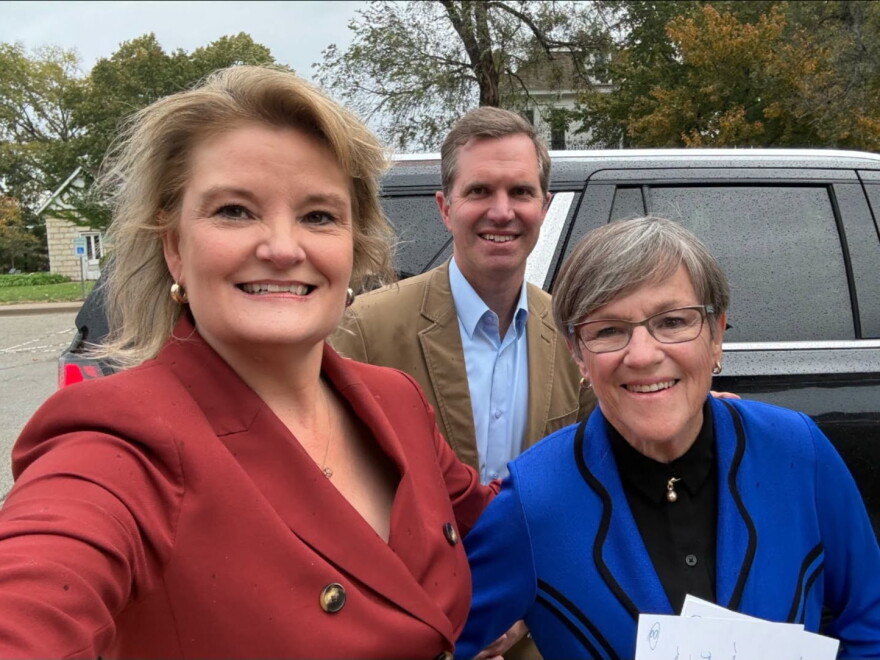
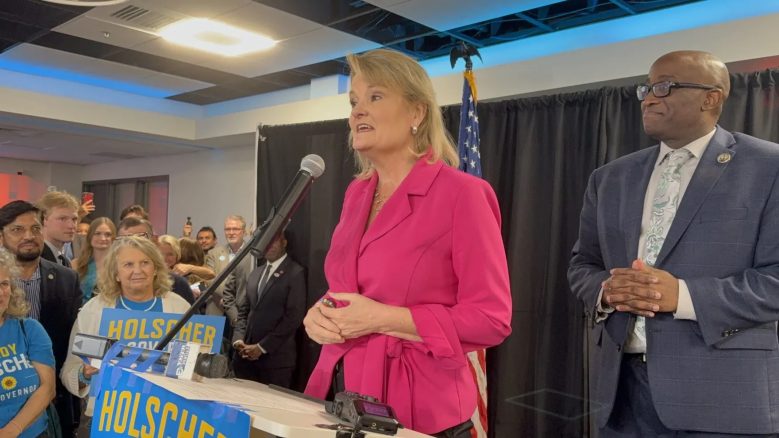
Holscher set the tone during her first speech as governor-elect.
“Throughout this campaign I heard from Kansans across the state who want their leaders to put politics aside,” She said, “and work together for the good of the people.
To make changes, the new governor will have to work with a new Republican leadership team.
GOP leadership changes
The election results have changed the field of candidates and created an opportunity for new leadership to shape the direction of the Republican caucus.
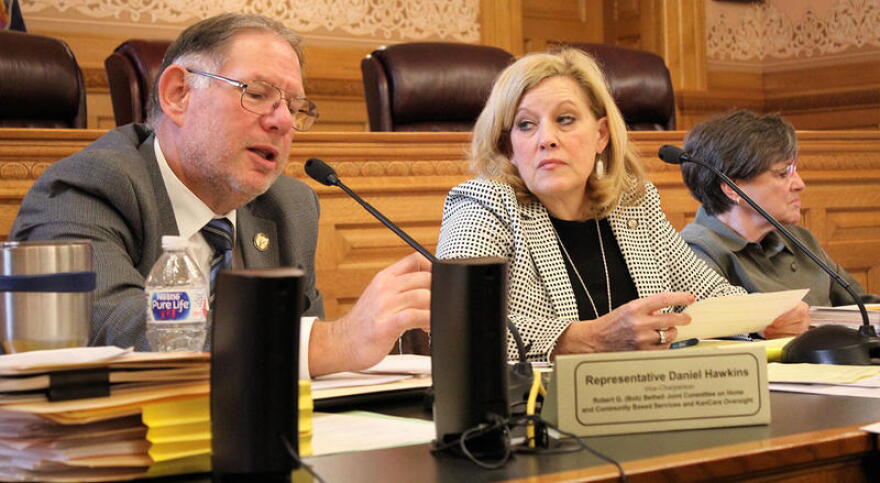
House Speaker Dan Hawkins is leaving the Legislature after winning the race to be the state’s insurance commissioner. House Majority Leader Chris Croft is projected to lose his reelection race.
Now the GOP will look for new leadership as it enters an era without a supermajority.
The House will hold its leadership elections Dec. 7.
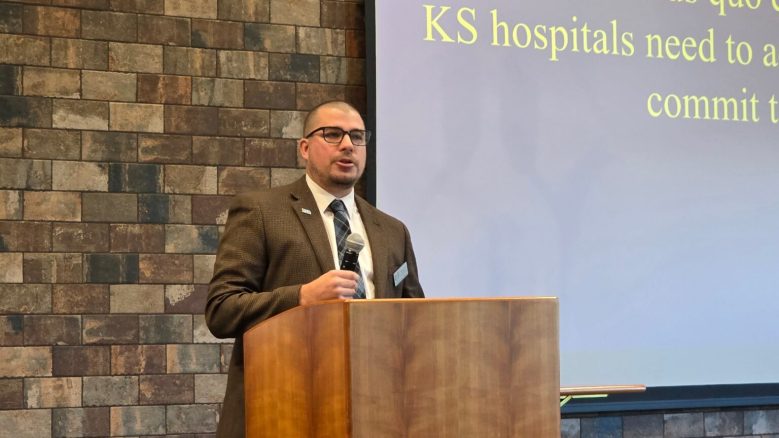
“Every person that’s running for these leadership positions is going to make their case,” Speaker Pro Tempore Blake Carpenter, a Sedgwick County lawmaker, said. “They’re going to make their arguments about the things that we can do.”
One potential change is more rural representation in Republican leadership, as many suburban Republicans in Johnson and Sedgwick counties lost their seats.
Carpenter wants Republicans to avoid dividing themselves between urban and rural interests. He said the caucus needs to stay focused on issues such as property tax relief and balancing the state budget.
Working together
Carpenter said working with Democrats is not unfamiliar territory.
“Most people don’t realize that the Republicans and the Democrats, we’ve worked on issues for years together,” Carpenter said.
The parties have clashed on social issues because of disagreements on transgender rights, including an ID and bathroom law. They have also disagreed on education changes like the restriction of student protests by punishing school districts.
Laws like these are not possible now due to the lack of a House supermajority. Republican and Democratic leaders expect less focus on social issues.
Republican Rep. Kyle Hoffman, who lives on a family farm near Coldwater, Kansas, is running for House majority leader after serving as the assistant House majority leader under Croft.
He said the smaller majority will require Republicans to be more careful about what they try to pass, particularly with a Democratic governor who could veto their legislation.
Hoffman blamed his party’s losses in the House on national political issues, including voter frustration over the war, high gas prices and President Donald Trump’s popularity.
He said Republicans should look for common ground with Democrats on fiscal issues like taxes and the state budget, while maintaining their positions on social issues where the parties have significant disagreements.
There is some concern about a path forward for one of Holscher’s biggest campaign promises — Medicaid expansion.
Medicaid expansion would offer government-funded health coverage to roughly 150,000 low-income Kansans. Expansion of KanCare — the state’s Medicaid program — would also reduce uncompensated care for rural Kansas hospitals.
Dead issue
When asked about some issues that he anticipates Republican leadership will not budge on, Hoffman said Republican leaders would not consider Medicaid expansion, calling it a “dead issue.”
Holscher remains resolute in wanting to implement the policy that her predecessor lacked the votes to put in place.
“We’ll work to expand Medicaid in Kansas,” Holscher said during her first press conference as governor-elect. “Because it’s a good idea for Kansas.”
But there are many differences between expanding Medicaid now, versus before President Trump’s One Big Beautiful Bill.
The federal legislation increases the state’s administrative burden to redetermine enrollees eligibility every six months instead of yearly. Federal changes also limit how states can fund their share of Medicaid by placing strict caps and freezes on provider tax rates.
The Overland Park Democrat said she plans to get advocacy organizations to discuss the benefits of Medicaid expansion with incoming lawmakers, but Holscher still needs major buy-in from the Republican dominated Senate.
A uniting and dividing issue
Property tax relief could be one of the biggest opportunities for cooperation.
Republicans in the House and Senate struggled to agree on a plan last session. But there’s broad agreement between House Democrats and Republicans on their plan. House members need GOP senators to buy in, something they’ve been hesitant to do.
Senate Republicans last session wanted a property tax annual valuation growth cap at 3%. While House Republicans preferred a six-year averaging system. Neither plan was signed into law.
Hoffman said lawmakers have to find a solution
“I think everybody believes we need to do something,” He said. “We need to do something that really impacts people, and not necessarily just looks like it impacts people.”
He suggests rebates or other programs that put money directly back into residents’ hands.
Hoffman said lawmakers recognize the need to act on property taxes, but the challenge will be finding a plan that makes a meaningful difference for Kansans.
Democratic plans
Johnson County Democrat Brandon Woodard, the House minority leader, said his party is ready to take advantage of their stronger position.
Last year, Republicans held 12-5 majorities in many committees. These groups decide what legislation makes it to the full chamber. Legislative leaders still have power to decide if or when bills are debated.
Several important House committees, including those dealing with taxes and the state budget, will be more evenly divided between Republicans and Democrats.
“While we still have to work with a Republican majority, we need only one Republican on every single committee to vote with us to get things passed,” Woodard said.
Woodard’s priorities for House Democrats include raising the state’s minimum wage, providing property tax relief and reinstating a renters’ rebate program that was eliminated under former Republican Gov. Sam Brownback.
Democrats will push these policies aimed at making life more affordable because they are issues Woodard said resonated with voters during the election.
House Democrats now have a stronger negotiating position with the Senate, too.
He said the House could block Senate priorities unless senators are willing to negotiate on proposals supported by House Democrats.
Property taxes are likely to be a major test of the relationship between the chambers.
Woodard said Democrats and House Republicans want to advance a proposal based on a six-year rolling average to provide relief. But the Senate has previously disagreed with the House over how to approach the issue.
To get laws passed, Democrats and Republicans will need to put Holscher’s words in action, by putting politics aside and working together for the good of the people.

Zach Boblitt reports on the Kansas Statehouse for the Kansas News Service.
The Kansas News Service is a collaboration of Kansas Public Radio, KMUW, KCUR, KRPS and High Plains Public Radio.
Kansas News Service stories and photos may be republished by news media at no cost with proper attribution and a link to ksnewsservice.org.
Don’t miss a beat — get the latest news from the Times delivered to your inbox:
Click here to learn more about our newsletters first
More coverage: Election 2026

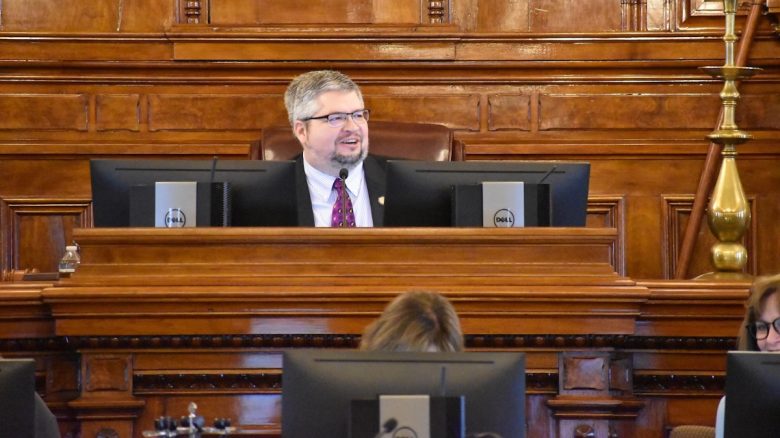
Republicans will still hold a Statehouse majority in Kansas but with less power
Latest state news: