

Liz Lyon used to walk past people with prosthetic limbs without noticing. But now, a year after losing her leg, she sees the way mobility impacts every part of life.
She’s one of multiple local folks with limb differences urging lawmakers and local officials to provide resources for people with limb loss. Those efforts, she said, start with more awareness.
“I have to tell you, I wouldn’t have thought of this at all last year before I had this happen to me,” Lyon said. “People are not aware unless they have somebody they know, or they have it happen to themselves, about limb loss and what people have to deal with.”
Both Mayor Brad Finkeldei and Gov. Laura Kelly signed proclamations declaring April as limb loss awareness month, but advocates said both local and state politicians can do more to help.
Don’t miss a beat … Click here to sign up for our email newsletters
Click here to learn more about our newsletters first
Susie Whalen said there are lots of small things that many people wouldn’t think of.
For example, when she goes to get dinner at one of her favorite restaurants downtown, she has to walk on four different surfaces to get there: concrete, brick, tile and wood. That can be challenging for someone learning to walk with a prosthetic.
Please support local news and information from The Lawrence Times.
Subscribe here.
Additionally, building codes for ramps can be difficult to navigate, Whalen said. After her amputation, she had a ramp built at her house, but because of city code requirements, it ended up being about 50 feet long and winding through her front yard.
“I called so many places around Lawrence and a lot of the contractors around here wouldn’t even entertain putting it in just because of the codes,” she said.
About 2.1 million Americans live with limb loss, according to the city proclamation. Diabetes, peripheral vascular disease and trauma are the leading causes of amputation. The number of Americans living with limb loss and limb difference will “rise to over 3.6 million by 2050 unless a major public awareness campaign is launched and key prevention initiatives put in place,” according to the proclamation.
At the state level, advocates have urged passage of the Every Body Can Move Act, which would require insurance to cover prosthetics. In the Kansas Legislature this year, the bill never even got a committee hearing.
So Every Body Can Move is a national organization working to enact similar legislation in 28 states before the 2028 Los Angeles Paralympics. So far, 12 states have enacted legislation.
“Why would you not want somebody to be able to have a limb if they need it?” Lyon said. “It’s just so important.”
Whalen recalled one day getting work done on her prosthetic at a clinic when she saw a man in a wheelchair wearing a Vietnam War veteran hat with both legs amputated. She approached him and asked if he was there to get a prosthetic. He said he had been waiting five years and hadn’t been able to get one.
“That infuriated me,” Whalen said. “Here I am, a new amputee, I got my prosthetic. And this Vietnam vet can’t get a prosthetic. There’s something wrong there and it just angered me so much, because I am not a Vietnam vet, but dang, I sure got my prosthetic in a hurry. And he’s still waiting for his. It’s just unbelievable. There’s no consistency with the insurance policies.”
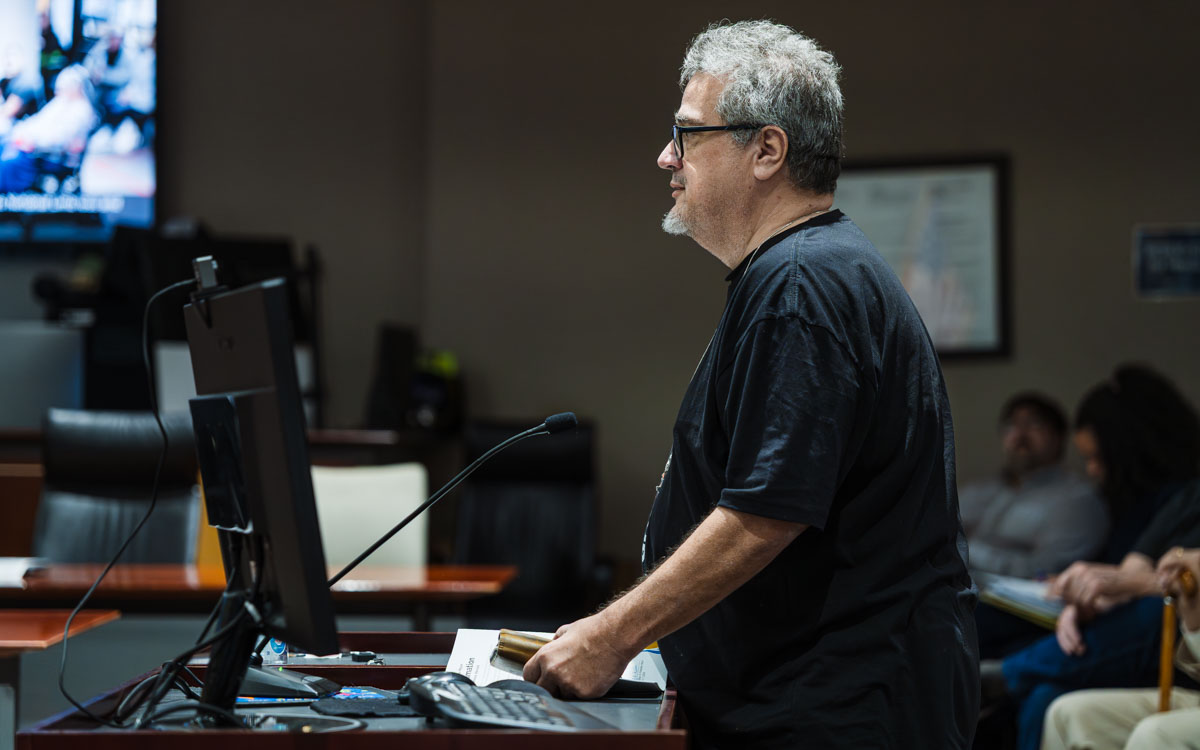
Multiple advocates said the resources and support available to them can be sparse.
Mika Tyhurst said many amputees don’t know where to go for help or what questions to ask. That’s part of the reason she started her current job at Hanger Clinic, where she helps match amputees with resources and support.
“We amputees feel like we’re alone,” Tyhurst said. “We don’t see a lot of amputees out in the community. So when people are able to connect with another amputee, they realize other people have these same feelings. It just kind of makes it full circle that I am on track and I am just like other amputees.”
Lyon said support and resources were more prevalent directly following her amputation. But they slowly started to dwindle, especially as she started working on walking and readjusting to life with an amputation. She filled those gaps with online resources like YouTube videos.
Support from close family and friends can be crucial. Lyon said her husband helped her constantly after her amputation.
“If I hadn’t had him, I don’t know what I would have done,” she said. “He was absolutely wonderful.”
But Tyhurst said family support can be a give-and-take, because many amputees want to be independent.
Whalen said aside from her husband, support was hard to come by. After her amputation, everything had to change, she said, and much of it she was left to navigate on her own.
That is until LMH started its limb loss program about two years ago. Started by Rex Ellebracht, a double amputee who has lived in Lawrence for nearly 30 years, the program has grown mostly from word of mouth, Whalen said.
“It’s really great because there are a lot of people out there that need help, and you don’t know how it is until you’re in that position,” Whalen said.
There’s also a limb loss support group, designed to be a place where people can share resources experiences to bring attention to issues of those with limb differences, Ellebracht said.
“We think of ourselves as an extended family to each other,” Ellebracht said.
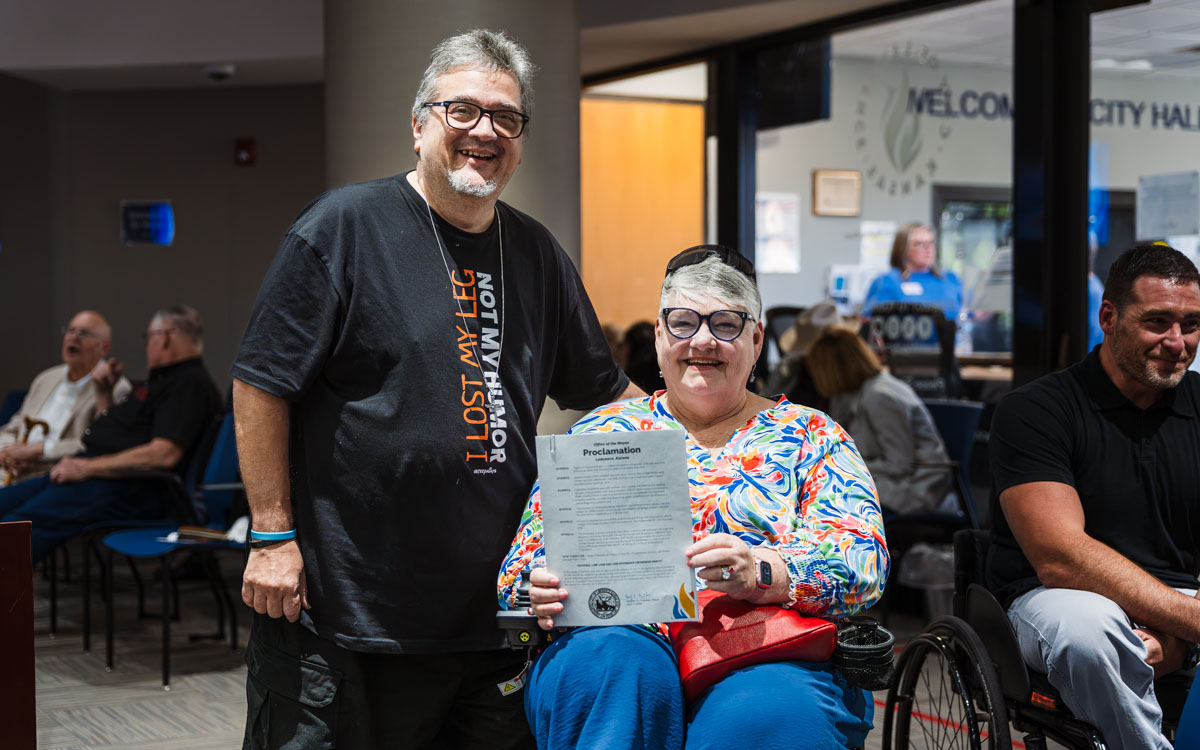
The group brings in speakers, and it partners with Independence Inc. and Lawrence Memorial Hospital. It meets from 3:30 to 4:30 p.m. on the second Thursdays of the month in LMH Health Conference Room A.
Lyon said the work limb loss advocates are doing has a simple goal: create a world where limb loss doesn’t prohibit a normal life.
“I think it’s so important that we get the word out that people have a right to move,” Lyon said. “People have a right to live their life. It may not be climbing a mountain, but just to live a normal life. Just going to the grocery store or, you know, just little things that they do, like going to visit their grandkids.”
If local news matters to you, please help us keep doing this work.
Don’t miss a beat — get the latest news from the Times delivered to your inbox:
Click here to learn more about our newsletters first

Cuyler Dunn (he/him), staff reporter, has worked with The Lawrence Times since April 2022. He can be reached at [email protected].
Read his complete bio at this link. Read more of his work for the Times at this link.
Latest Lawrence news:

 Molly Adams / Lawrence Times
 Molly Adams/Lawrence Times