

The skull from a bison that was harvested to feed crowds of people in September now looks over the Haskell Wetlands from the top of a newly raised stickball pole.
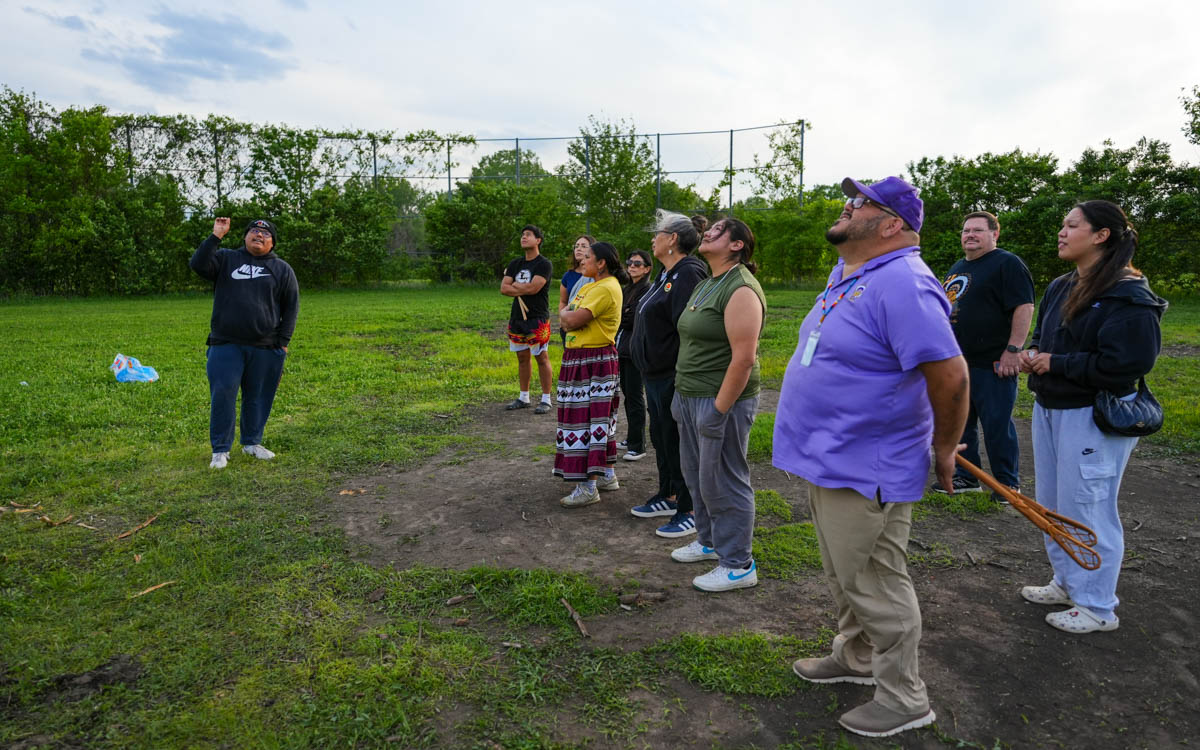
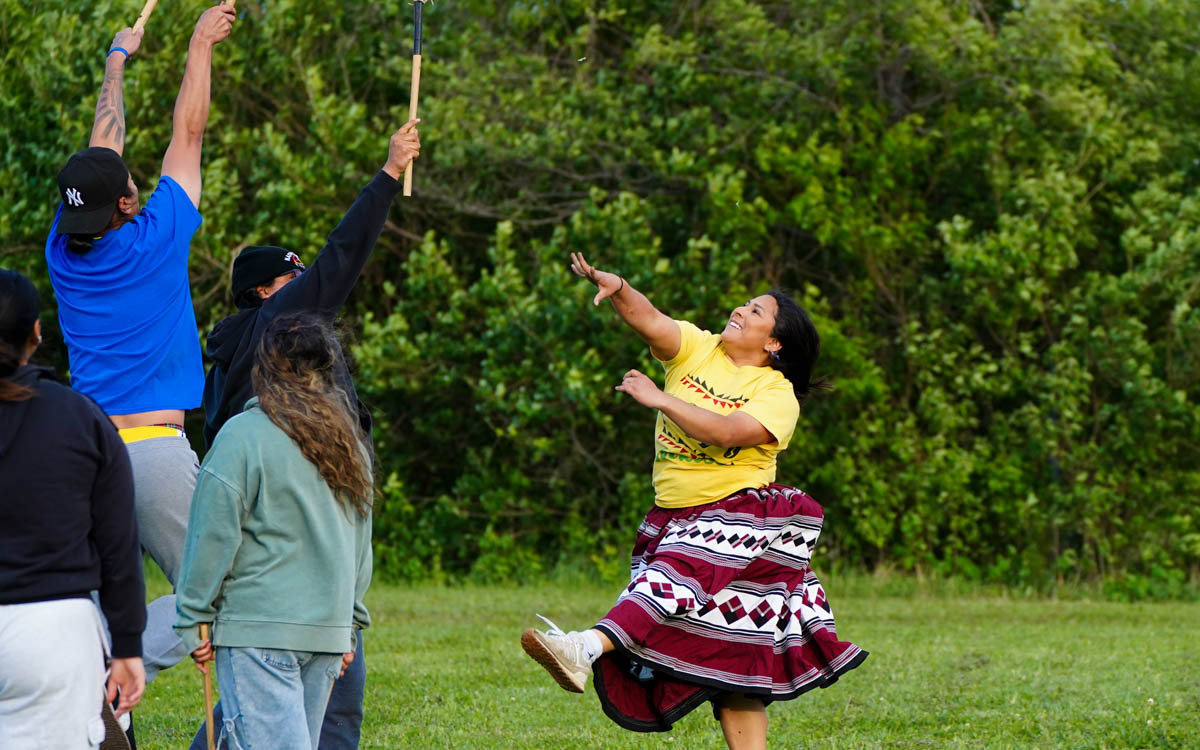
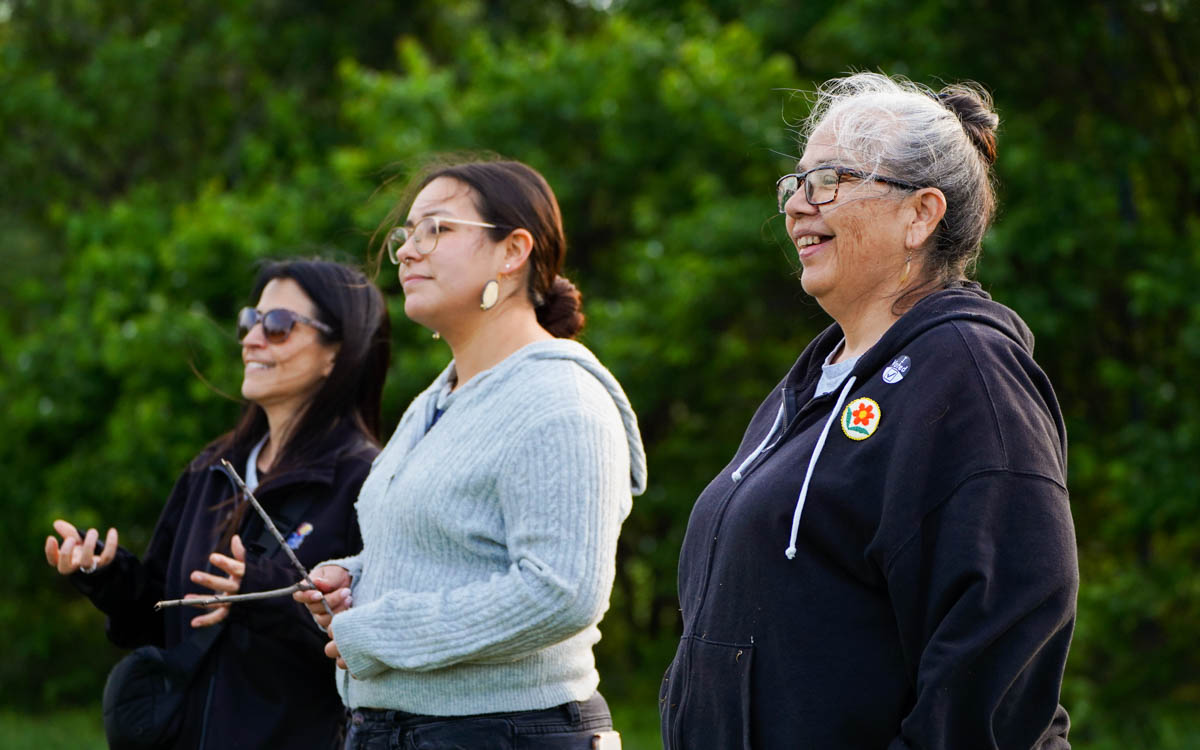
Haskell students, staff and community members worked together to install the permanent stickball pole Thursday evening on the campus’ old baseball fields near the wetlands and the Medicine Wheel.
Stickball is a centuries-old game played by multiple Indigenous tribes. The rules and field setup varies across tribes.
Mackie Moore, Cherokee Nation of Oklahoma and dean of the College of Business, said some tribes primarily play on ceremonial grounds, while others only have men use sticks while women use their hands.

Moore would play “Mississippi-style” as a Haskell undergrad. There wasn’t a stickball pole at that time, and they’d set up goals on either end of a large field.
Don’t miss a beat … Click here to sign up for our email newsletters
Click here to learn more about our newsletters first
“It was a game that was given to us by the Creator to settle our differences, to prepare our young men for war. It’s that serious of a game,” he said. “… Over time, norms change and things change, and those sticks aren’t used quite as much as those weapons as they were back then.”
Moore said the game can still get physical or even bloody, but Haskell’s new pole has a goal of connecting people.
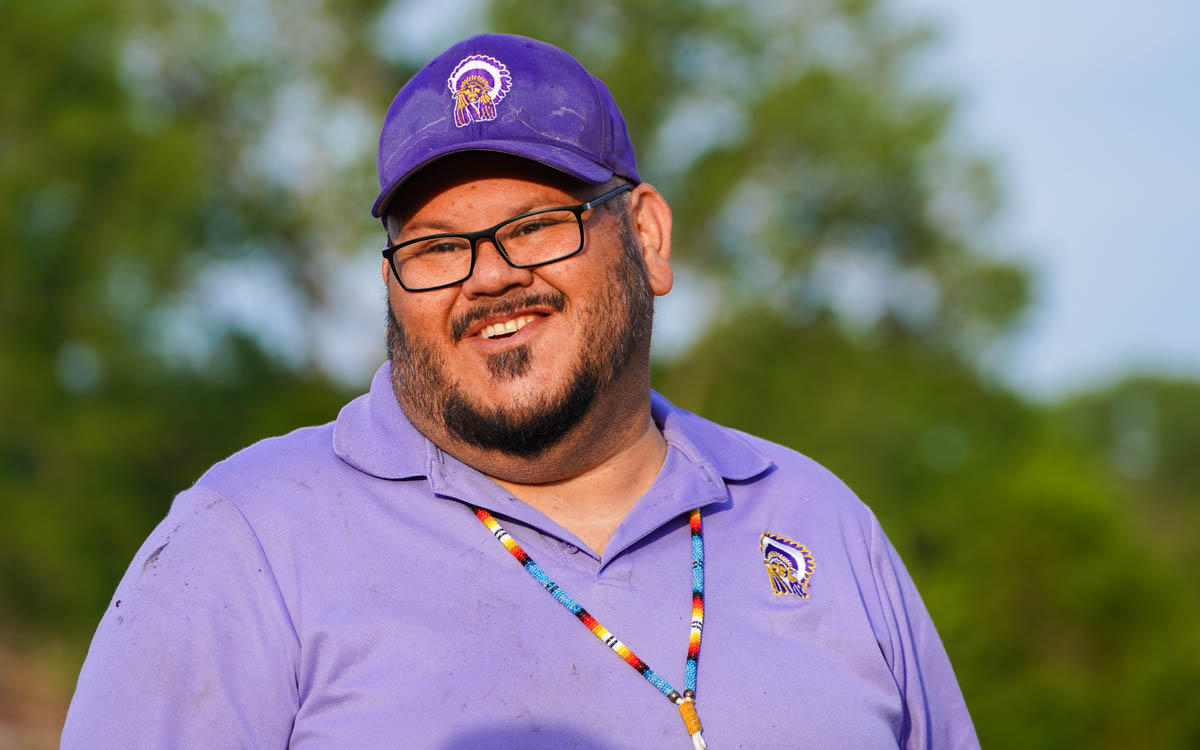
“It’s social, so just by nature, it’s something to bring people together,” he said. “… But it’s still significant in its culture, because it’s a game that’s been passed down.”
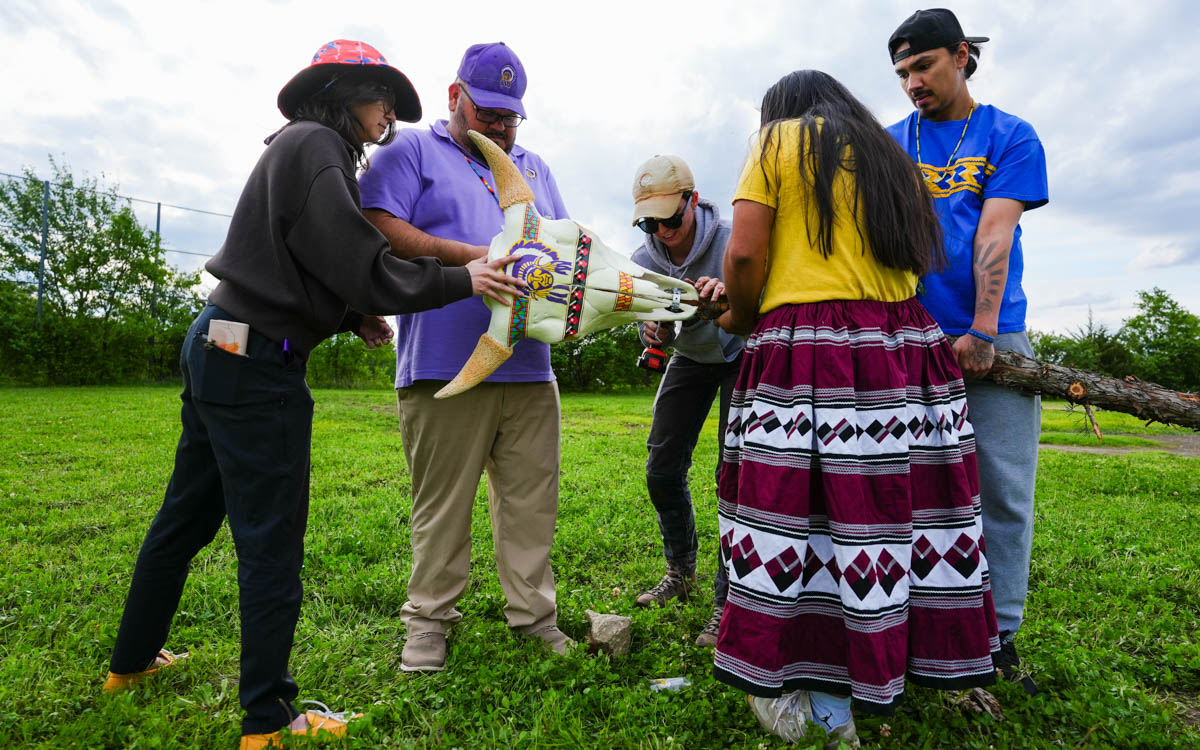
In some iterations of stickball, a wooden fish or similar item is placed atop the pole. The higher on the pole a player can hit with a ball, the more points they get — hitting the fish nets them the most points. A bison skull stands in for a fish on Haskell’s stickball pole.
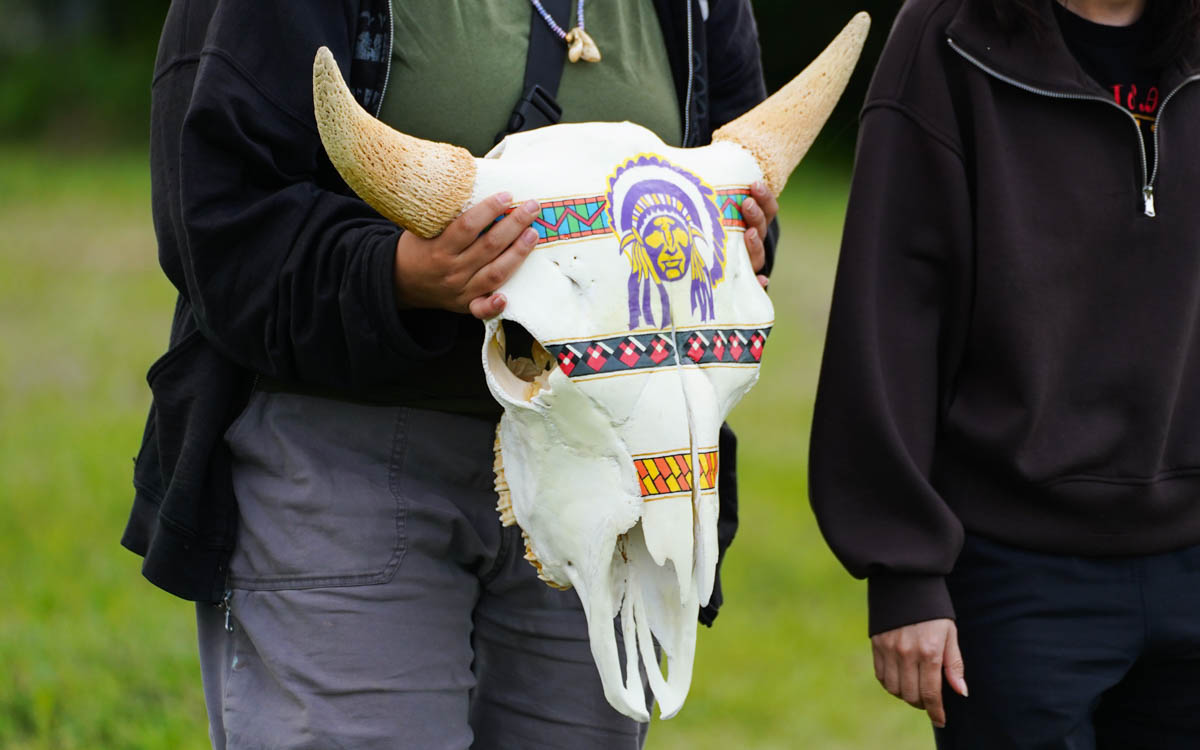
Aiyanna Tanyan, citizen of the Seminole Nation of Oklahoma and Mvskoke Creek, is a senior who participated in the school’s September bison harvest. She and her peers cleaned the bison head by submerging it in the wetlands, letting nature and its many critters take care of the meat. Tanyan said the skull was nearly clean by the time they retrieved it.
Next, they bleached the bone and Tanyan painted it with the Haskell head and Seminole patchwork designs that her tribe uses to make clothing.
“So I, of course, wanted to put the Haskell head on there, on the front,” she said.
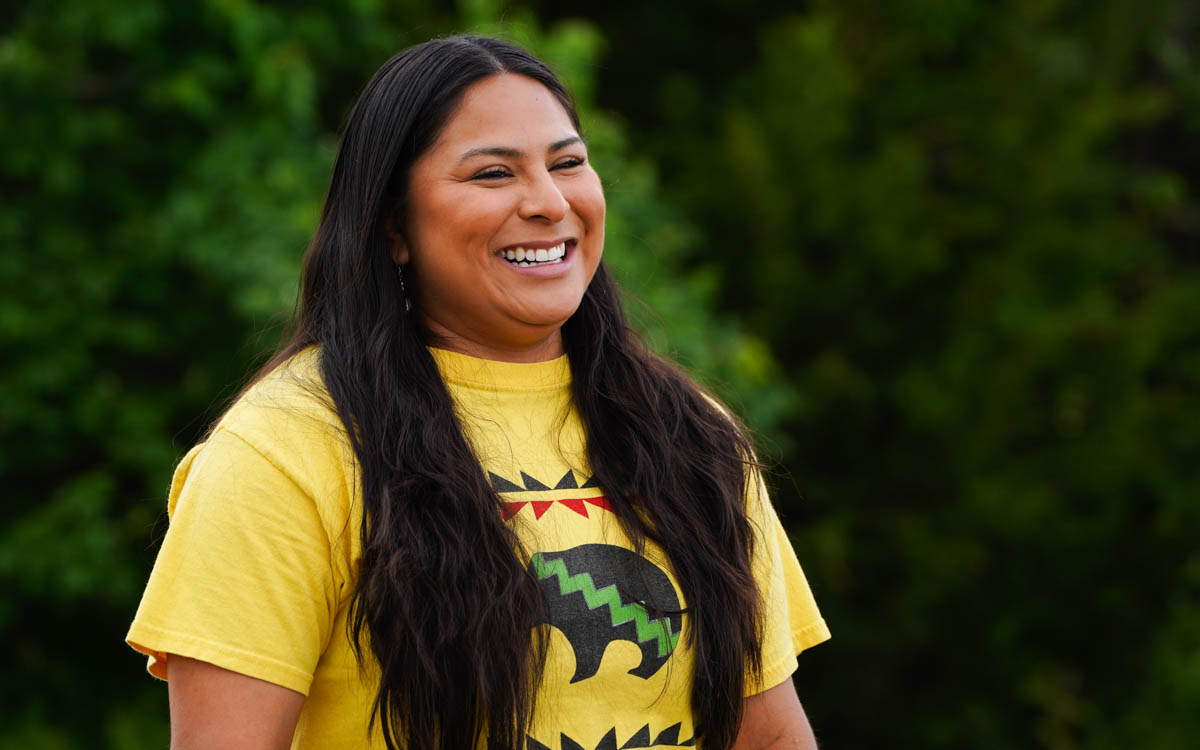
The different patchwork patterns represent Seminole clans, including Deer and Tanyan’s Wind clan. She sealed the art — and secured the teeth — with epoxy.
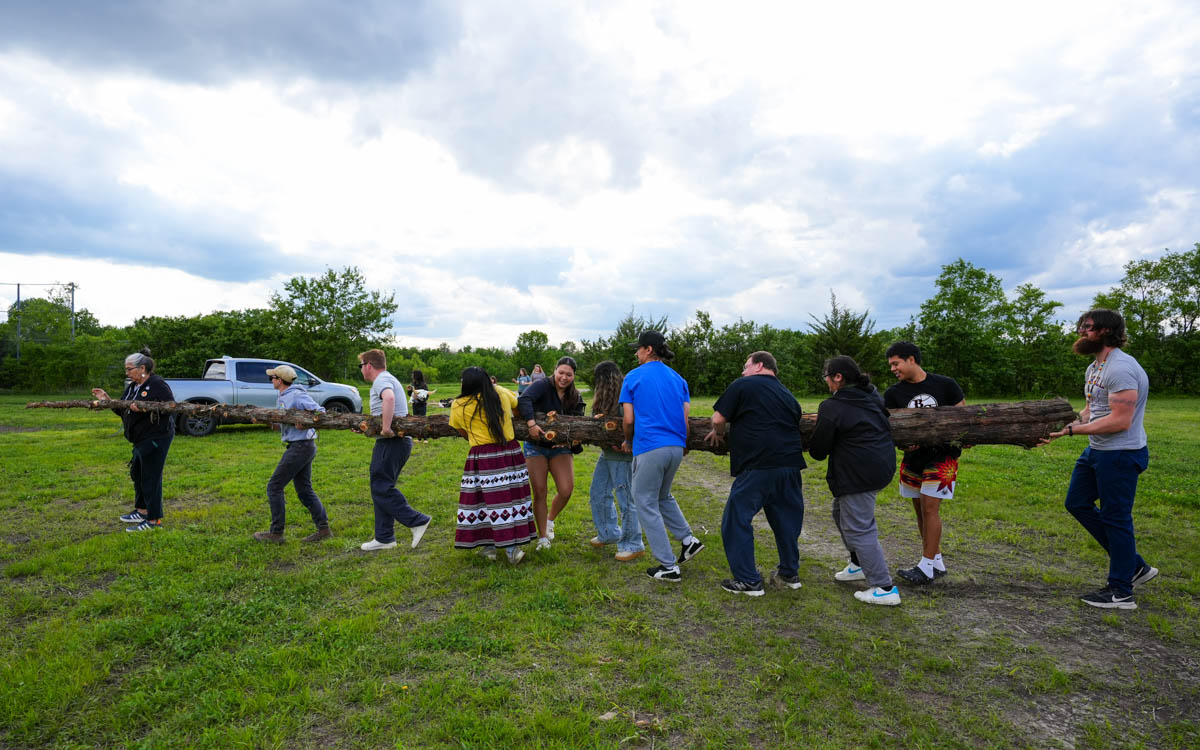
The pole itself is made of the trunk of a cedar tree. Courtney King, Peoria and Miami, works at the Haskell Greenhouse and is a KU graduate student. She has been laboring to clear cedars from the West Prairie on HINU campus, where the invasive species has proliferated. Instead of discarding the wood, she thought to repurpose it.
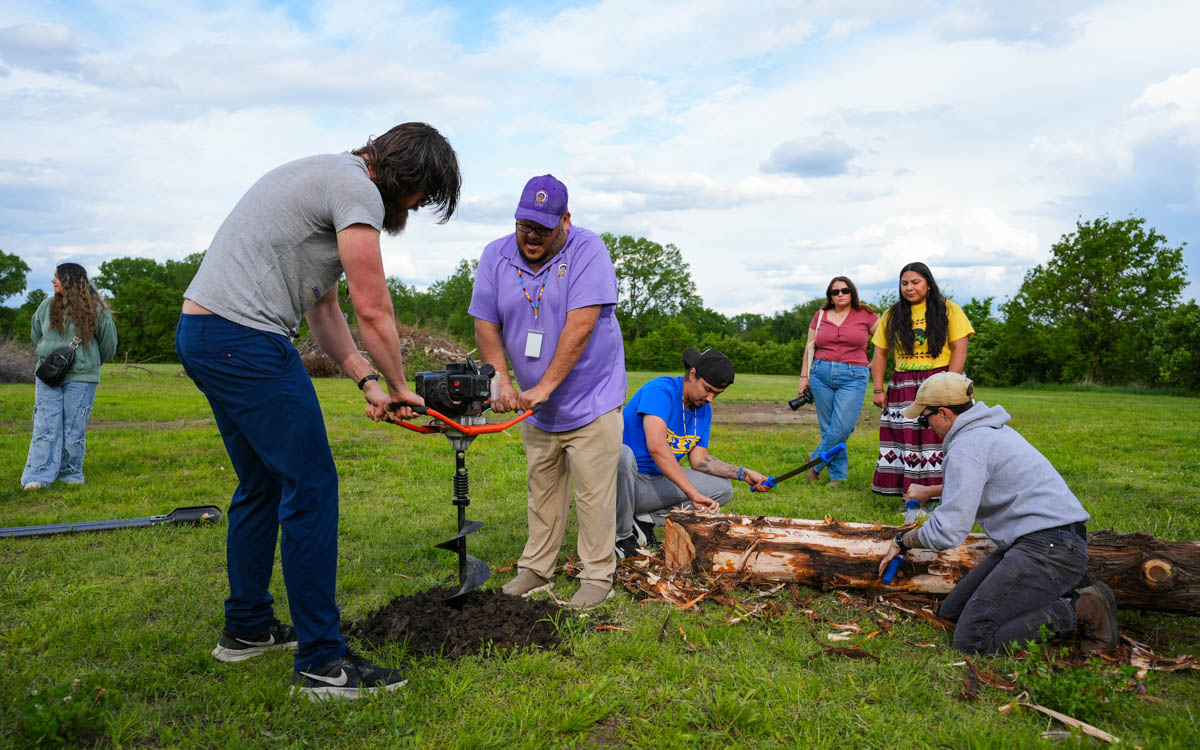
People started work by stripping bark from the base of the trunk using draw knives. Moore said draw knives are traditional tools that were used to make cabins and canoes.
Then, attendees drilled and dug a hole in the earth. Using one moving strap and a lot of person power, they raised the tree, centered it in the hole, and rotated it so that the bison skull would face the sun when it rises in the east.
Haskell freshmen Adarius Shoemake and Amari Amos, both from the Mississippi Band of Choctaw Indians, have played stickball since they were 9 and 12, respectively. Growing up, they played on the same team for a time.
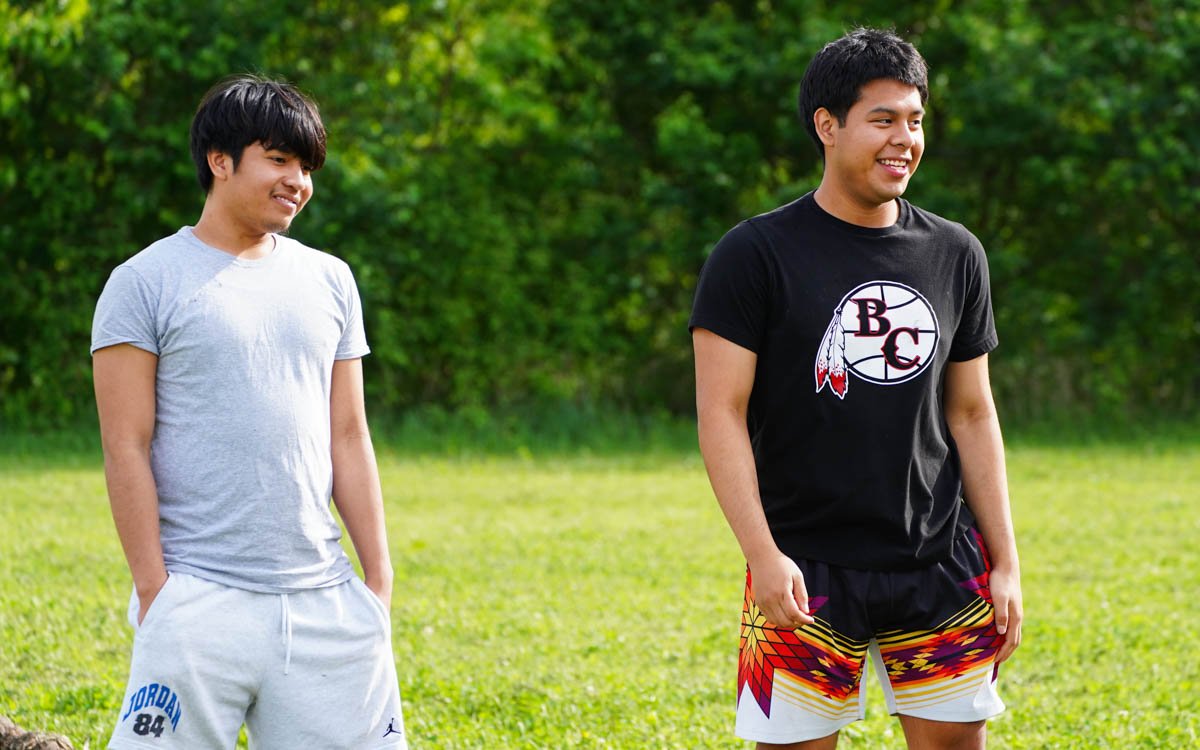
Amos said that Tribal Chief Cyrus Ben presents a drum to the winners of a stickball tournament.
“Stickball is important to me because we’ve been playing it for so long and just to win and hold the drum up after every year, that’s just a good feeling,” he said.
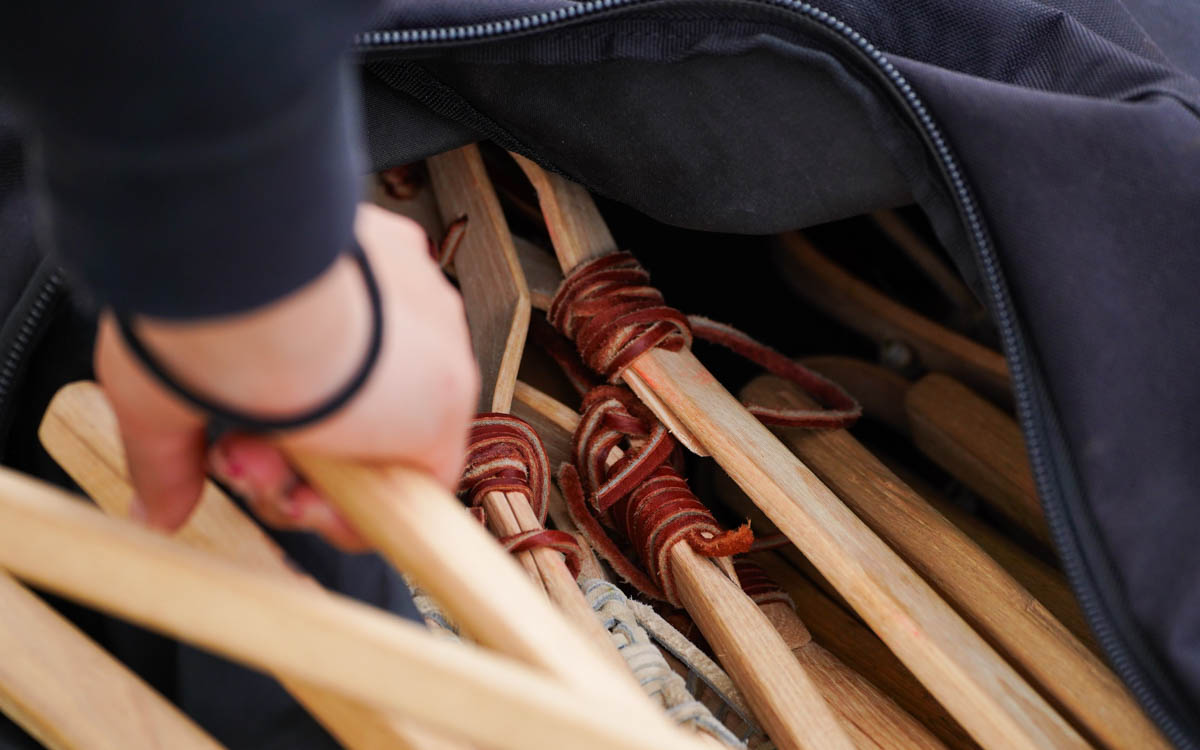
Thursday was Shoemake and Amos’ first time playing stickball at Haskell. They warmed up together, sending balls soaring across the field, as others worked to raise the pole.
Joseph Gray, Cherokee, drove from his home in Kansas City, Missouri to be a part of the gathering. He graduated from Haskell in 2004, and said the school changed his life.
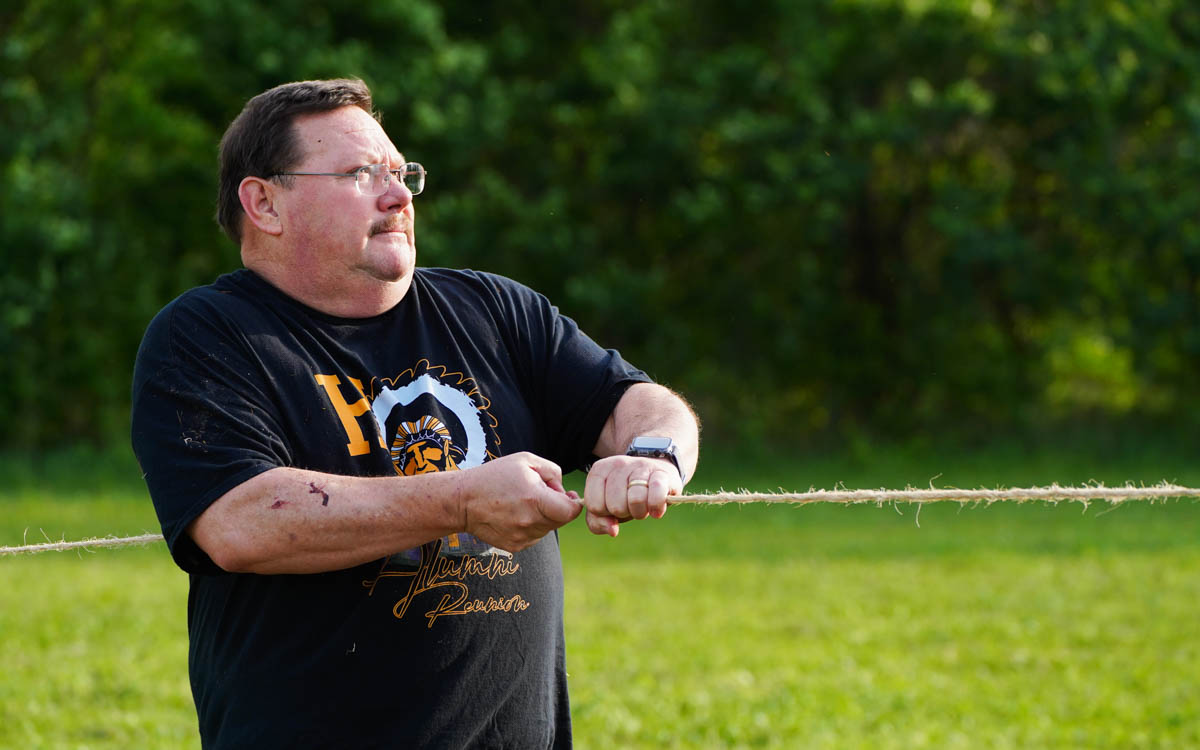
“I’m just grateful for it all, because if I hadn’t done this, it could have been lost to my family,” he said of his cultural heritage.
Even two decades after graduation, Gray is exploring and learning new traditions. He recently played his first game of stickball with the KC Cherokee Club, and wanted to be a part of a pole raising on a campus close to his heart.
“You can really see how it builds community,” he said.



If local news matters to you, please help us keep doing this work.
Don’t miss a beat — get the latest news from the Times delivered to your inbox:
Click here to learn more about our newsletters first

Wulfe Wulfemeyer (they/them), reporter and news editor, has worked with The Lawrence Times since May 2025. They can be reached at [email protected].
Read their complete bio here. Read their work for the Times here.

Jacob Rice (he/him), photo correspondent, has worked with The Lawrence Times since March 2026. He studied journalism and mass communications at Iowa State University, where he spent four years as the visuals editor for the Iowa State Daily.
Check out his photography for the Times here. Read his articles for the Times at this link.
Latest Lawrence news:
 August Rudisell/Lawrence Times
 Brandon Colbert / Contributed photo
 Molly Adams / Lawrence Times