
A Lawrence man will face trial on charges related to a hit-and-run that killed a KU student north of town last year.
Elsa McGrain, a 20-year-old premed student at the University of Kansas, was struck by a vehicle Nov. 6, 2025, north of Lawrence. She was found dead early the following morning.
Law enforcement arrested William Klingler on Nov. 9, 2025, on an outstanding warrant. At that time, officers with the Douglas County Sheriff’s Office had established him as a person of interest in McGrain’s death. They also took Klingler’s truck into custody at that time.
Don’t miss a beat … Click here to sign up for our email newsletters
Click here to learn more about our newsletters first
Please support
The Lawrence Times!
Subscribe here.
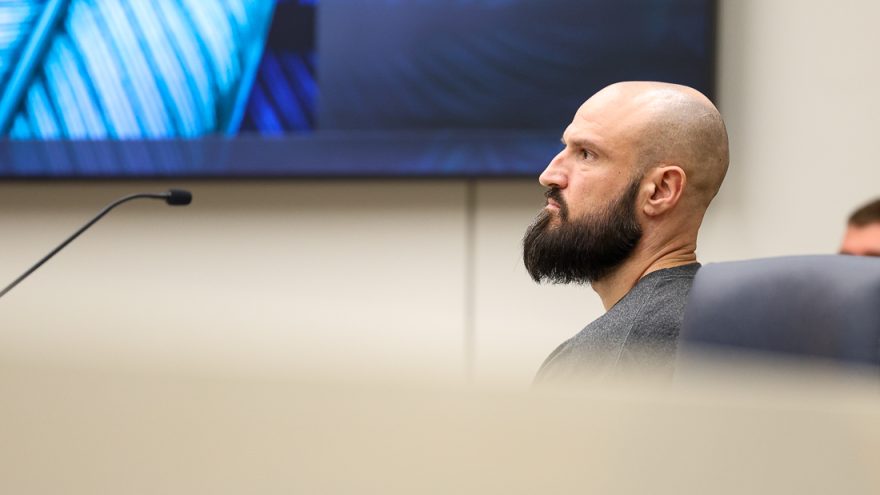
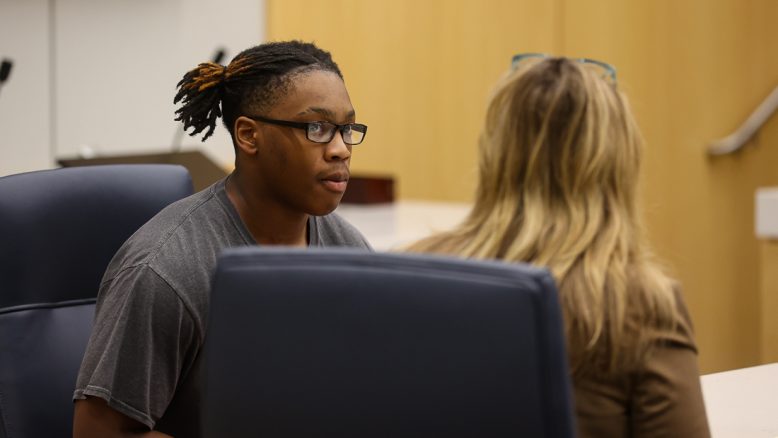
Klingler went before Douglas County District Judge Stacey Donovan for his preliminary hearing on Thursday. He’s charged with one count of leaving the scene of a fatality accident, a level-4, or midlevel severity, felony, and Donovan determined that the case will proceed to trial.
He also faces a charge of circumvention of an ignition interlock device; driving while suspended, second or subsequent offense; and no proof of motor vehicle liability insurance coverage.
Klingler was previously charged with driving under the influence in July 2024, which would be his fourth or subsequent conviction if found guilty. He faces other charges in that case, including circumventing an ignition interlock device, which is a device that requires people convicted of DUIs to take a breath test before their vehicle will start.
Since he was taken into custody, the state has charged him in two other cases for driving under the influence, driving while suspended on a second or subsequent offense, and more.
The Douglas County district attorney’s office didn’t respond to a question asking why Klingler hasn’t been charged with involuntary manslaughter in McGrain’s death prior to publication.
Evidence testing
After Donovan’s ruling, Angelo Panas-Cabrera, the public defender representing Klingler, asked for some lead time before Klingler’s arraignment. Panas-Cabrera said he’s still waiting on some bits of discovery, and he wants more DNA information from the Kansas Bureau of Investigation.
Prosecutor David Melton submitted KBI lab results as evidence during the Thursday hearing.
Troy Miller, a detective with the sheriff’s office, testified that he saw what he believed to be blood and tissue on the outside of Klingler’s truck during the initial investigation. He collected samples and sent them to KBI.
According to KBI’s lab results, the DNA profile of the tissue was consistent with McGrain’s DNA.
Karine Quadros, an evidence technician with the sheriff’s office, said that they found the left part of a headphone that likely matched the right part of a headphone found near McGrain’s body. She also found a silicone case in the car that matches a silicone case at the scene.
KBI was unable to identify the DNA on these pieces, per the report that was referenced Thursday.
Quadros said she collected green fibers from the exterior of Klingler’s truck that appeared to match the color of McGrain’s shirt.
Panas-Cabrera asked two law enforcement witnesses who had been on the scene if they found a flashlight, reflective clothing or vests in the area near McGrain’s body. All said no, but multiple witnesses said McGrain was wearing bright white shorts and a bright green shirt.
Multiple witnesses also testified to extensive damage on the passenger side of Klingler’s car — the side that allegedly would have hit McGrain based on her position and his reported direction.
Through additional questions to witnesses, Panas-Cabrera established that there would have been little to no light in the area at the time McGrain was hit. Witnesses said there isn’t a sidewalk beside the road, and there’s only a small shoulder.
Lowell Neitzell, who found McGrain’s body while making a delivery for work, said it’s common for people to walk or run on the road in that area for exercise.
Klingler’s interactions with a friend, law enforcement
Michael Wood, who said Klingler “was a good friend,” said Klingler called him the night of Nov. 6, 2025, saying he hit a deer. Klingler asked Wood for a replacement headlight that the two had previously pulled from a dumpster.
Klingler was parked behind Printing Solutions — a business in North Lawrence that both men had worked at and where they often hung out — when Wood arrived.
Wood testified that he had personal experience hitting deer, having done it three times, and there was always an “extreme amount of hair.” Wood said he didn’t observe any deer hair on Klingler’s vehicle.
Panas-Cabrera asked Wood if it’s possible his encounters with deer could have been different than what allegedly happened with Klingler, based on different vehicle speeds.
“You can be driving five miles an hour and barely bump them, and there’s always going to be hair,” Wood said.
He testified that the passenger side bumper, headlight and fender of Klingler’s truck were damaged in a way he had not seen it a few hours prior.
Wood also reported that Klingler seemed more “nervous” and “skittish” than usual. Wood said Klingler is always a little “fidgety,” but Wood said he grew frustrated over his inability to get an answer from Klingler about what he hit and where the accident occurred.
“He never ended up telling me the whereabouts of where he hit the deer,” Wood said. “He just kept saying he just didn’t know.”
Wood said he eventually left after arguing with Klingler, aggravated by Klingler’s lack of clarity.
Over the course of their conversation, Wood said Klingler eventually considered that he may have hit a person. At one point, he said he wasn’t sure what he’d hit, but “he just remembered seeing long hair,” according to Wood.
At another point, Wood said he remembered Klingler questioning why someone would walk or run on the side of the road toward oncoming traffic.
Wood said that Klingler told him he “initially stopped whenever he made the hit” but panicked and left.
Wood later told officers that he didn’t believe Klingler hit a person and that he was making things up and “freaking out” as he wasn’t supposed to be driving in the first place. That’s allegedly why Wood didn’t call the police on Klingler.
As Melton questioned Wood, he established that the witness also told officers he thought the situation was one of Klingler’s “crazy stories” but “this time it was different” because Klingler seemed more nervous than usual.
Once Klingler was arrested Nov. 9, Lance Flachsbarth and Troy Squire — a detective and master deputy with the sheriff’s office, respectively — interviewed the man.
Flachsbarth said Klingler asked to see his mother when deciding whether or not to waive his Miranda rights.
“I told him he was 36 years old and a grown man, and that he didn’t need his mom to make that decision,” Flachsbarth said.
Flachsbarth said Klingler told them that he was making two DoorDash deliveries the night of Nov. 6, and the alleged accident happened after the first delivery.
Klingler reportedly continued onto the second delivery because he thought he hit a deer. He was also working under the DoorDash account of his sister or significant other and didn’t want to “screw up” their driving record, according to Flachsbarth.
Once information publicly came out about McGrain’s death, Klingler said he continued to believe he couldn’t have done it, the detective said.
Flachsbarth said Klingler told him that he had his mother and sister drive him back to the scene. Flachsbarth also said Klingler tried to explain the damage to his truck in ways that didn’t seem consistent with what officers observed during a prior September traffic stop, and what could reasonably cause that much damage.
Flachsbarth said that “when pressed,” Klingler said it was possible he was responsible and it was a poor decision to not stop.
“You kept on pushing that he was responsible for hitting Elsa McGrain, correct?” Panas-Cabrera said.
Flachsbarth said yes, and agreed that Klingler kept saying he didn’t do it and that he hit a deer throughout the interview. It wasn’t until the end of an interview, running about two hours and 40 minutes, that Klingler said he might have been responsible, according to Flachsbarth.
He wasn’t sure if any law enforcement officers spoke to DoorDash to figure out where the second delivery was, as Klingler’s account of his whereabouts in the interview was confused and imprecise.
“November is a time of year where there are more deer on the road?” Panas-Cabrera asked Flachsbarth.
The latter said he isn’t a wildlife biologist.
Questioning witnesses’ testimony
Panas-Cabrera questioned law enforcement witnesses to determine if certain statements they made to the prosecution were assumptions.
Quandros, when questioned by the prosecution, said McGrain’s death was the first traffic fatality she worked, but the topic was included in her regular forensic training. She confirmed it was normal for a person struck by a vehicle to be knocked out of their shoes when Melton suggested it as an explanation for the placement of McGrain’s shoes.
Panas-Cabrera established that her job was to collect items important to a case, but that she’s not qualified to reconstruct a crime scene. Quandros confirmed for Panas-Cabrera she didn’t have specific education on how a body might be propelled when hit.
“So you just made an assumption when you were testifying about that earlier,” Panas-Cabrera said.
Officers used broken plastic from the scene, one with numbers and another with a partial alphanumeric string, to determine that McGrain was possibly hit by a Ford truck matching Klingler’s.
They used footage from a nearby business and information from license plate readers to establish that Klingler’s was the “only vehicle that matched that description in that area at the time,” according to Miller, one of the detectives who worked the case.
Panas-Cabrera clarified that Klingler’s truck was the only one seen on license plate scanners that could have matched the broken plastic, not necessarily the only matching truck there that night.
Miller said that’s why they didn’t immediately arrest Klingler, but pinned him as a person of interest.
Upcoming hearings
Klingler was set to be arraigned in another case Thursday morning, but attorneys and Donovan agreed to push arraignment for his three different felony cases, including this case, to 10 a.m. Friday, Jan. 8.
He has been in custody since his arrest in connection to the hit-and-run. A judge set Klingler’s bond at $500,000 cash or surety, meaning he’d likely need to pay a bondsman $50,000 to be released from the Douglas County jail pending trial.
Defendants in criminal cases should be presumed not guilty unless they are convicted.
Honoring Elsa McGrain
Anna McGrain, Elsa’s mother, attended the Thursday hearing. She said her daughter was “light, joy, beauty — she shined.”

Anna said she was satisfied with the decision to proceed to trial. She said it’s been a long year since Elsa’s death, and they’re anxious to see more evidence and accountability.
Elsa was an old soul who packed a lot into her 20 years, according to her mother.
“She was very faith-filled, and we’re carrying that forward as a family,” Anna said.
Elsa was a student and teaching assistant in KU’s biology department. Last week, Anna attended a bench dedication near Haworth Hall, organized by biology professors in Elsa’s honor.
She said around 150 people attended and shared memories of what Elsa brought into their lives.
“I can’t wait to go back and sit there and just always remember what light she brings and brought into this world, and I hope that others can carry that forward, too,” Anna said.
If local news matters to you, please help us keep doing this work.
Don’t miss a beat — get the latest news from the Times delivered to your inbox:
Click here to learn more about our newsletters first
Related coverage:



Wulfe Wulfemeyer (they/them), reporter and news editor, has worked with The Lawrence Times since May 2025. They can be reached at [email protected].
Read their complete bio here. Read their work for the Times here.
Latest Lawrence news:
 Wulfe Wulfemeyer/Lawrence Times