
Like any other history, Lawrence’s queer history repeats itself. Reflections from leaders in the gay and lesbian liberation movement of the 1970s and ’80s show how their fight for rights reverberates throughout Lawrence’s transgender community today.
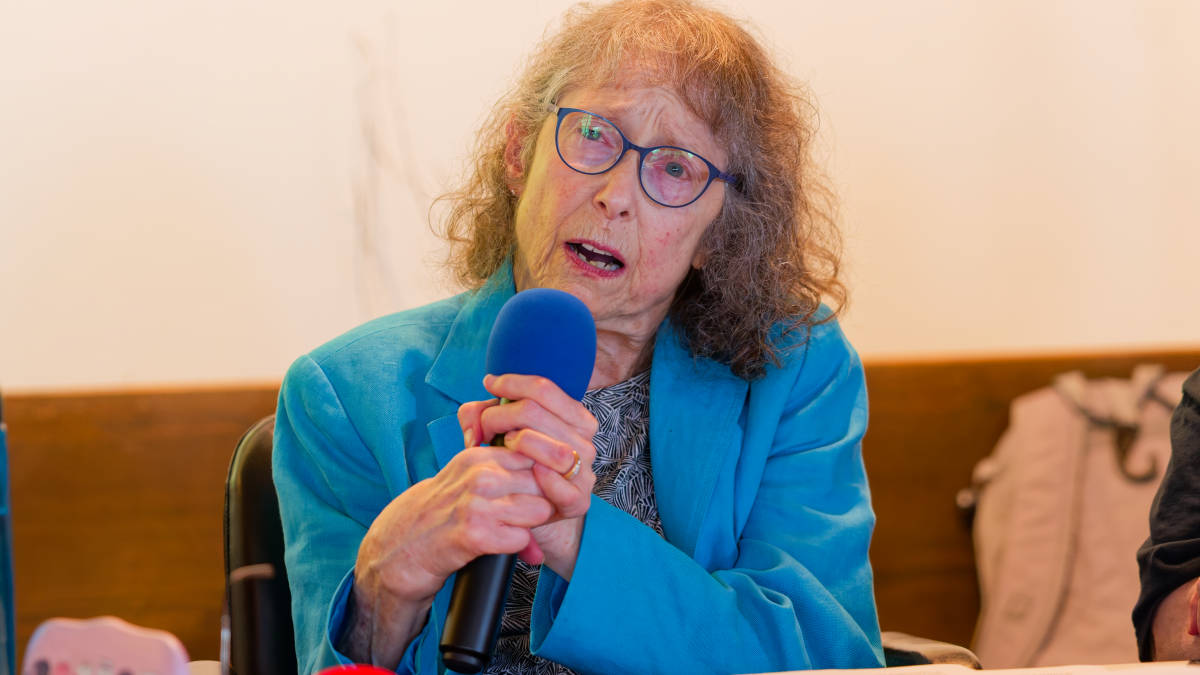
Ruth Lichtwardt was a director of one of the nation’s first student groups for gay and lesbian liberation at the University of Kansas. She told those who wanted to follow in her footsteps to “be naive and think you will win no matter what.”
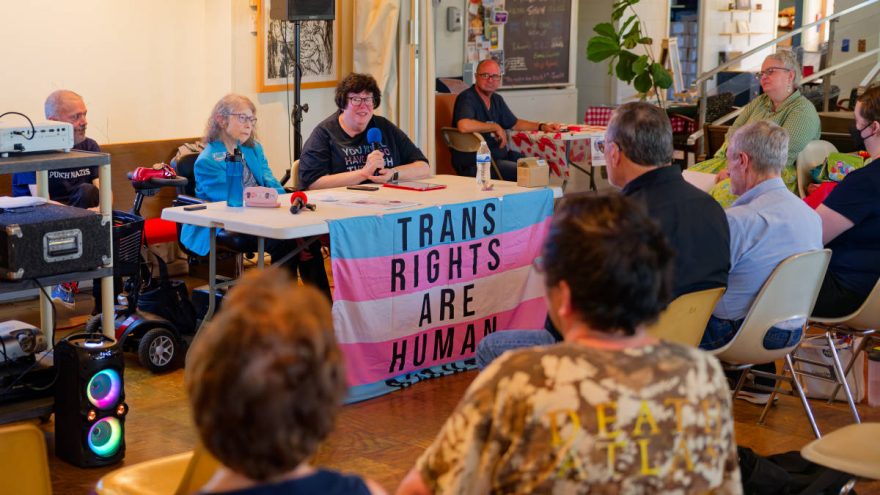
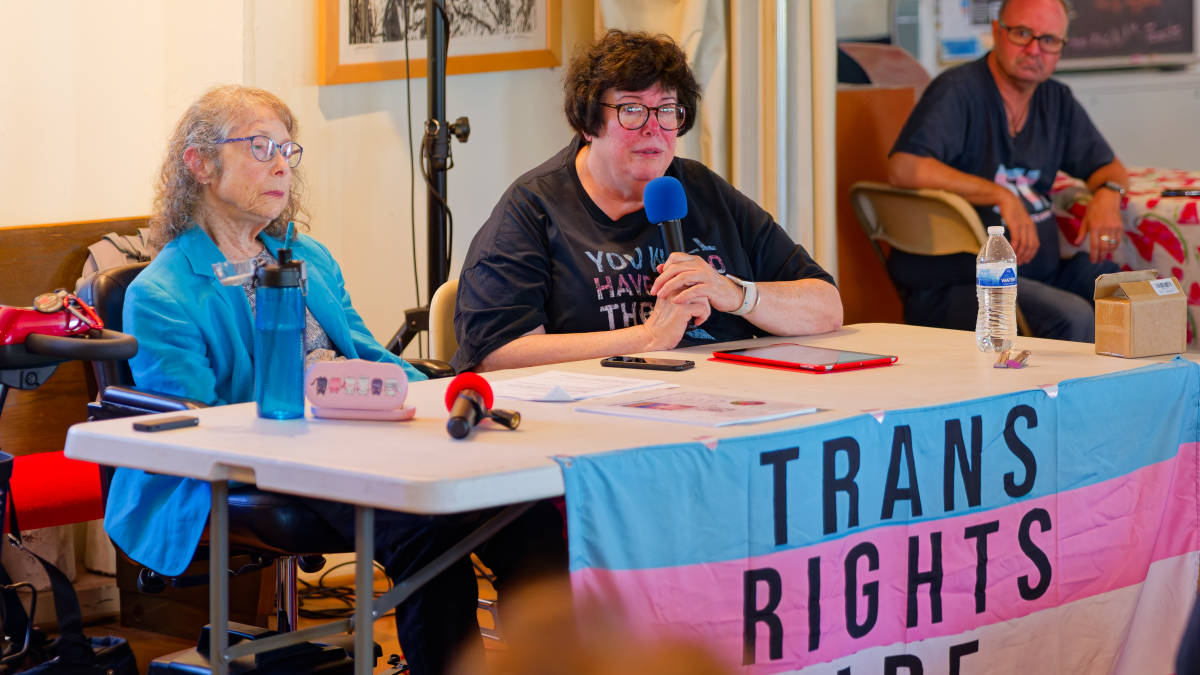
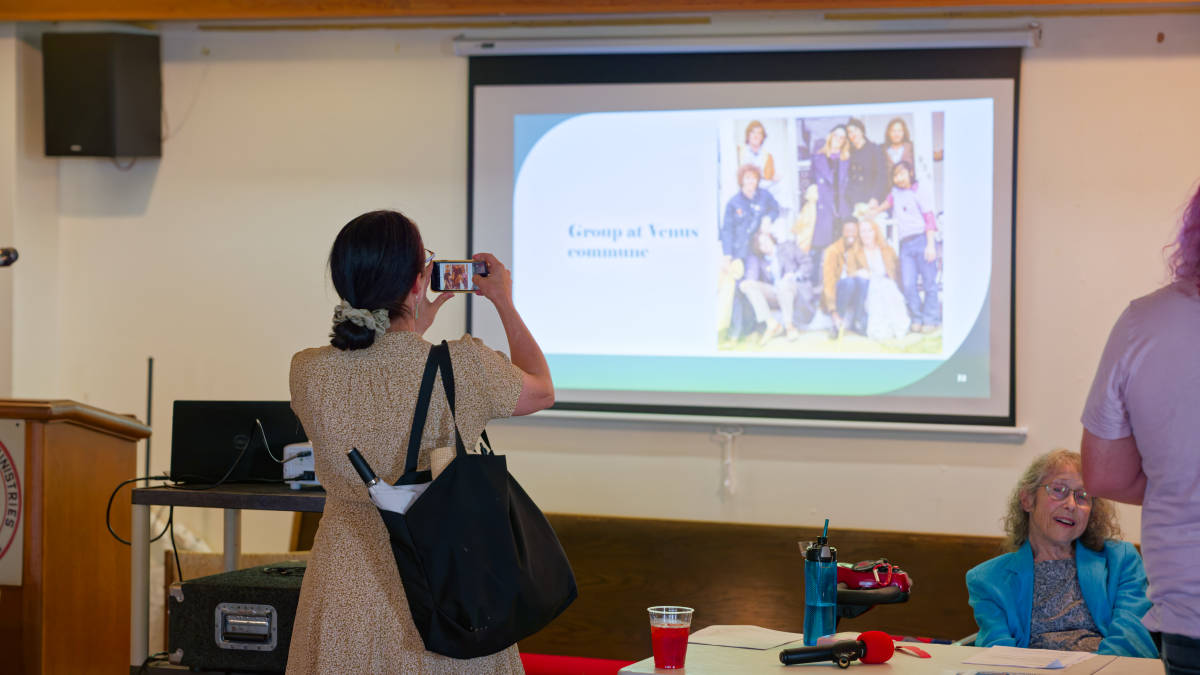
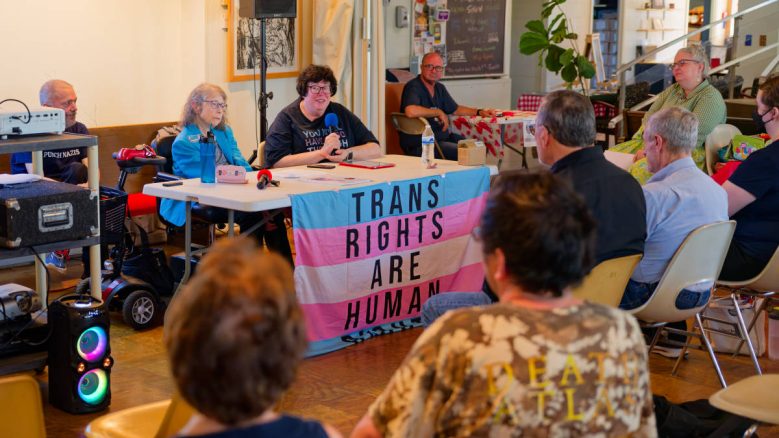
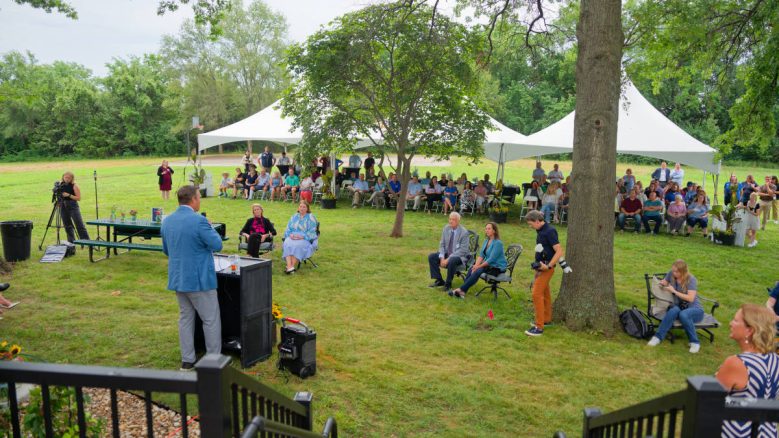
Lichtwardt spoke alongside Kathy Rose-Mockry, author and former director of KU’s Emily Taylor Center for Women and Gender Equity, at an event in July.
The talk was organized by Kevin Elliot of the Trans Liberation Front collective to celebrate Rose-Mockry’s book, “Liberating Lawrence: Gay Activism in the 1970s at the University of Kansas,” and to build solidarity among the local queer and transgender community.
He welcomed attendees to the event, saying, “We’re here for a reason, and we’re here to learn about Lawrence queer history.”
Don’t miss a beat … Click here to sign up for our email newsletters
Click here to learn more about our newsletters first
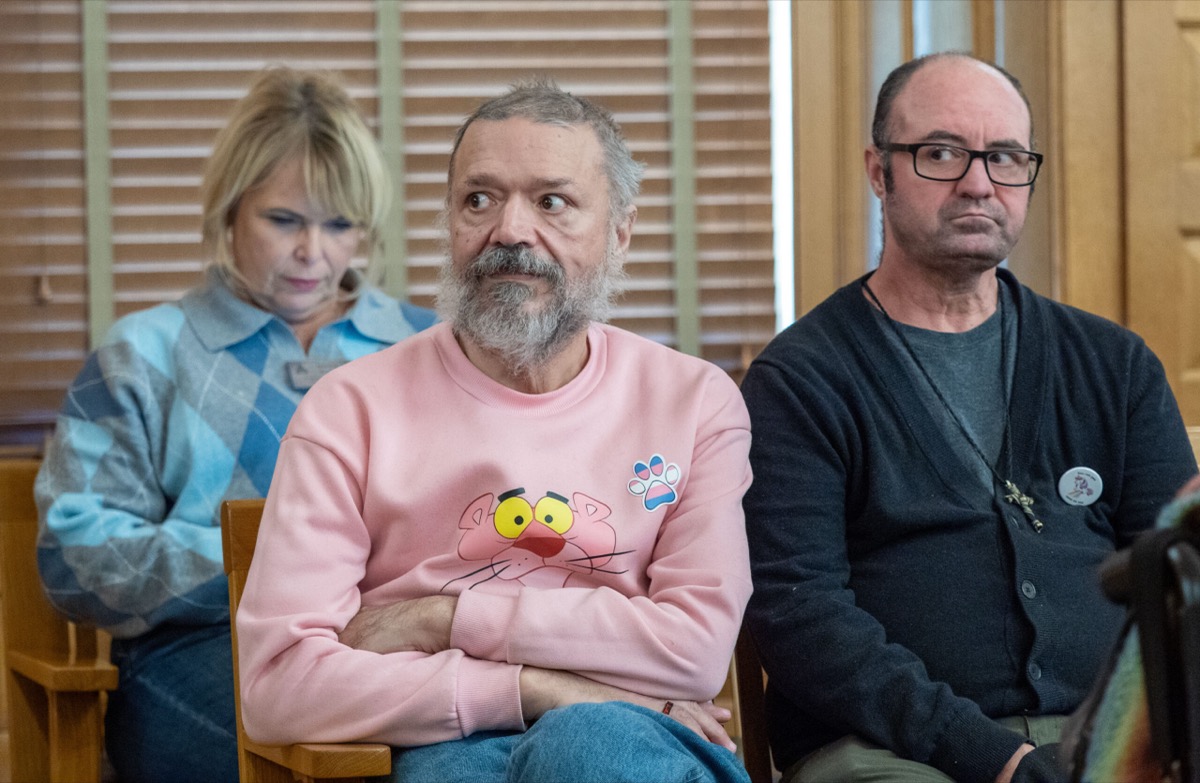
Elliott is a cisgender man living with his husband, Claven Snow, in Lawrence. He and Snow, a trans man, are struggling against the present day effects of the Kansas Legislature’s latest anti-transgender law, SB 244.
In Elliot’s words, Snow’s passport and driver’s license have been “repronouned.” Kansas reverted Snow’s documents under SB 244 to reflect his gender assigned at birth, as opposed to the gender he lives his life as.
Elliott said it’s also been increasingly difficult to get gender-affirming care covered by their insurance.
“We have two young kids who are 10 and 12 right now, and I have court papers determining my paternity for them, but I’m wondering, you know, is that what they’re going to come for next — the confirmation of my paternity and my children?” Snow asked.
Despite the challenges, Elliot said he isn’t cowed.
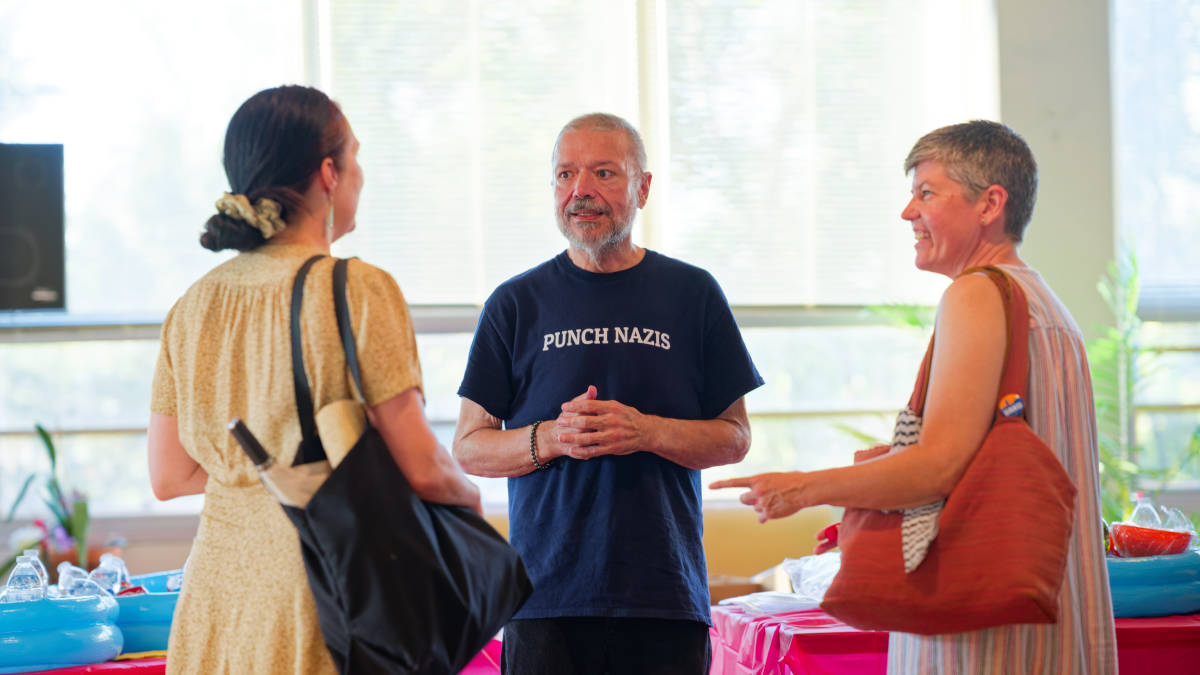
He’s known Lichtwardt since he was a teenager. He remembers protesting the war in Vietnam at KU’s Ecumenical Campus Ministries with his mom, then protesting for queer rights in the ‘80s. He’s spoken out in Lawrence for AIDS activism and for labor rights, against the war in Iraq and against the South Lawrence Trafficway.
“And I feel like I’m starting over again. And I guess they want me to be tired, but I’m not,” Elliott said. “I’m never going to back down because my life, the life of those I love, are too important.”
‘This was so important and so risky’
Lichtwardt was a volunteer and became the director of Gay and Lesbian Services of Kansas at KU in 1983. GLSOK blossomed from the Lawrence Gay Liberation Front, which in turn was born from a headstrong Lawrence High student.
In the late ‘60s, David Stout, a social welfare Ph.D. candidate at KU, did a school project interviewing gay and lesbian people from Topeka to Kansas City to explore resources available to them.
As Rose-Mockry recounted the story from her book, she said that a Lawrence High student came up to Stout and told him he needed to take action with that information.
Stout turned the student down. He was finishing his degree, he said, and didn’t have the time to take on a larger project.
Please support
The Lawrence Times!
Subscribe here.
The next thing he knew, his phone number was plastered on posters around town. The culprit was the Lawrence High student, and the result was the first meeting of what became LGLF in 1970.
“One of the things to fill you in on why this was so important and so risky is during that time, people who are gay and lesbian could be the target of hate crimes, denied housing, arrested, fired,” Rose-Mockry said.
Gay students were quietly expelled, she continued, and they were denied internships, certifications and licenses.
Against that backdrop, LGLF and GLSOK slowly eked out recognition from KU.
Lee Hubbell, who joined the group in ‘71, said that when the university denied them a club room, the owner of the Kansas Union — an entity independent from KU — set them up.
By Lichtwardt’s time, the group had gained stronger footing, but she still faced physical threats and was even the topic of another student’s project in a class on terrorism.
She also was square in the middle of a student senate conflict that caused July event attendees to groan in recognition. The KU body wouldn’t fund GLSOK unless they provided a list of members. More recently, trans Kansas have expressed fear over being put on government lists as they turn in their IDs to the Kansas Department of Revenue.
In a later interview, Lichtwardt said that, beyond KU, the right wing today is using many of the same attacks to isolate trans people as the gay and lesbian community faced in the 1970s and ‘80s. Refrains like “protect the children” or “you don’t want a gay man to be in the same bathroom with you” echo, she said.
“I honestly think that the ultimate goal of the far right is to drive anybody who deviates from what they consider correct … back in the closet,” Lichtwardt said.
Rose-Mockry gathered Lichtwardt and figures from LGLF and GLSOK’s history at KU in 2021 to celebrate “51 Years Out!”
In 2024, since that gathering, KU effectively closed the Emily Taylor Center that Rose-Mockry directed, folding it into the Student Engagement Center alongside the Office of Multicultural Affairs and the Center for Sexuality and Gender Diversity.
KU then stripped gender-inclusive housing assignments and restrooms from an on-campus scholarship hall for undergraduates in 2025. Under direction from the Kansas Board of Regents, the university administration banned employees from putting their pronouns in their email signatures the same year.
Recently, they also began enforcing SB 244.
Lichtwardt said the chancellor walked a tightrope between acknowledging LGLF/GLSOK and maintaining the university’s state funding in the ‘80s.
“The chancellor had to be very, very careful about what he did, and I actually appreciated that at the time, although I didn’t want him to be,” she said.
KU’s position, in her eyes, has only gotten stickier.
“KU’s in that situation again, only it’s not just the state legislature, which is also obviously very conservative, but the federal government is coming after any whiff of equality,” Lichtwardt said.
Snow and Elliot said they felt KU was failing to balance bureaucracy with the needs of queer and trans staff and students.
“I think that any agency that’s dependent on federal and state money right now is under tremendous pressure, and unfortunately, they’re not courageous enough to do what’s right, and so they’re complicit,” Elliott said. “And when this is over, they’re going to be embarrassed and ashamed.”
A well-trod path
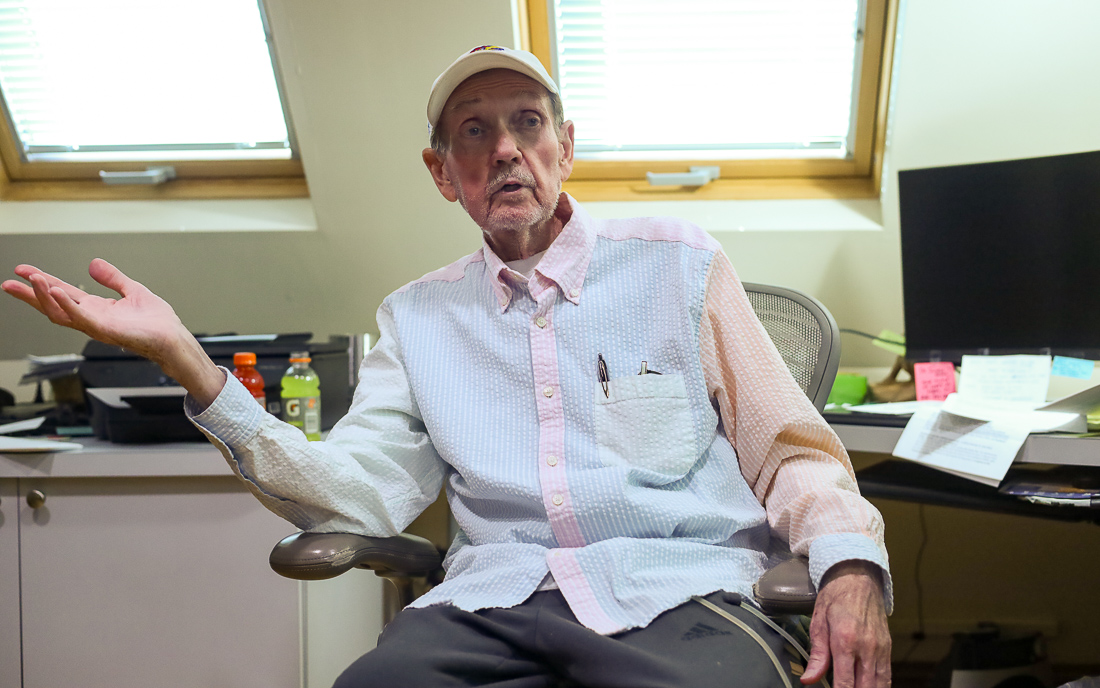
Hubbell, now in his 80s, has lived in the same Lawrence home with his husband for decades. He hoped to attend the July meeting to impart some reflections from his own life, but his health kept him away.
“But the message I wanted to convey and discuss with our trans buddies and sisters: they are starting on a similar way. They’re going to experience all of those things,” he said, referring to experiences in his decadeslong struggle for liberation. “You have to have guts. You have to have patience. And it’s going to happen one day at a time.”
Hubbell described a four-step arc to liberation LGLF worked through, which ultimately extended beyond his time at KU.
First, he said, LGLF needed to establish that gay people exist and are as human as anyone else. To that end, he said the group created a speakers bureau and sent folks all over, including to a KU fraternity.
The second step, he said, is tolerance.
“It’s like, OK, well, I still don’t like you, but if you’re not bothering me, then it’s kind of OK,” Hubbell said. “… That’s what I call tolerance.”
Acceptance follows, which is capped off with equality. For Hubbell, equality was the ability to marry his husband. Gay marriage was legalized in the United States in June 2015.
“We were committed to each other long before we sit and expressed the marriage vows,” Hubbell said of his husband.
They’d already been together for richer and for poorer, through sickness and in health.
“Now, not everybody has experienced that equality,” Hubbell said. “It’s not totally accepted by everyone, and we may have that rescinded. But at least … some of us have been able to do that.”
Both Hubbell and Lichtwardt underlined the importance of queer visibility, but acknowledged the inherent safety risks for the people behind the movements.
“It is very dangerous to do so for a lot of (trans) people, but it’s very much like it was to be gay or lesbian in the ’50s,” Lichtwardt said. “I mean, you had absolutely no protections, and while there are theoretically human rights protections now for trans people that didn’t exist, if you have a government that’s actively trying to strip them away, then the situation is very similar.“
Lichtwardt said she places hope in younger generations.
“A lot of people I know who are younger are identifying as nonbinary or queer, and it’s not the traditional definition strictly of gay or lesbian. It’s much more flexible,” she said. “And I think younger people are coming out in greater numbers in their varieties, and so there is a lot more acceptance.”
Trans Liberation Front
An attendee at the July event asked for recommendations to take action the way members of LGLF and GLSOK did.
Rose-Mockry recommended “finding the places in the community that are doing the work that you’re passionate about.”
Elliot, Snow and the other members of TLF are doing just that with their mutual aid organization.
Trans Liberation Front’s name is a nod to the roots that the Lawrence Gay Liberation Front established. The group and the name are newly minted, as they’ve grown out of and separated from a different trans group, bearing a fresh set of aims and ideals.
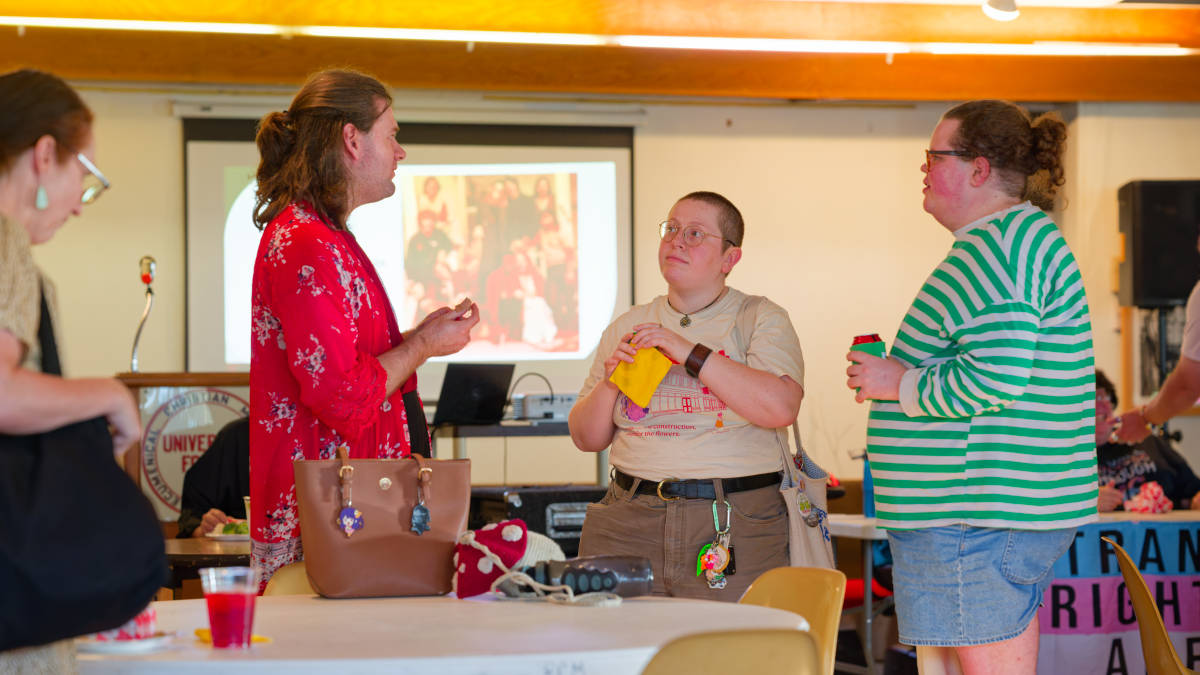
Elliott said TLF offers members safe rides home, money to pay rent and groceries, and self-defense. They align themselves with labor organizers, Free Palestine and Food Not Bombs, and they host skillshare events on topics from mending and sewing to basic car maintenance. Elliott said they frequently discuss how to access healthcare and respond to ever-shifting laws that define their lives.
He said that in the ‘80s, he saw people forced to choose sides between their various racial, sexual and gender identities. For example, some lesbian women separated from LGLF because they saw their aims as more aligned with the feminist movement.
Elliott acknowledged the need for people of different genders, racial and ethnic groups to have spaces dedicated to their identities.
“But the issue is that we need to remember that we’re all still the targets of the same people, and we need to weave our fabrics together,” he said.
In his view, all queer groups in town, “whether or not we share complete common goals, are allied sibling organizations.”
TLF welcomes trans, nonbinary and queer people, as well as allies, and people can join through an interview process. Folks can contact the group through their Instagram, via email at [email protected], or schedule a one-on-one through their contact page.
Rose-Mockry’s book includes interviews with Hubbell and Lichtwardt and offers a more complete history of LGLF and associated movements. It is available for checkout at the Lawrence Public Library and for purchase at the Raven Book Store.
If local news matters to you, please help us keep doing this work.
Don’t miss a beat — get the latest news from the Times delivered to your inbox:
Click here to learn more about our newsletters first

Wulfe Wulfemeyer (they/them), reporter and news editor, has worked with The Lawrence Times since May 2025. They can be reached at [email protected].
Read their complete bio here. Read their work for the Times here.

Nathan Kramer (he/him), a multimedia student journalist for The Lawrence Times since August 2024, is a recent graduate of Free State High School. He also served as a news photo editor for Free State’s student publication, where he worked as a videographer, photographer and motion designer. See more of his work for the Times here.
More coverage:
 Nathan Kramer / Lawrence Times
‘You have to have guts’: Lawrence gay liberation leaders connect their history to transgender rights

 Molly Adams / Lawrence Times
Latest Lawrence news:
Nathan Kramer / Lawrence Times‘You have to have guts’: Lawrence gay liberation leaders connect their history to transgender rights

 Connor Sutton/Contributed photo
 Nathan Kramer / Lawrence Times