
Public and nonprofit health agencies in Douglas County will host quarterly meetings to push for better policy, data collection and patient care to improve birth outcomes in the community.
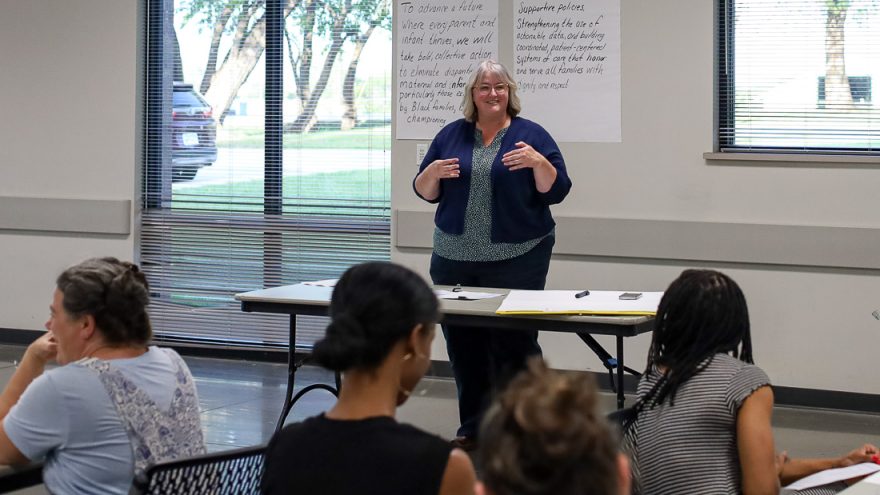
Vicki Collie-Akers, associate professor at the University of Kansas Medical Center and director of policy and planning with the health department, said at a gathering Thursday that a large motivation for the meetings is to eliminate stark racial disparities in birth outcomes.
In April, Black mothers shared their testimonies and researchers with Lawrence-Douglas County Public Health presented data demonstrating the discrepancies across infant mortality, birth weight and more for Black families.
Collie-Akers said they’ve seen the gap only widen in the past three years.
Don’t miss a beat … Click here to sign up for our email newsletters
Click here to learn more about our newsletters first
“It’s not a three-year answer that we can eliminate those disparities, but we really have to make progress and keep the ball rolling so that in 10 years, maybe we do see narrowing of those gaps, and in 20 years, this isn’t even a conversation anymore,” she said.
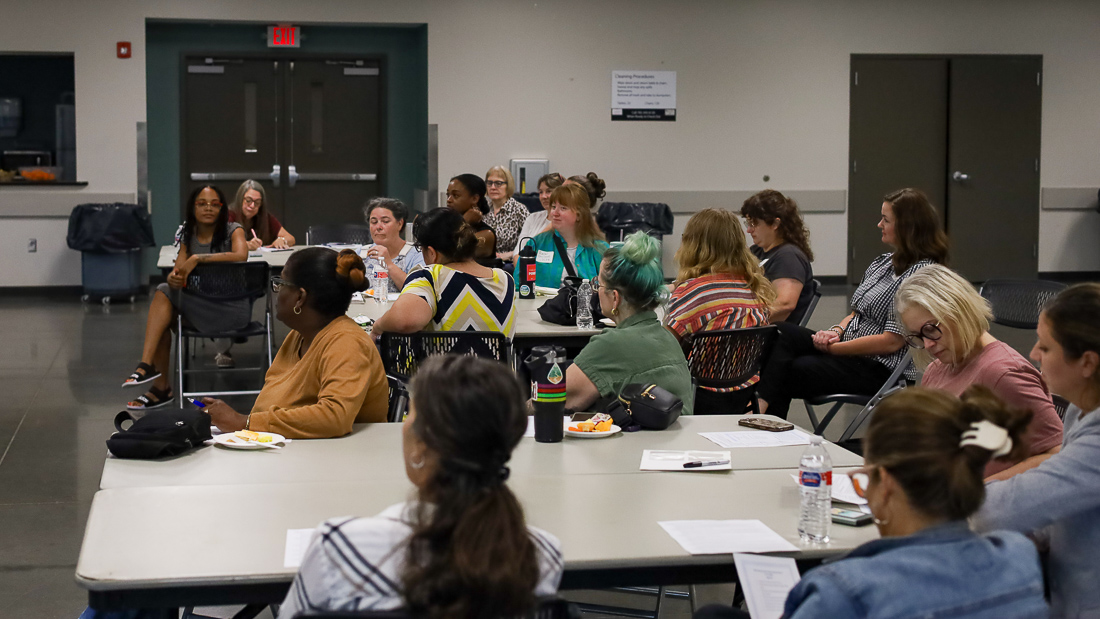
The quarterly meetings will be co-hosted by groups like the health department, LMH Health, the Early Childhood Collective and LiveWell to slot into the county’s Community Health Improvement Plan for 2024 to 2029.
Please support
The Lawrence Times!
Subscribe here.
One of that plan’s primary goals is to “Improve the health of mothers, families, parents and infants by reducing racial and ethnic differences in birth outcomes.”
Attendees started brainstorming aims for the next few years of meetings Thursday night.
Collie-Akers said that in April, folks discussed increasing paid family leave when a person has a baby or needs to take time off for a medical appointment. She also brought up access to a living wage, safe and affordable housing, and payment policies for doulas.
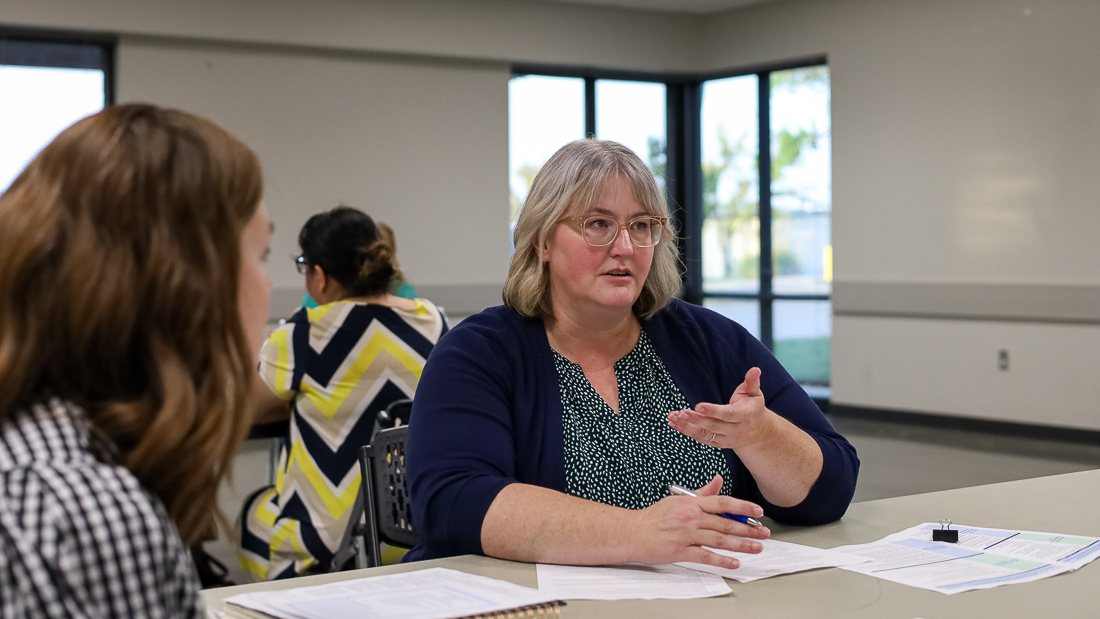
“So, are doulas compensated adequately? Are they part of an integrated health system where policies support their presence in healthcare provider settings?” she said.
Madison Dockter runs the Full Circle Youth Program with the Lawrence-Douglas County Housing Authority. She said they often see young moms, many with several children.
“We often see women that wait quite a while to tell anyone that they’re pregnant, including getting care, because they just expect judgment because they’re young or they’re low-income,” Dockter said. “… That’s something that we’re trying to combat.”
Traci Dotson said pregnant people sometimes won’t tell their employers so they don’t start losing shifts and income. Dotson is the executive director of the Early Childhood Collective, as well as a social worker and doula.

The group also discussed partnering with the Lawrence school district.
Dockter didn’t specify where she went to school. However, she said she had her first baby during spring break her senior year of high school, and only got that one week off.
“They were more willing to send homework home if you had the flu than if you were home with a baby,” she said. “… Most kids in that position are going to end up dropping out of school and not finishing.”
Dockter also recommended that new parents apply for a three-month hardship rent reduction.
“For a lot of women, having a baby is a loss of income,” she said.
In addition to an income hardship, birth also counts as a medical hardship, Dockter said. Applicants need to already receive housing assistance, be that public housing or a voucher.

Dotson, reflecting on the group’s burgeoning mission statement, said she appreciated the emphasis on Black families, but was also alarmed by disparities the Hispanic/Latino community faces. For example, she highlighted language barriers.
“How much scarier that is — like I’m getting ready to push a baby out, and I don’t even … know what the people around me are talking about,” she said.
People also reflected on stringent immigration policy affecting healthy births by forcing Hispanic and Latino people to “go underground” and avoid services.
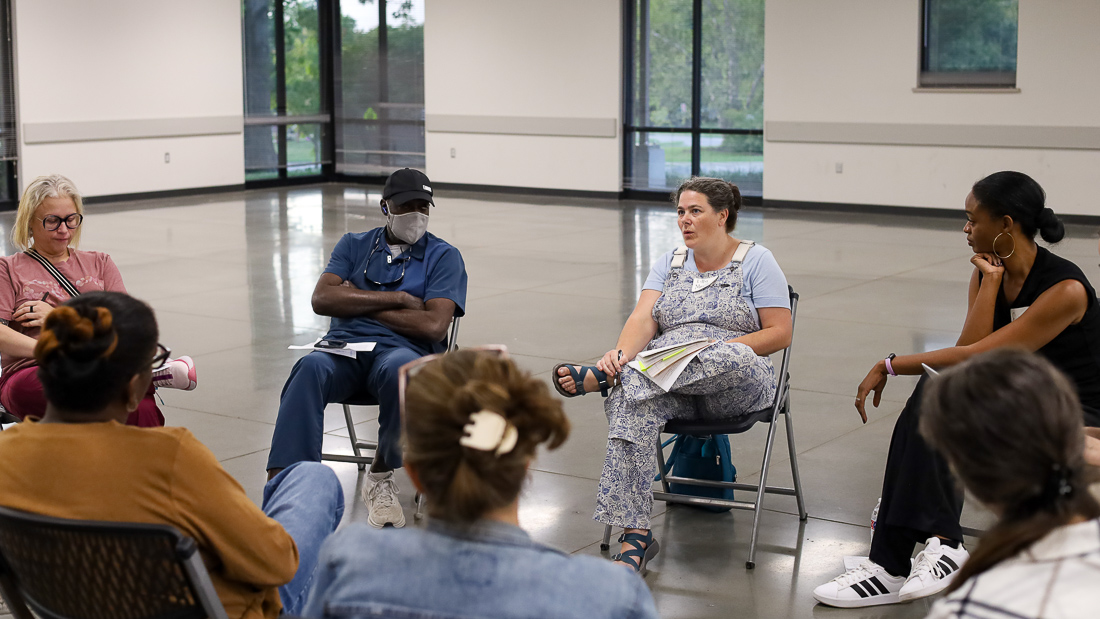
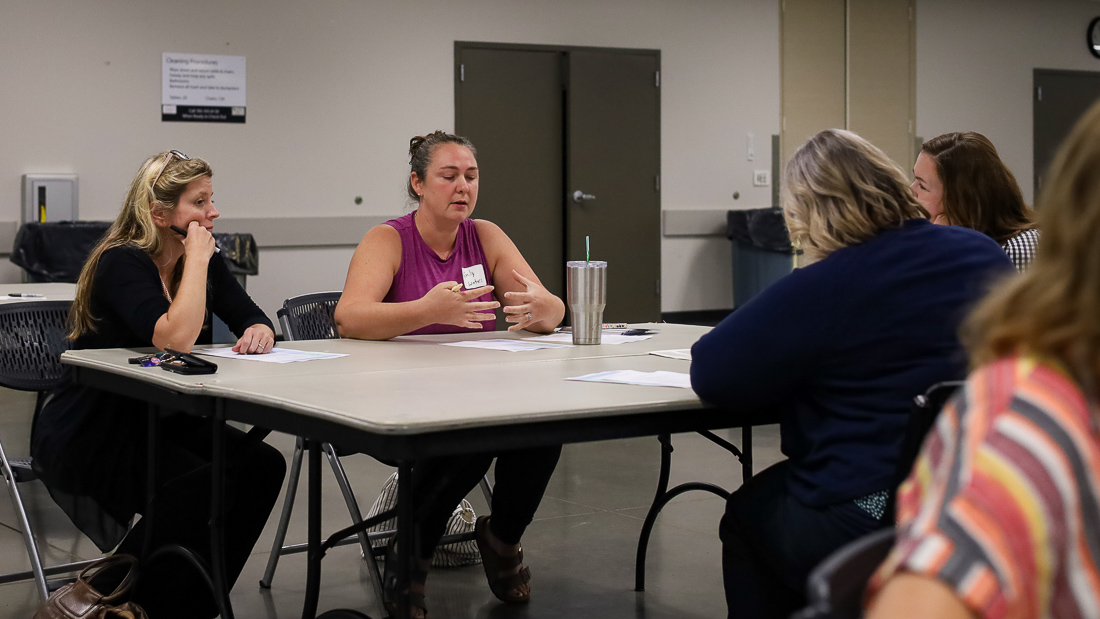
Breakout groups dove deeper into how to create a strong continuum of care between doctors and hospitals; why doulas aren’t often covered by private insurance; and how to close access gaps on a local level, from prenatal to postpartum care.
Members of the public, clinicians and birthing industry advocates can get involved in future conversations by emailing [email protected].
If local news matters to you, please help us keep doing this work.
Don’t miss a beat — get the latest news from the Times delivered to your inbox:
Click here to learn more about our newsletters first

Wulfe Wulfemeyer (they/them), reporter and news editor, has worked with The Lawrence Times since May 2025. They can be reached at [email protected].
Read their complete bio here. Read their work for the Times here.
Latest Lawrence news:
 Wulfe Wulfemeyer/Lawrence Times
 Cuyler Dunn/Lawrence Times