

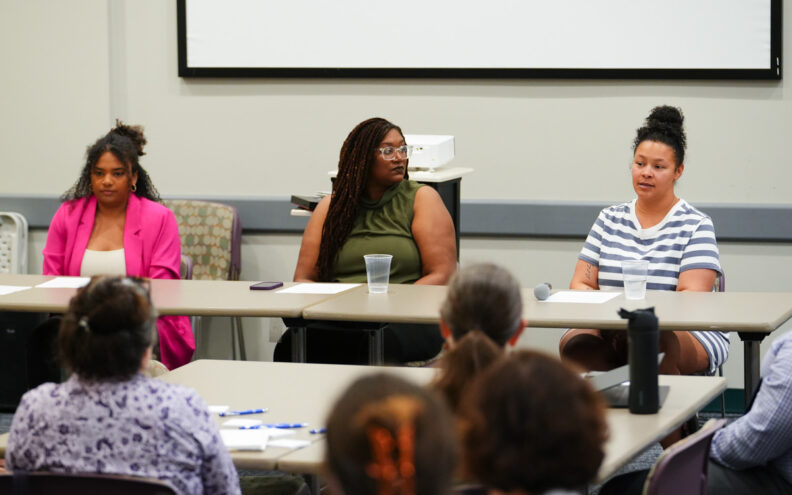
Black mothers at a health department forum attested to traumas they experienced around births, underlining the need for medical professionals to listen and take accountability.
Alongside the testimonies, specialists from Lawrence-Douglas County Public Health presented data on county birth outcomes that shows the area sees higher rates of death for Black non-Hispanic infants than babies of other races.
Although the number of affected babies is relatively small, each number matters, presenters said.
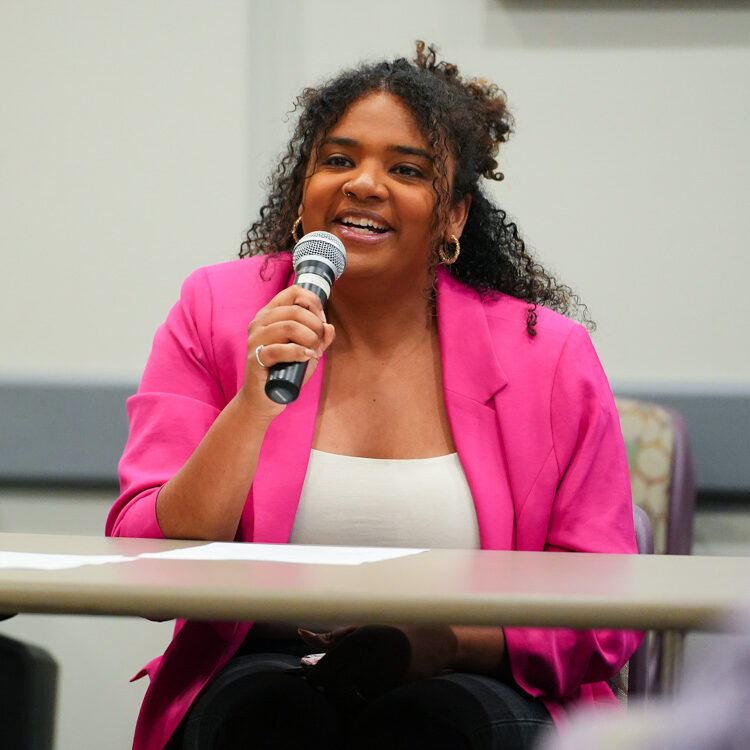
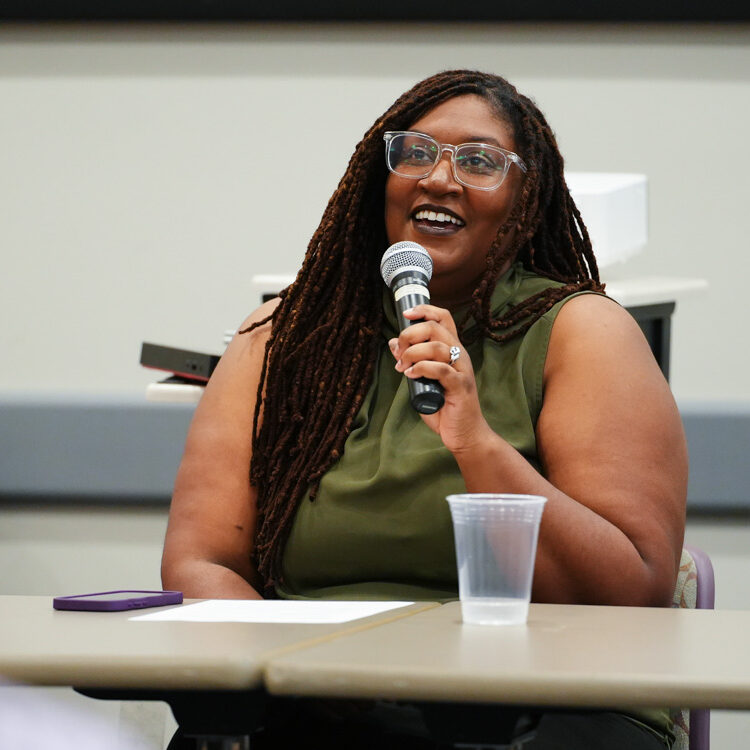
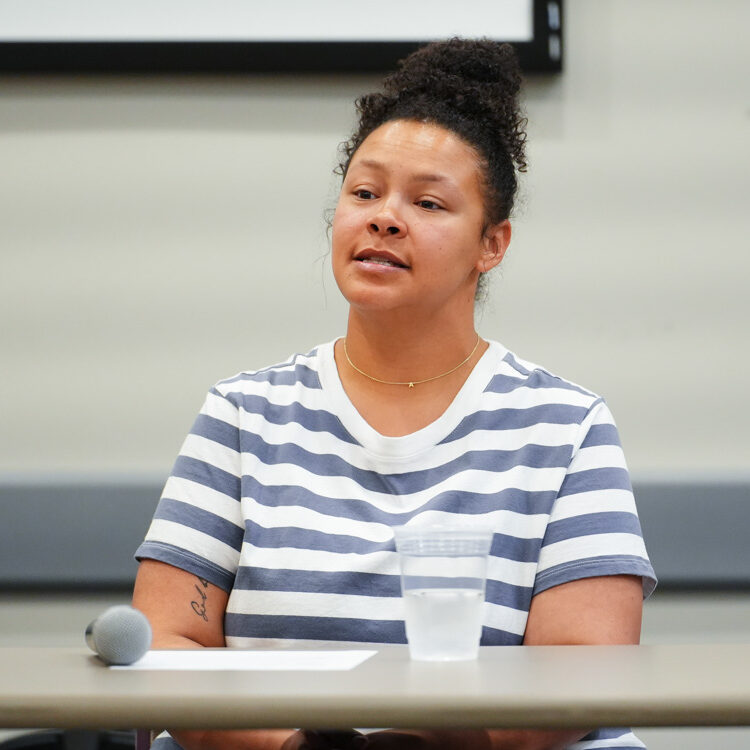
Three Black mothers participating in a panel all spoke about the importance of doctors listening to Black women and giving them the proper care they need.
Don’t miss a beat … Click here to sign up for our email newsletters
Click here to learn more about our newsletters first
Robyn Wagner is a mother to a 20-month-old. She shared her experience of giving birth with an unfamiliar doctor who didn’t tell her that she had suffered an injury in the process.
Wagner had returned to her original doctor to seek answers and comfort. Wagner’s original medical care team sat with her and held her as she cried, she said.
“The way she advocated for me in that moment, she took it a step farther … I never like to get people in trouble, but this is something that needed to be shared,” Wagner said. “She took the step and the advocacy and the initiative to do that for me, and I’ll just never forget the moment of sitting in that room surrounded by people.”
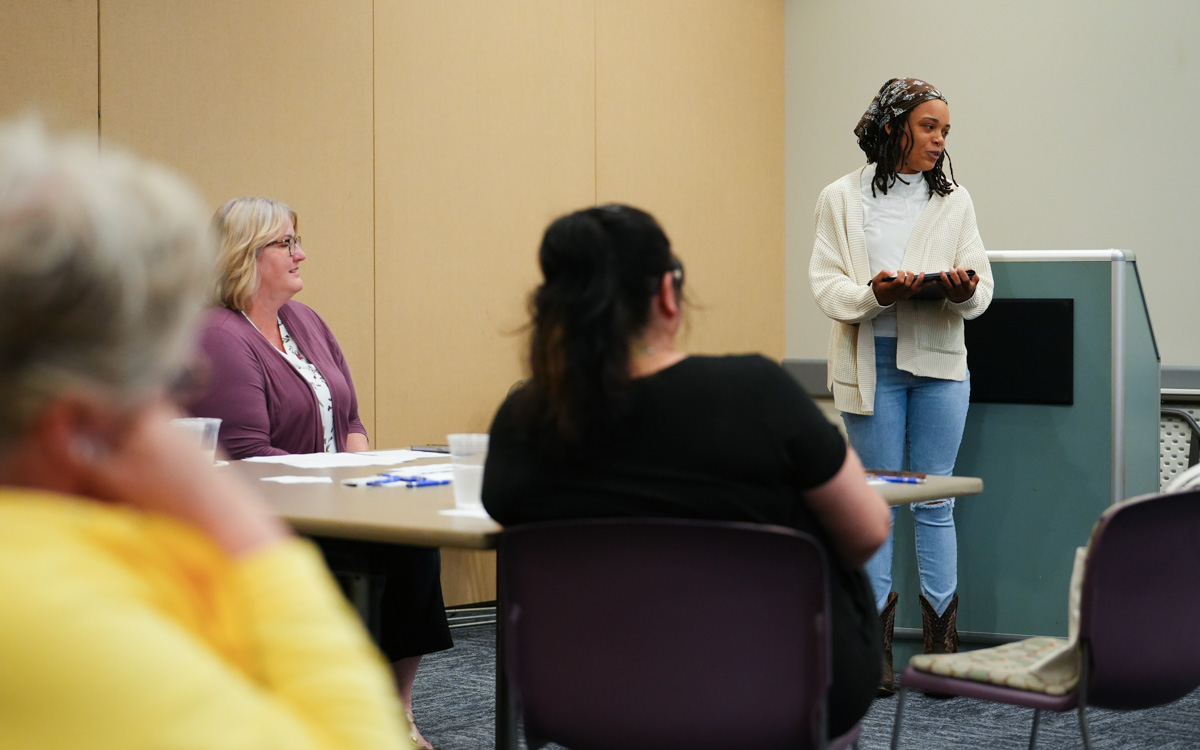
Clare Nderagakura of Clare’s Community Closet shared an experience with a lactation consultant after the birth of her second child. Nderagakura described an interaction where the consultant refused to listen to her after turning down services.
“She decided to come in anyway,” Nderagakura said. “She was very loud. Disruptive. She made me feel as if I didn’t know what I was doing at the time.”
She said her doctor and one of her nurses showed accountability by providing the necessary forms, encouraging her to report the incident to patient advocates.
Kiesha Mumford, a doula for Doulas of Douglas County, said she had been unfamiliar with the medical practices in the birth of her first child. Three years later, she began studying to become a doula and discovered she had underlying trauma from her first birth.
For her second child, Mumford decided to switch to a doctor in Overland Park, where she said doctors and nurses respected her decisions about delivery methods.
She said medical professionals can take accountability by acknowledging when they’ve made a mistake and listening to Black mothers.
“Something as simple as, ‘I see you, I hear you. What can I do?’ That’s really all I think that needs to be said,” Mumford said.
Data disparities
Vicki Collie-Akers, associate professor at the University of Kansas Medical Center and director of policy and planning at Lawrence-Douglas County Public Health, led a presentation on Douglas County birth outcomes.
Please support local news and information from The Lawrence Times.
Subscribe here.
“Infant mortality — the death of an infant before 1 year of age — is one of the basic indicators of health of a community,” Collie-Akers said.
The presentation, also prepared by LDCPH Informatics Manager Dee Kinard, highlighted the disparities in low birthweights, preterm births and rate of mortality in Black non-Hispanic infants in comparison to white, Asian, Hispanic and Native American infants.
Collie-Akers said that the outcomes of these births by Black individuals does not mean people of the Black racial identity are the cause of the outcomes.
Douglas County data from 2020-2024 showed a rate of 4 infant deaths per 1,000 live births, per the presentation. That’s better than the national Healthy People 2030 target of 5 or fewer infant deaths per 1,000 live births.
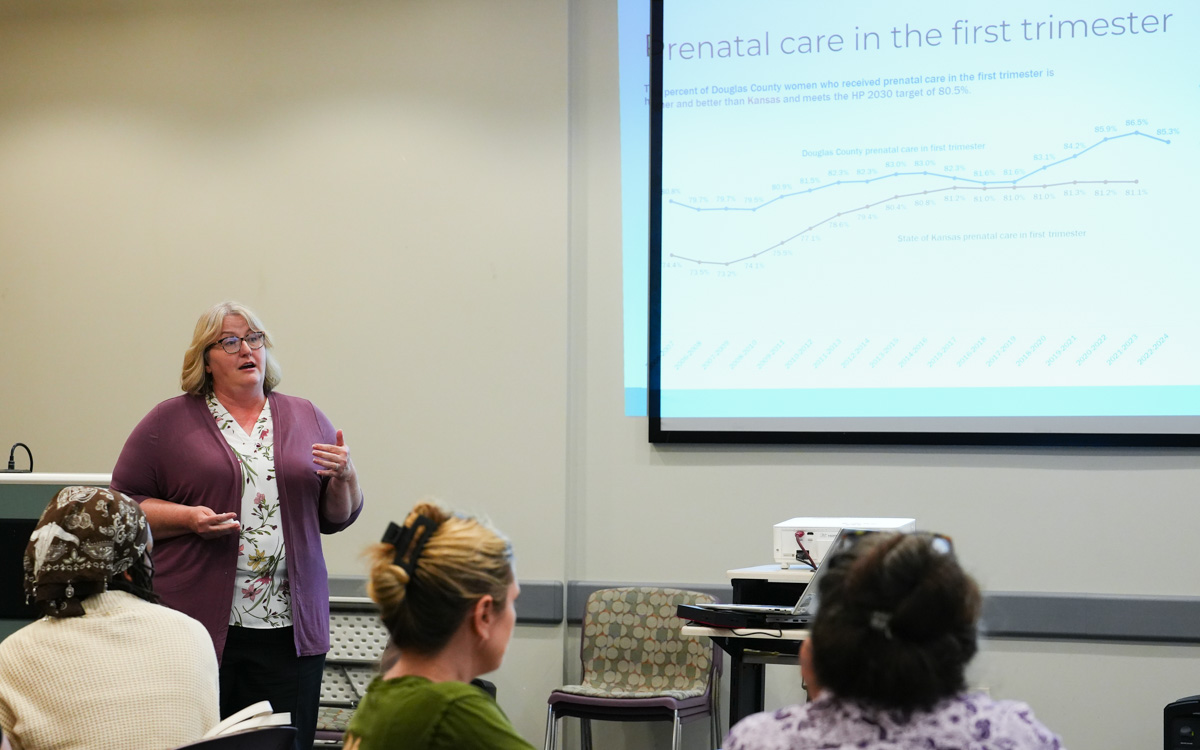
However, when data analysts broke the numbers down by race, they found that Black, non-Hispanic infant mortality in the county is 3 times that of white infant mortality and 7 times that of Hispanic infants from 2020-2024 data.
Black families in the county also experience higher rates of preterm births than people from other races. Collie-Akers defined preterm births as those occurring less than 37 weeks into gestation.
From 2022-2024, 12.2% of Black non-Hispanic infants were born preterm, compared to 9.4% for white infants, 7.9% of Hispanic infants, 8.5% for both Asian and Native infants, according to the presentation.
Low birth weight, defined as less than 2,500 grams (5.5 pounds), affected a rate of 16% of Black infants, which is more than double the 7.2% of affected white infants from 2022-2024. 6.9% of Asian infants, 5.6% of Hispanic infants and 1.3% of Native infants also had low birth weight in those years, according to the presentation.
“Data about maternal morbidity is a lot harder to come by,” Collie-Akers said.
She said the health department and LMH aim to compile that data and make it public by the end of the year.
Collie-Akers said she hopes the data leads to change.
“What I would hope is that we look back and we say this was a moment that we stepped … toward a goal and a vision for every baby making it to their first year, every mom feeling good about their birthing experience,” Collie-Akers said.
‘There’s a clear change’
Following the panel, attendees joined with mediators to discuss potential solutions and think about goals for the next six months, one year and five years.
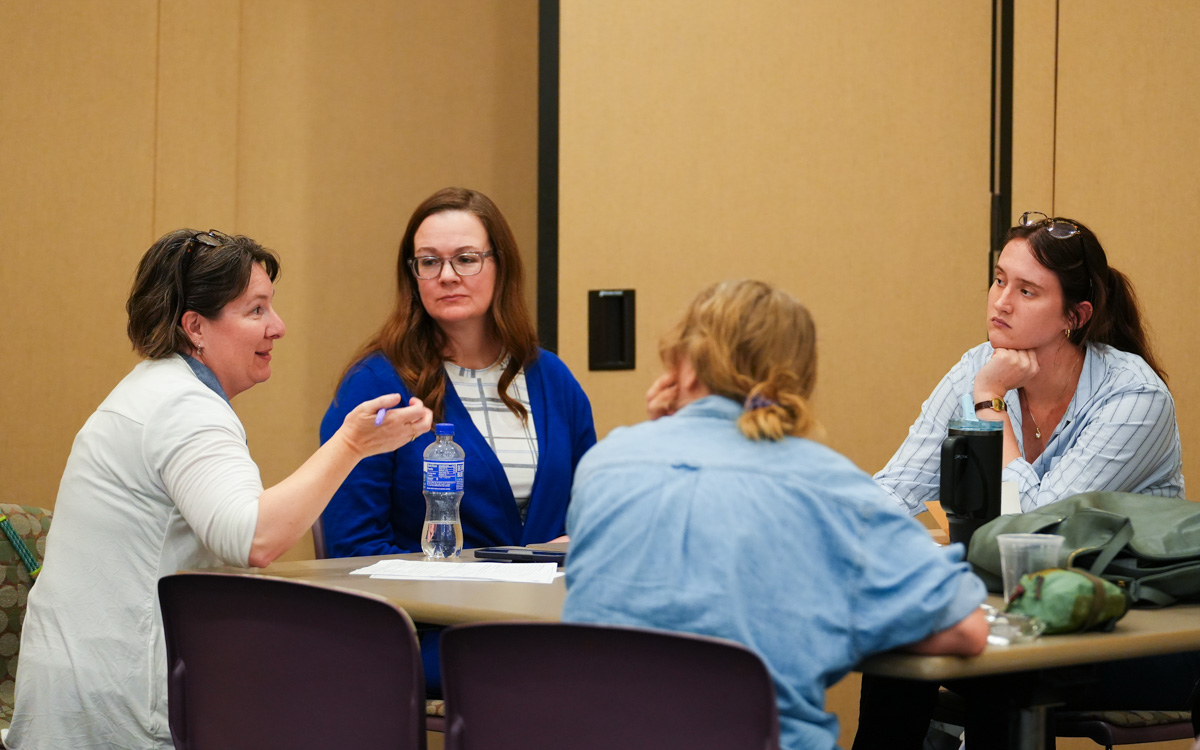

Common themes included increasing financial support for mothers, increasing mother-focused community support and ensuring training on racial disparities is updated in medical education.
Ginny Barnard, LiveWell Douglas County executive director and Safe Kids coordinator, acted as a moderator for one of the group discussions. She spoke about her work with Douglas County Thrives, a project that aims to improve the financial stability of single female-headed households.
Collie-Akers said she has a deeply held belief that change needs to be made and that the community will have failed if the same data points and graphs are presented in five years.
“I’ve had a couple ER visits in the last couple of years, and … there’s a clear change in how people are listening,” Nderagakura said. “And it’s like they are listening with their whole bodies to what we’re saying, especially as Black women. … That’s exactly what you should be doing.”
If local news matters to you, please help us keep doing this work.
Don’t miss a beat — get the latest news from the Times delivered to your inbox:
Click here to learn more about our newsletters first

Jacob Rice (he/him), photo correspondent, has worked with The Lawrence Times since March 2026. He studied journalism and mass communications at Iowa State University, where he spent four years as the visuals editor for the Iowa State Daily.
Check out his photography for the Times here. Read his articles for the Times at this link.
Latest Lawrence news:
 Molly Adams / Lawrence Times