
As state funding lags, some Lawrence school board members have suggested legal action may be the best way to force the Kansas Legislature to adequately fund special education.
Kansas law requires the state reimburse 92% of the excess costs associated with special education services, something the state has not done since 2010-11.
Earlier this fall, four Johnson County school districts — Blue Valley, De Soto, Olathe and Shawnee Mission — hired a law firm to represent them in possible legal action against the state to address repeated underfunding for special education.
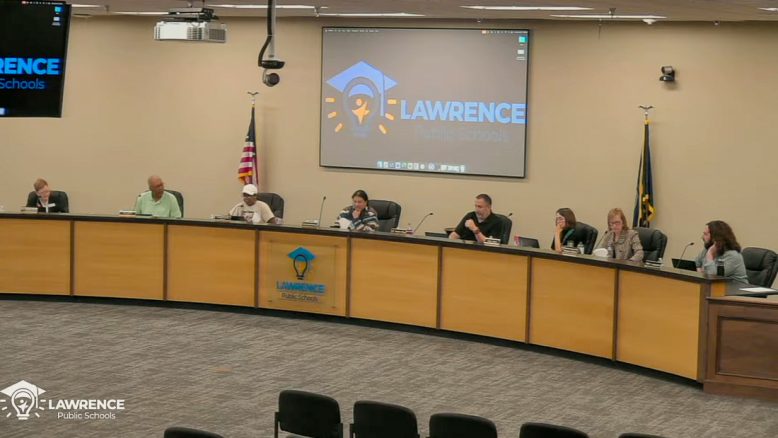
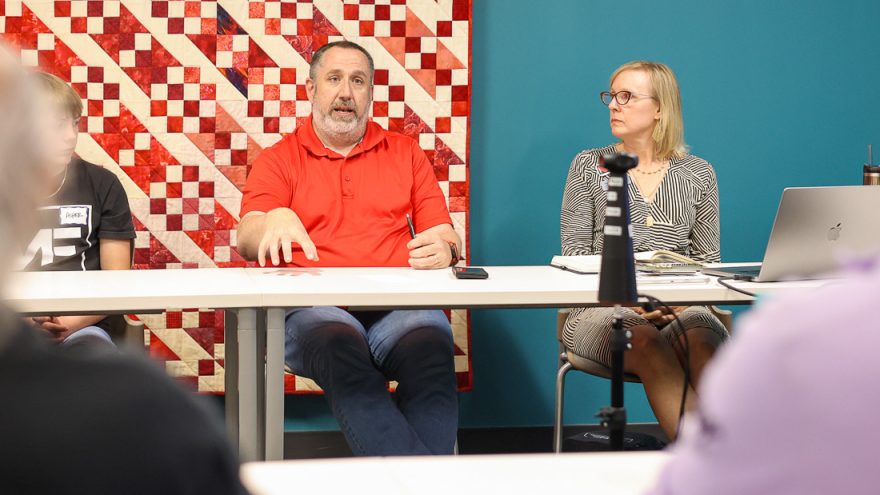
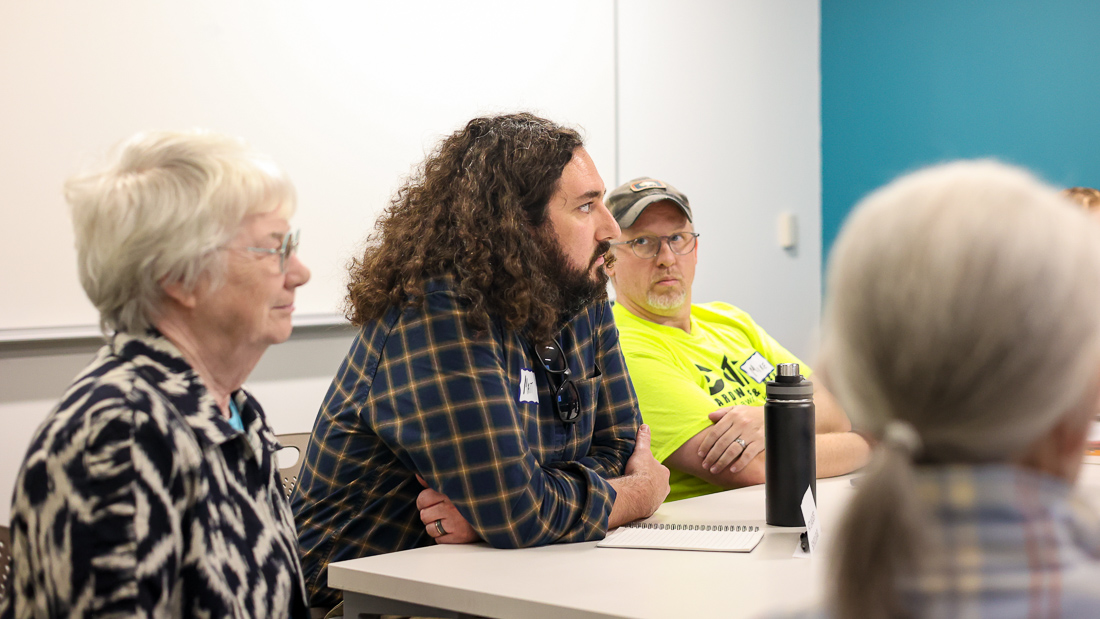
Some Lawrence school board members at a meeting with a local advocacy group, the Coalition for Collaborative Governance, said they may be interested in joining legal action if that becomes an option in the future.
Don’t miss a beat … Click here to sign up for our email newsletters
Click here to learn more about our newsletters first
“There are several of us that are interested in following that, wanting to join those conversations,” board member Matt Lancaster said.
Please support
The Lawrence Times!
Subscribe here.
School board member GR Gordon-Ross said the four Johnson County districts have not yet publicly shared a way for other districts to join them in their lawsuit, but have expressed that they intend to eventually make that an option.
Gordon-Ross said one reason it has taken a long time for school districts to pursue legal action regarding special education funding is due to what happened the last time school districts banded together to sue the state over school funding.
In that case, Gannon v. State, the districts won, forcing the Legislature to increase school funding to match constitutional requirements. But the case took more than a decade to fully resolve.
“Everybody still has PTSD of if we pull this trigger, do we really have this fight in us again to go through this?” Gordon-Ross said.
‘We are doing everything we can to fill that gap’
During its 2027 session, the state Legislature will evaluate the public school finance formula. Lawrence school board members have repeatedly decried a lack of funding from the state.
“We are receiving the least percentage of funds to support our special education programs in the history of special education in the United States, between the underfunding at the state level and the underfunding at the federal level,” board member Shannon Kimball said. “And we are doing everything we can to fill that gap and make sure that these students get what they should be getting.”
Funding for the school district is complicated. The district levies a little bit more than 52 mills of property taxes. A mill is $1 in tax for every $1,000 of assessed property value.
But of those 52 mills, many of them are not controlled by the local school board. Twenty mills are required to be sent to the state, which distributes the money according to a school funding formula based on enrollment.
About eight mills each are sent to bond and interest payments and capital projects. A few other mills are assigned to various smaller levies. That leaves 14 mills the district collects as its local option budget, a tool designed to allow local school boards to levy taxes for district-specific priorities.
But Gordon-Ross and Kimball said even that money is bound by lots of state mandates that require funding for various priorities dictated by the state.
“They design the local option budget for school boards to go to their community and say, ‘We would like to ask you for supplemental money for our budget, so we can do extra things within our school district if you are willing to pay for it,’” Gordon-Ross said. “That’s what the purpose of that fund is for. Now, today, 64% of that extra money that we have asked the community to give us, the state is telling us how to spend.”
That has been combined with increased inflation to create budget pressures on local school districts, said Kimball, who also works as a government relations specialist at the Kansas Association of School Boards.
“I agree that we have created a difficult situation,” said Marci Francisco, a state legislator representing Lawrence. “We say that we want to educate our kids, and we keep putting up barriers.”
On Monday, the school board approved designating Josh Douglass with Mickes O’Toole LLC as legal counsel to provide representation in special education “to ensure the District’s interests are well represented.”
Lancaster in a text message said the decision was not related to any specific plans, but rather is a “step towards improving our overall compliance picture, being proactive in identifying issues, and being able to respond effectively and efficiently.”
‘Our mission … will not waver’
The questions about legal action come as the district continues to grapple with an increased demand for special education services and dwindling funding from the state.
Board members heard more details about the district’s special education programs during their meeting Monday. The presentation highlighted challenges revolving around the need to provide more services to more students, but with a continued lack of state funding.
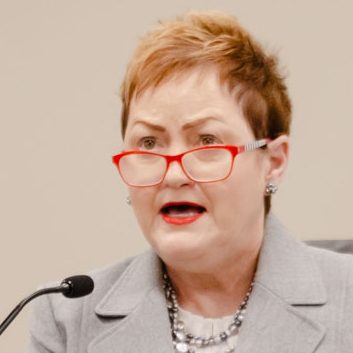
“Our mission to serve students to support their needs and to ensure their highest level of achievement and independence will not waver,” Superintendent Jeanice Swift said. “It is challenged only by reduction in resource, as this board has valiantly led advocacy on.”
The number of students in the district with special needs has increased over the last 10 years, and the district now outpaces the rest of the state in the percentage of students receiving special education services. Last year, that number was nearly 18%.
The district serves nearly 2,400 students in its special education programs, with the majority being students with learning disabilities, speech and language impairment, developmental delays and autism. Gifted students make up 15% of the district’s special education students.
Last year, some district special education staff and parents of students with special needs shared stories of inadequate services and support provided to students.
Jason Kingman, the district’s assistant director of special education, said the district had made some improvements for staff, including increased pay and hiring more staff as district employees instead of contractors.
Lori Stithem, the district’s executive director of special education, said the district’s special education services are anchored by three key goals: access, meaningful progress and independence for all students.
Shelia Smith, a director of special education for the district, said most Lawrence special education students are served in the general education classroom with assistance from special education teachers.
“Our goal is always to include the student with non-disabled peers to the greatest extent that is appropriate for the student,” Smith said.
If local news matters to you, please help us keep doing this work.
Don’t miss a beat — get the latest news from the Times delivered to your inbox:
Click here to learn more about our newsletters first

Cuyler Dunn (he/him), staff reporter, has worked with The Lawrence Times since April 2022. He can be reached at [email protected].
Read his complete bio at this link. Read more of his work for the Times at this link.
Latest Lawrence news:
 Cuyler Dunn/Lawrence Times
Lawrence school board members float legal options to push for more special education funding
 Debi Taylor/Contributed photo
 Nathan Kramer / Lawrence Times