

A new exhibition at the Haskell Cultural Center and Museum builds on the Indigenous Renaissance by asking Native poets to redefine and recontextualize a white artist’s depiction of Native people at the turn of the 20th century.
“Is this how you see me?” is on display through Monday, May 31 at the museum, 2411 Barker Ave. The center is open from 10 a.m. to 4 p.m. Mondays through Fridays.
The show analyzes work from white painter Charles Marion Russell, nicknamed “the cowboy artist.”
“He created more than 2,000 paintings of cowboys, Native Americans, and landscapes set in the western United States and Alberta, Canada, in addition to bronze sculptures,” the museum text reads.
Don’t miss a beat … Click here to sign up for our email newsletters
Click here to learn more about our newsletters first
Alongside lithographs of Russell’s paintings, the wall is stamped with the shape of ekphrastic poems from Haskell students, graduates and a past Kansas poet laureate.
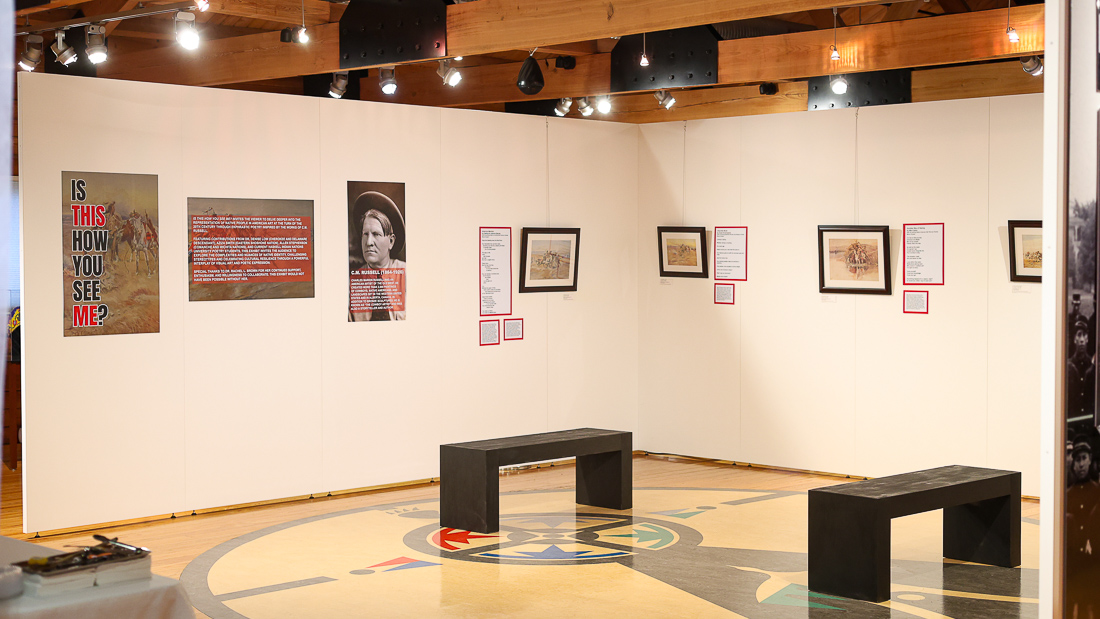
Allen Stephenson, enrolled Comanche Nation and Wichita Nation, said the exhibition underlines the current wave of the Indigenous Renaissance. He graduated in 2018 with a bachelor’s degree in American Indian Studies, sovereignty emphasis, and regularly performs his work around Lawrence.
Please support
The Lawrence Times!
Subscribe here.
Stephenson hopes the exhibition will challenge Native people as they balance histories of assimilation with revival and renewal.
“The American Indigenous intellect is always going to have to reconcile with this American individual alter ego,” he said.
Stephenson’s piece, “Intrepid,” takes on Russell’s painting, “Indian Family with Travois.”
It leads with this line: “Wayward travelers, lost in a white man’s dream.”

Stephenson said the poem both lends credence to Russell’s work, while understanding and rectifying its depictions of Native people.
“I try to think about this man’s life and what he was going through, what the times were back then, and if he truly understood this, or was this just romanticization?” he asked. “Was this even fetishization? I don’t know. I’m not sure we’ll ever know.”
Stephenson said the poem both lends credence to Russell’s work, while understanding and rectifying its depictions of Native people as “archaic” and “fading away.”
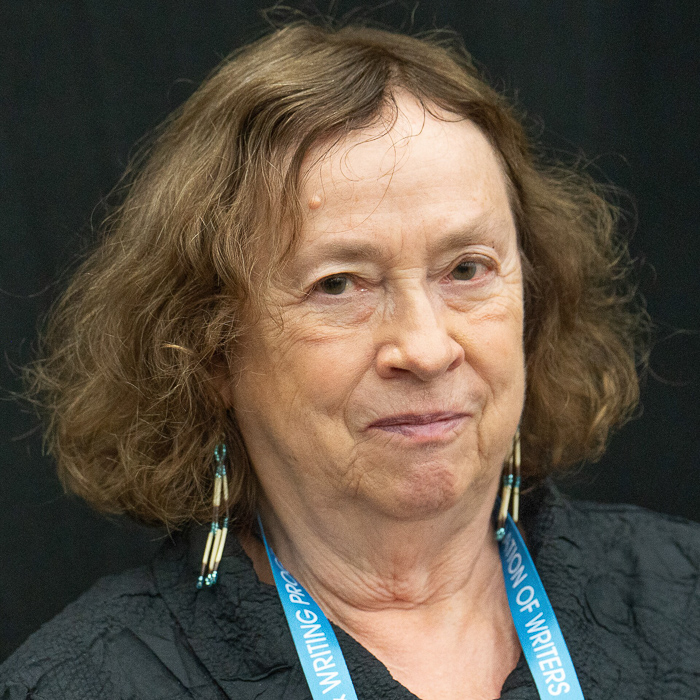
“The exhibit shows interaction between Native and settler European communities during the reservation period,” poet Denise Low said via email. “This is when a well intentioned white artist was documenting, form his cultural perspective, what he thought was the last years of Native people’s existence. It was indeed the end of an era.”
Low, Cherokee and Delaware descendant, worked at Haskell from 1984 to 2011, teaching in two departments and serving as the dean of humanities for two years. Low was also the state poet laureate from 2007 to 2009, and currently teaches online at Baker University.
Low’s poem, “Somewhere Beyond Great Falls, Montana,” sits alongside Russell’s painting, “Signal Smoke.”
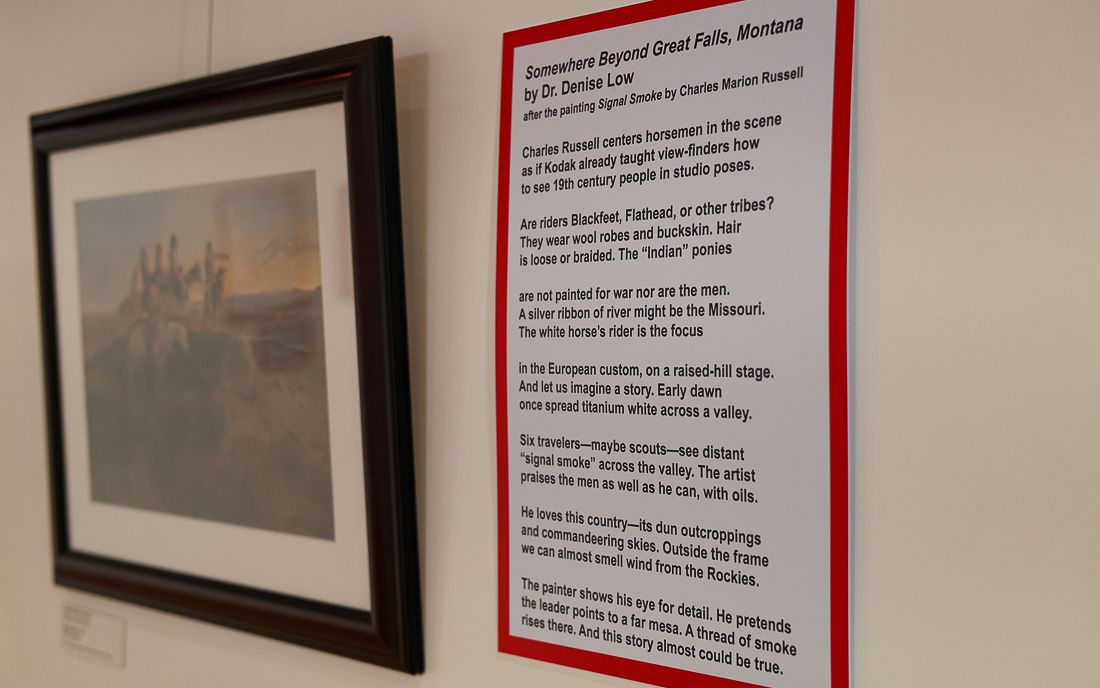
“In the poem I try to honor Charles Russell’s good intentions as he observed people and a land that he admired,” Low said via email. “He used his own three-point perspective art tradition, plus the custom of placing emphasis in an artwork rather than focus on the network of relationships. The group of Indigenous men is foregrounded as though they were on a stage.”
Haskell student Mia Cadue, Kickapoo Tribe in Kansas, also found a drama unfolding in the painting “Native American War Party.” Her poem, “Another Way of Seeing,” turns the name of Russell’s piece on its head.
“This looks like a family that went on this journey,” she said. “They’re reliant on each other. They’re lost on this journey. They’re trying to find their way.”
Cadue had similar questions as Stephenson, and first approached Russell’s work with trepidation.
“I just kind of questioned his credibility,” she said. “… Did he grow up around Natives? Did he do his research? Did he spend time with them? Did he learn anything? Like, how is he — what gives him the right to sit here and paint these depictions of Natives?”
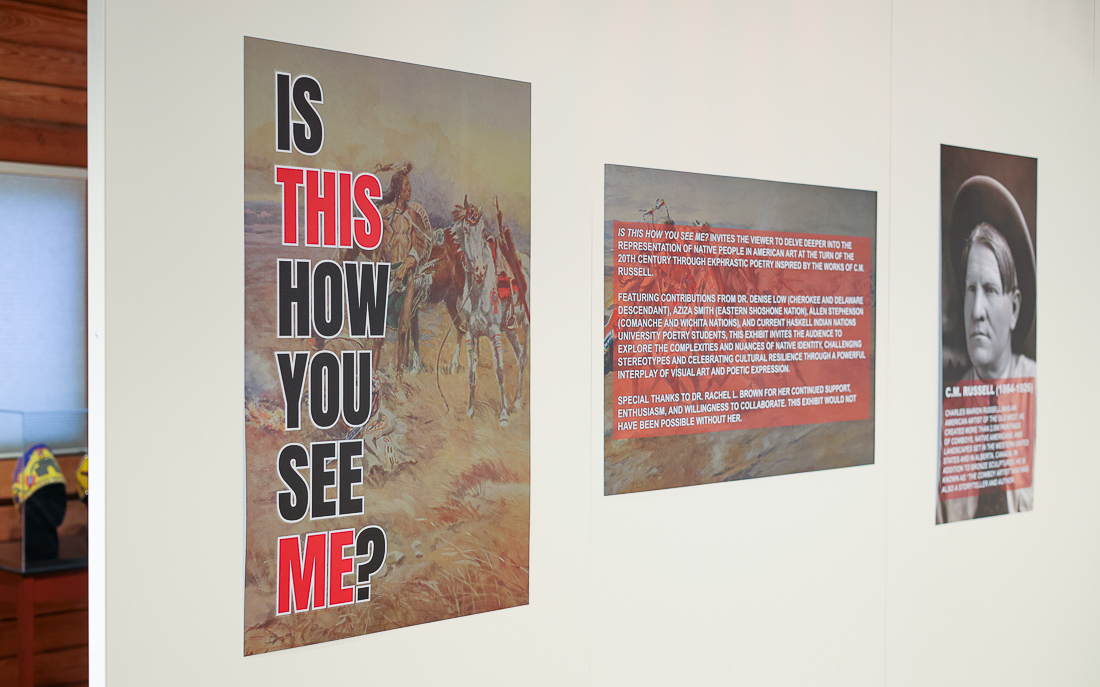
With time, she came to appreciate that, if Russell’s visual documentation did not exist, she would not have written what she calls her masterpiece.
“Trust yourself / Trust your knowledge / Trust your gut,” Cadue’s poem reads.
“All the poems that I do write, it’s like messages either to myself or to my peers,” she said.
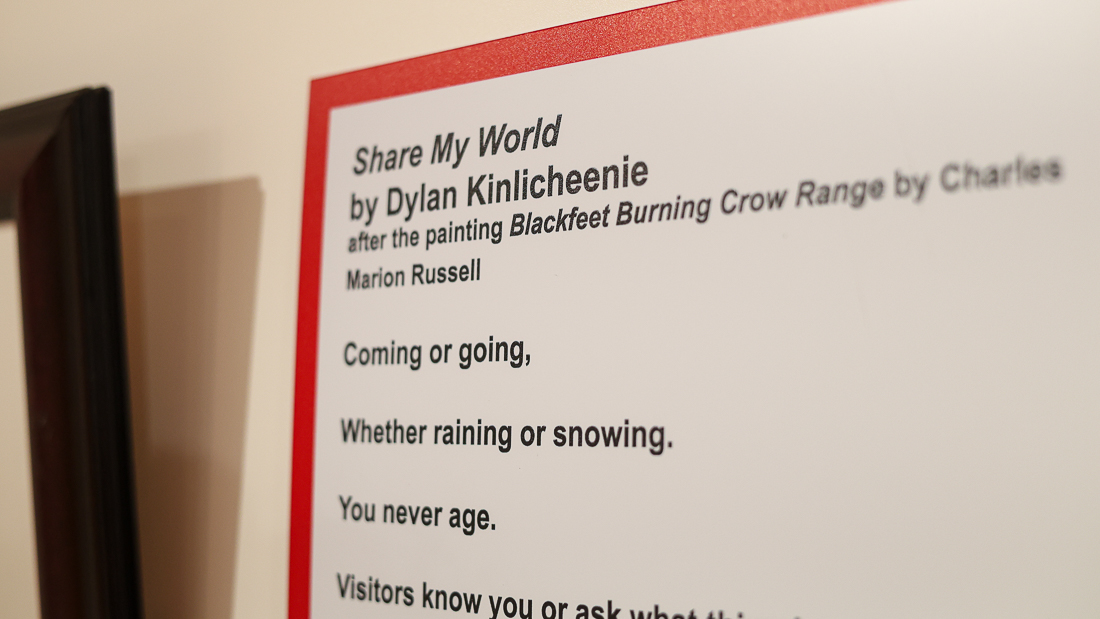
Cadue’s entire poetry workshop, taught by Rachel Linnea Brown, had the opportunity to contribute their work to the exhibition.
Stephenson said he feels a pang of jealousy over the growing arts opportunities current Haskell students have, but he’s proud to have laid that groundwork when he himself was a student, taking classes with Low.
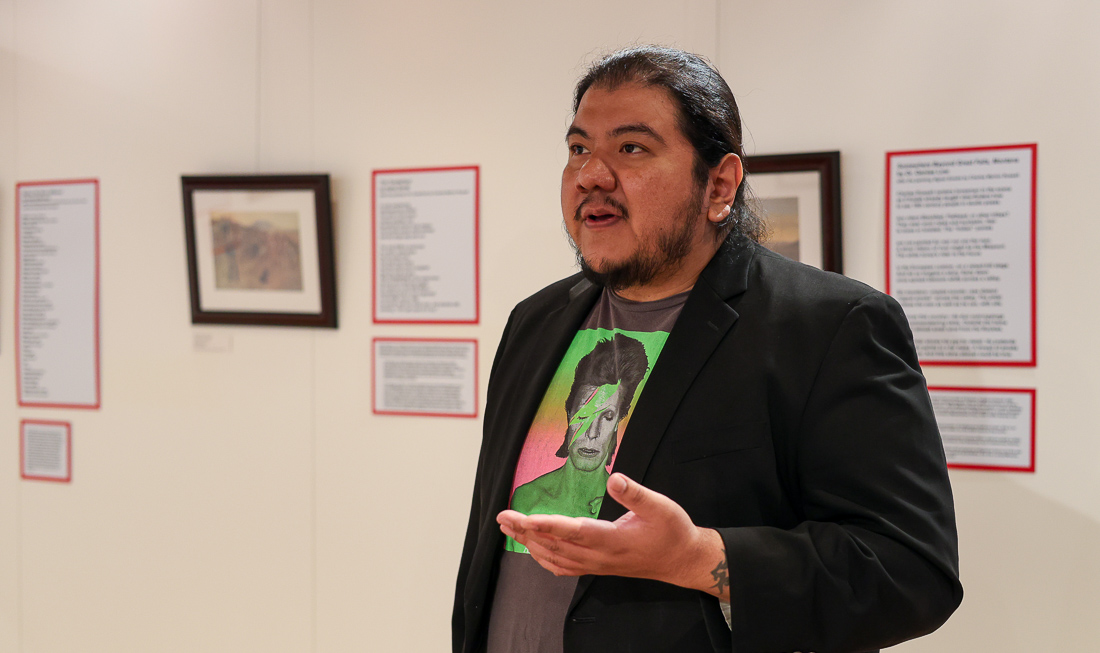
“I feel like that’s sort of what we’re supposed to do, at least as Indigenous people,” he said. “It’s like, you make a path, you clear a path for other people, and then you always want something better for the generation before you.”
For Low, the museum plays a key role in this renaissance.
“I appreciate the work of the Haskell Cultural Center to sustain art and history of this important site in Indian Country,” she said. “Arts help people’s traditions to survive and flourish.”
If local news matters to you, please help us keep doing this work.
Don’t miss a beat — get the latest news from the Times delivered to your inbox:
Click here to learn more about our newsletters first

Wulfe Wulfemeyer (they/them), reporter and news editor, has worked with The Lawrence Times since May 2025. They can be reached at [email protected].
Read their complete bio here. Read their work for the Times here.
Latest Lawrence news:
 Wulfe Wulfemeyer/Lawrence Times