

The Lawrence Police Department has ended its program to register and integrate local residents’ and businesses’ surveillance cameras after extensive community pushback. Advocates say the need for oversight remains.
Laura McCabe, a spokesperson for the police department, said police may still ask for footage from the 132 resident cameras already registered. She said they would not continue to register new resident cameras or integrate local business cameras with the police department.
Micha Anne Cox runs communications for the Lawrence Transparency Project, an advocacy group formed against the program. She said this situation proves local governments need public oversight.

“Grassroots organizing, public pushback, and oversight are Lawrence’s best defense to ensure our neighbors aren’t treated like a surveillance experiment,” she said.
The Lawrence City Commission approved a five-year contract with Axon, a law enforcement and military technology company, in November 2024. Axon provides the police department’s body cameras, Tasers, evidence storage system and more, but the contract also included a camera technology called Fusus.
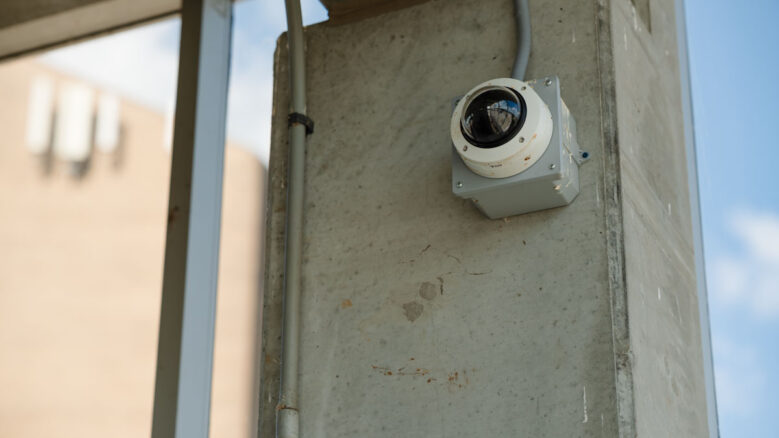
Fusus technology was the basis for the police department’s Connect Lawrence program, which had two parts. First, Lawrence residents could register their cameras with the program. The police said they wanted to create a list of camera locations so they could reach out to the owners for footage if an incident occurred nearby.
Get daily news in your inbox: Sign up for our email newsletters
Learn more about our newsletters first at this link
Second, local businesses could integrate their cameras with the police department by purchasing Fusus technology that would allow the police live access to the camera feed if something occurred nearby.
Please support
The Lawrence Times!
Subscribe here.
According to the police department’s website about the program, 132 residents’ cameras have already been registered with LPD.
The website also said there were 468 integrated cameras, but McCabe said those were existing city cameras that police will continue to use. Those include automatic license plate readers the department purchased from a company called Genetec. Those are not part of the Axon contract.
The Axon contract will cost about $3.2 million through January 2029. Fusus equipment had a price of $270,817 for the duration of the contract. McCabe said the contract would not be adjusted as the Fusus technology was part of a package.
Research has shown how companies like Axon created a business model built on encouraging police departments to increasingly purchase more technology in bundles.
Soon after LPD announced the Connect Lawrence program in July 2025, residents organized to push back against the technology, and experts warned of expanding police surveillance and potential privacy concerns.
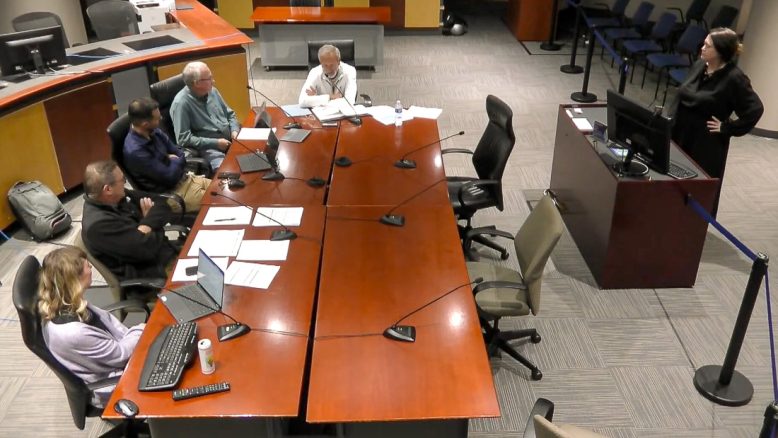
That September, the city commission asked Police Chief Rich Lockhart to work with the community to implement safeguards on the technology. The Lawrence Transparency Project drafted an ordinance suggesting protections for the technology.
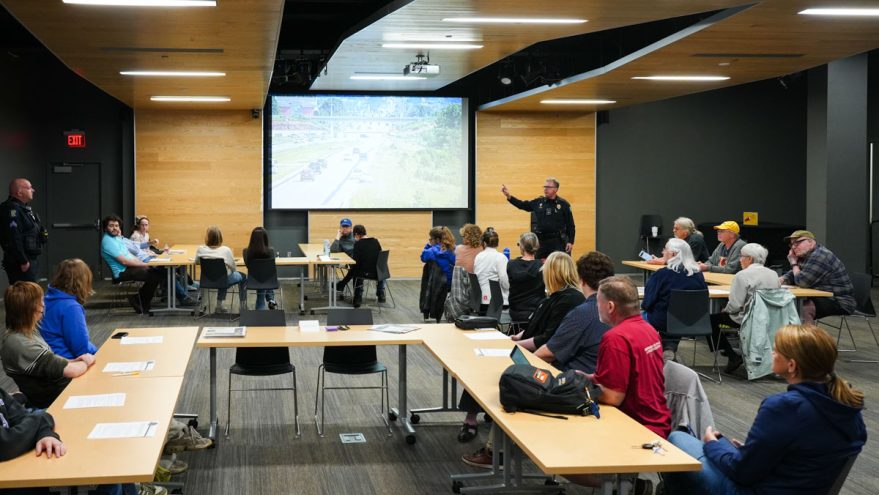
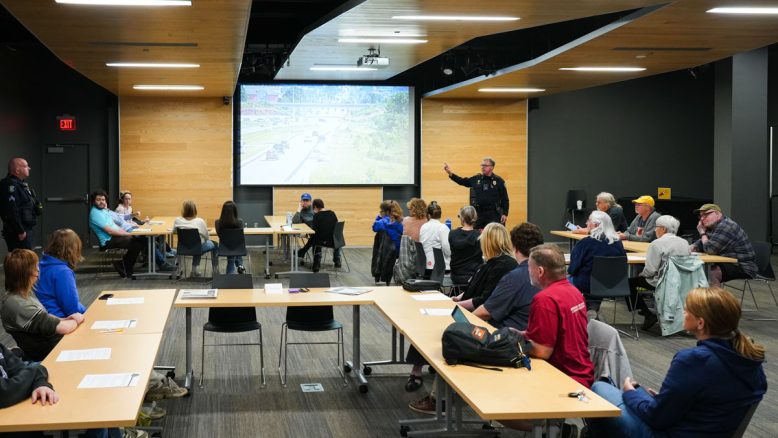
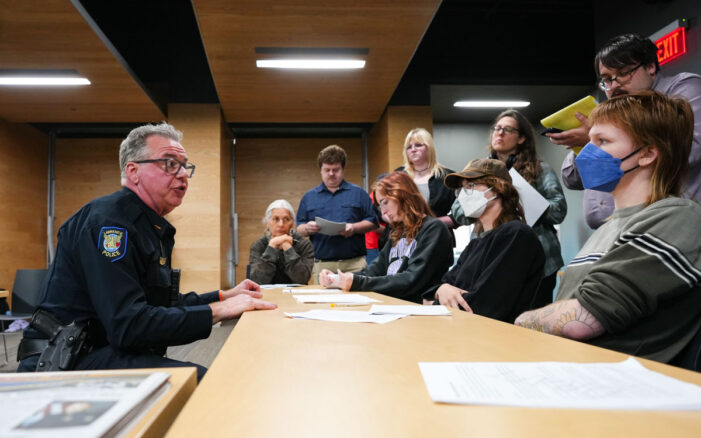
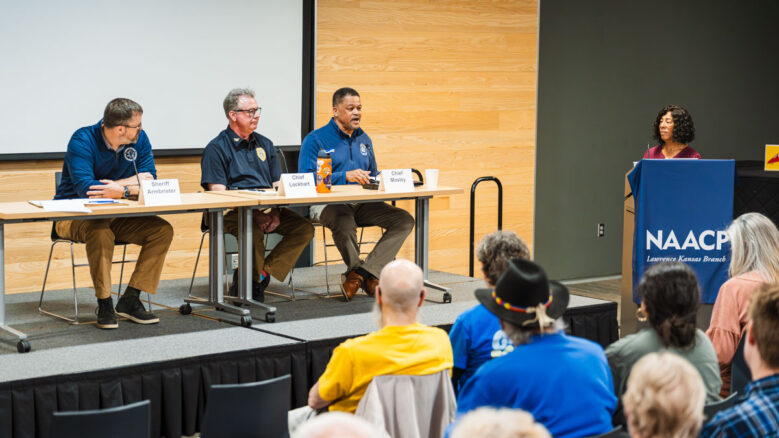
The police drafted their own policy and in April hosted a tense meeting with the public where they tried to assuage concerns.
McCabe said the program never resumed after the pause because of the feedback from the community.

Kincaid Dennett, who helps lead the transparency project, said the decision to stop the program was a big win for Lawrence.
“But the process that let Fusus through on the consent agenda, without a public conversation about what it meant for our city, remains unchanged,” they said. The city commission’s consent agenda is a long list of items that are generally considered routine and approved without discussion. “Over the past year, we’ve learned how dangerous these tools can be.”
Dennett said their next step was to push for “comprehensive public oversight of existing and future surveillance technologies,” including automatic license plate readers.

Mayor Brad Finkeldei said he was unaware the police had ended the program until contacted by a reporter. He said he supported the decision not to continue with the program.
Finkeldei said much of the Axon contract was routine equipment, but the commission has asked Lockhart to make additions to the contract clear moving forward.
“I think that was a good lesson in transparency that we’ll take to heart going forward,” Finkeldei said.
Cox said the people who pushed back against the program should be proud of what they accomplished.
“This is proof of what happens when people speak up and refuse to be kept in the dark,” she said. “But we also have to carry this lesson forward: if our elected officials aren’t doing the job we put them in office to do — representing our voices — it is up to us to hold them accountable.”
If local news matters to you, please help us keep doing this work.
Don’t miss a beat — get the latest news from the Times delivered to your inbox:
Click here to learn more about our newsletters first

Cuyler Dunn (he/him), staff reporter, has worked with The Lawrence Times since April 2022. He can be reached at [email protected].
Read his complete bio at this link. Read more of his work for the Times at this link.
More coverage: Lawrence Police Department
 Jacob Rice / Lawrence Times
Lawrence police end surveillance camera integration program after opposition from community
 Jacob Rice / Lawrence Times
 Nathan Kramer / Lawrence Times
Latest Lawrence news:

 Mac Moore/Lawrence Times
 Jacob Rice / Lawrence Times


