
The tallgrass prairie — an ecosystem native to much of Turtle Island, which ran from current-day Canada down to Texas — once covered 170 million acres of the continent.
Today, the tallgrass prairie is one of the most endangered ecosystems in the world, covering about 4% of North America, according to Andie Perdue, a board member with Outdoors Unscripted, and Patti Beedles, conservation coordinator with Kansas Land Trust.
Douglas County, once home to extensive prairies curated by Native Plains tribes for thousands of years, now has less than 1% of untouched prairie, Perdue said.
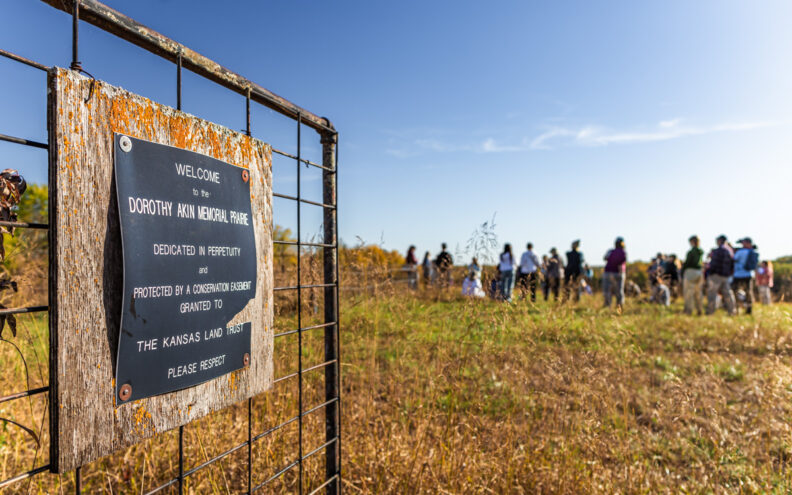
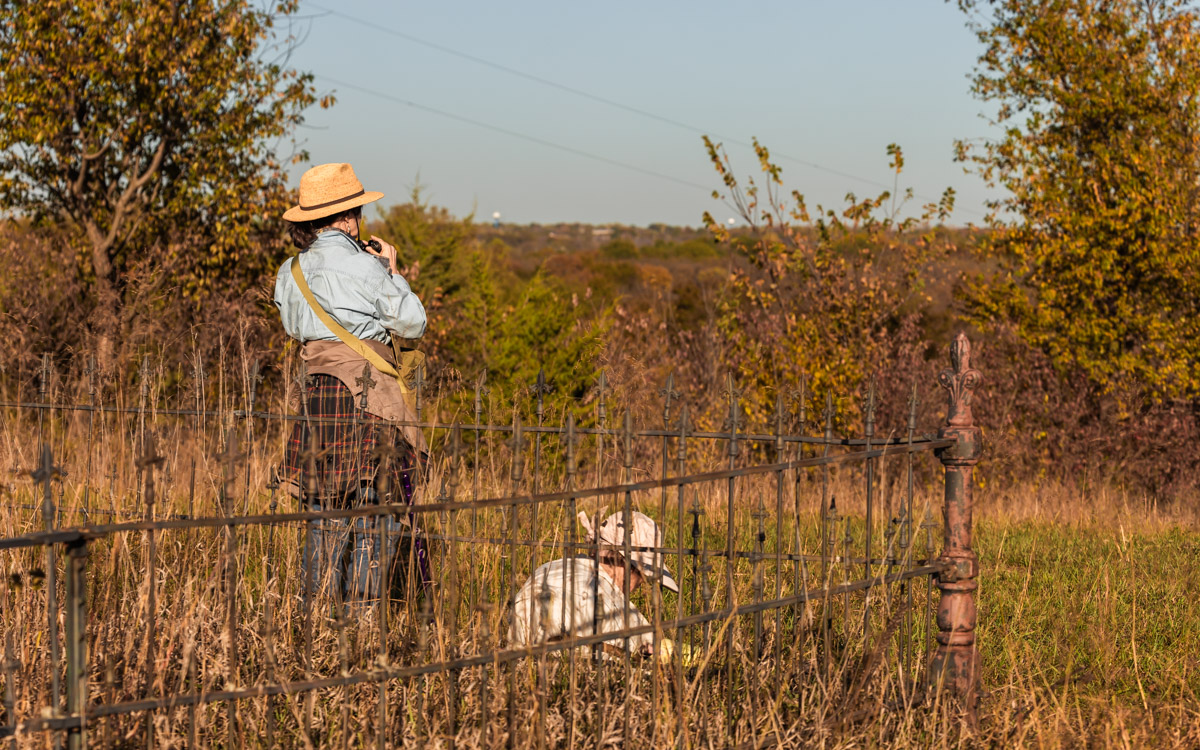
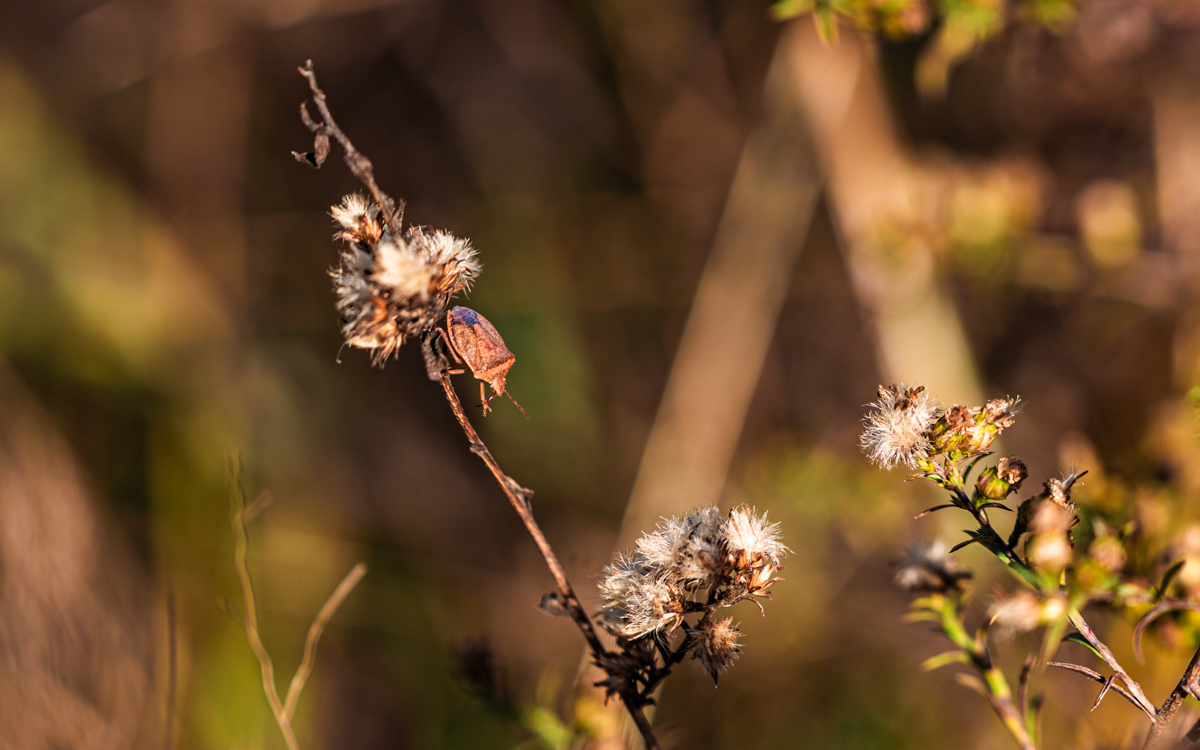
Akin Prairie Conservation, located southeast of Lawrence around 1850 North 1150 Road, is a hay meadow containing 16 acres of the county’s remnant prairie. Remnant means that the land has never been tilled, leaving a centuries-old seed bank and root network intact.
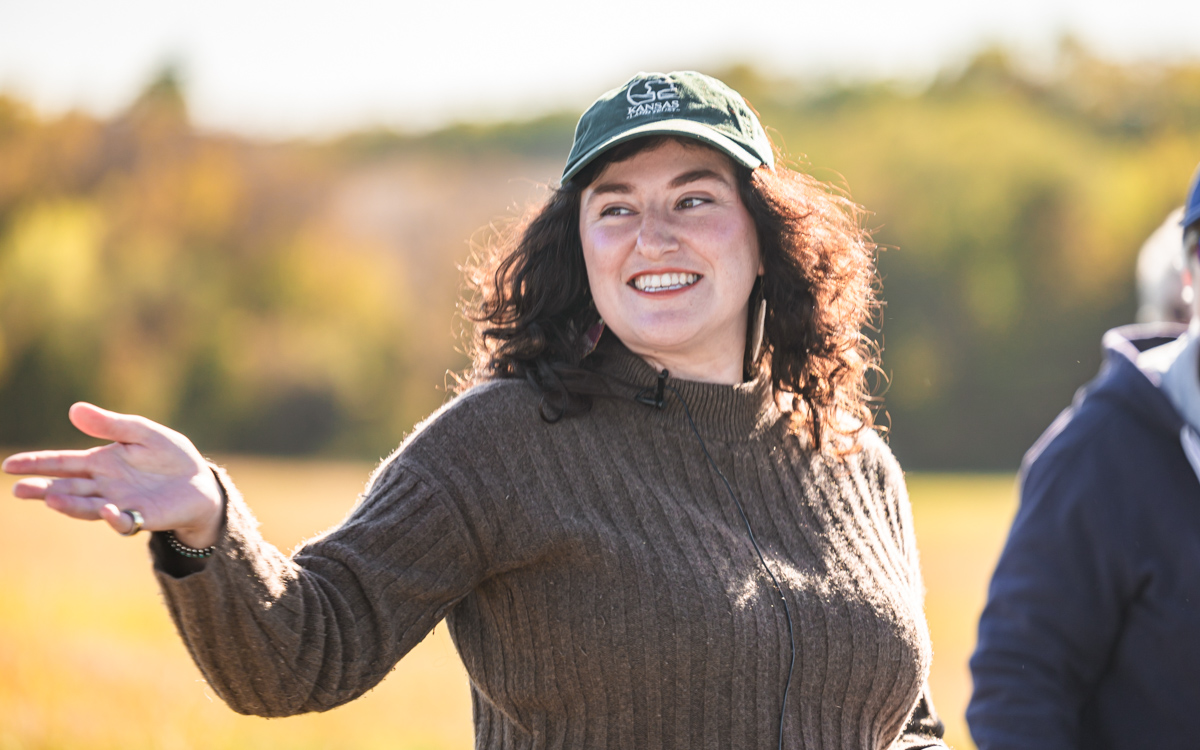
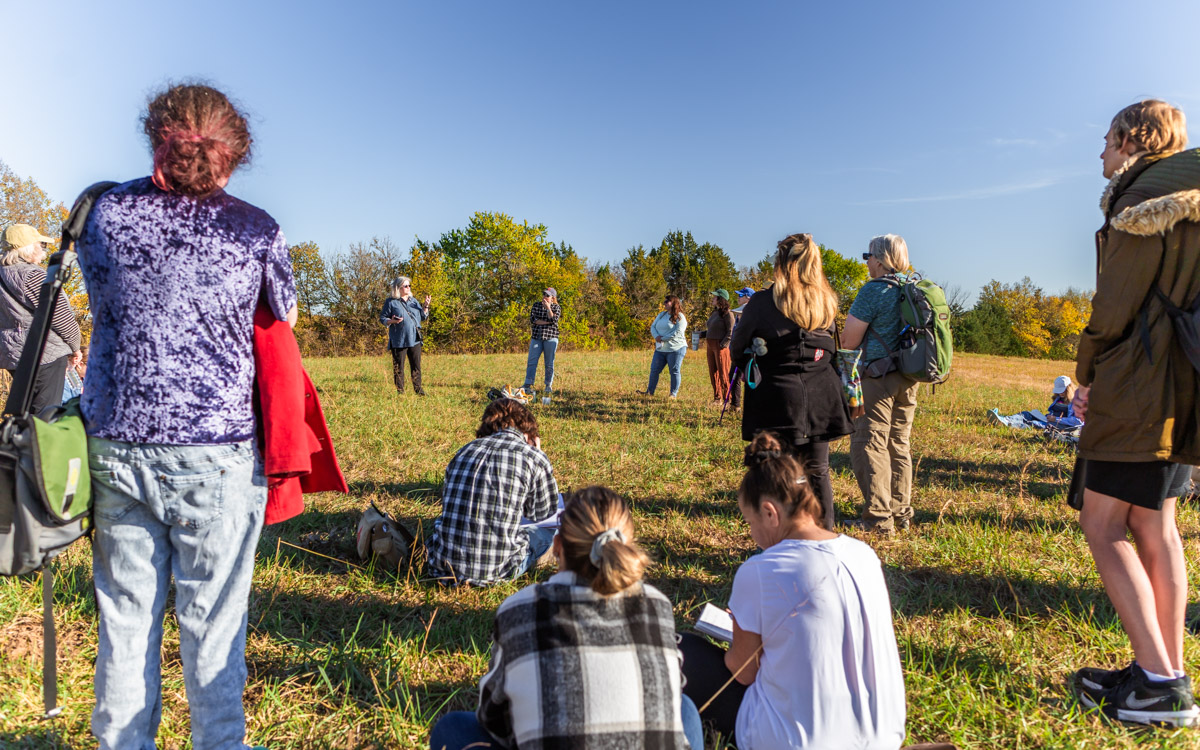
On Monday, this land played host to a creative workshop for people seeking to connect with natural spaces through writing and art.
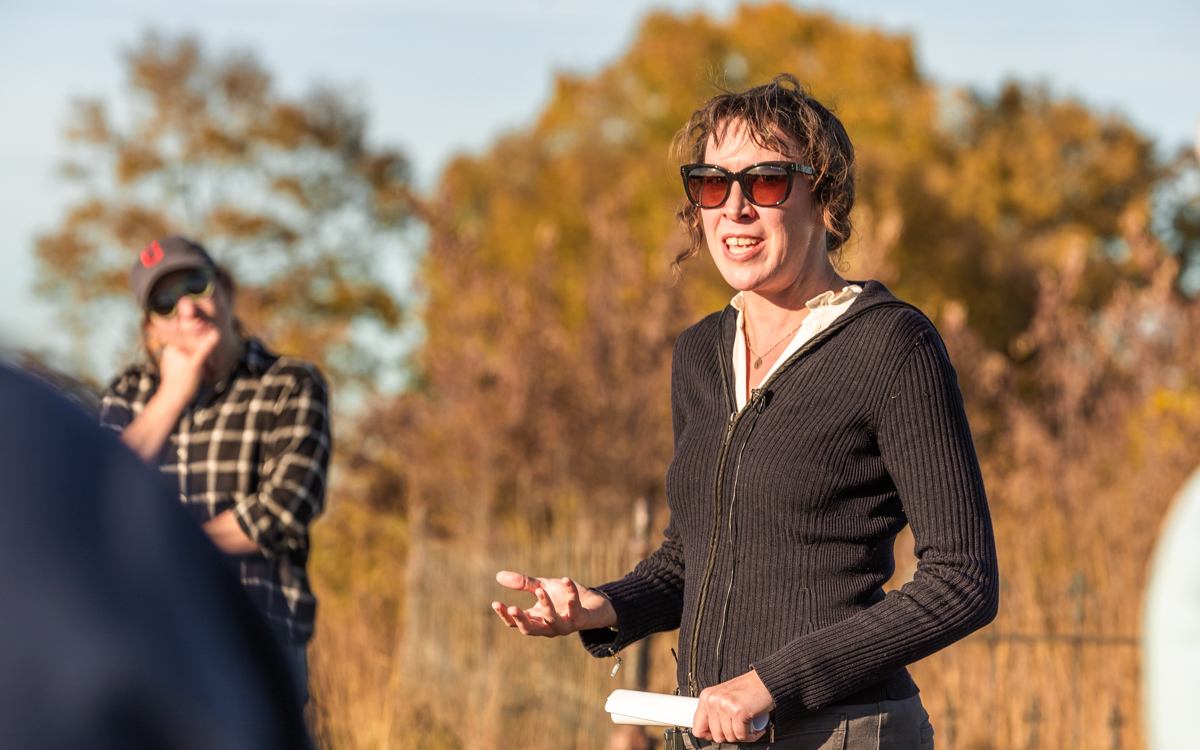
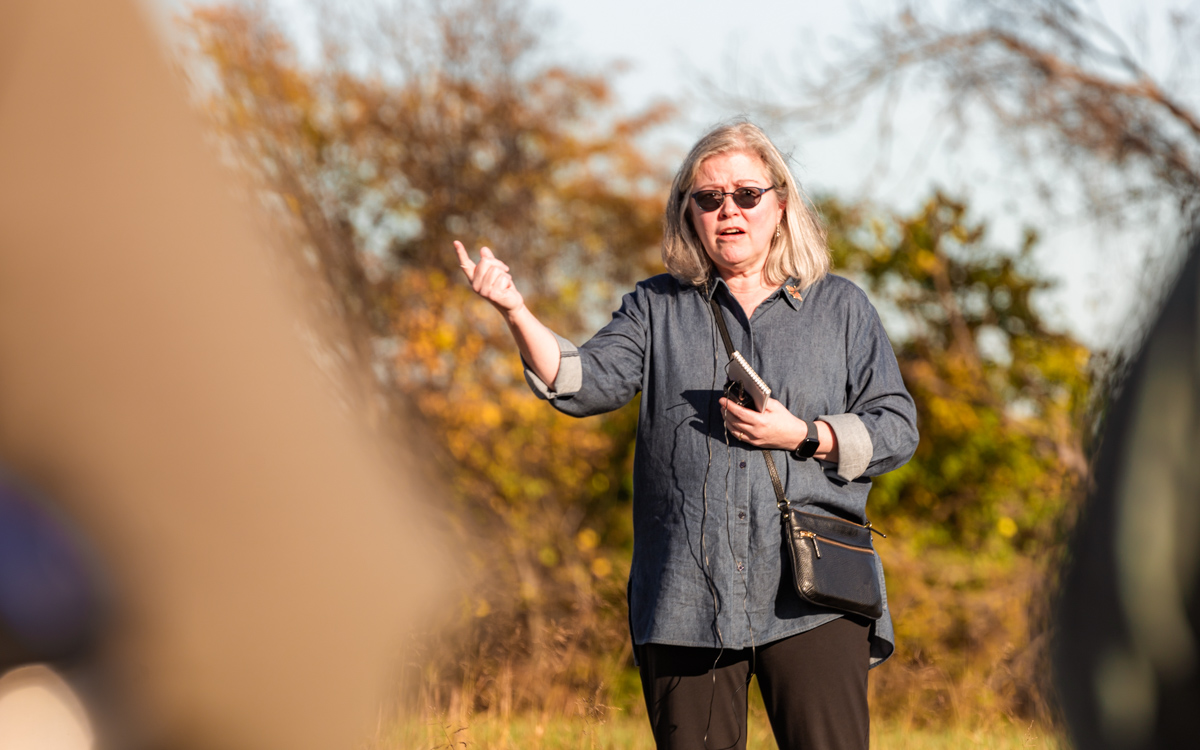
New York Times columnist and nonfiction author Margaret Renkl guided writers during her visit to Lawrence for the fall 2025 iteration of the KU Commons’ Kenneth Spencer Lecture series.
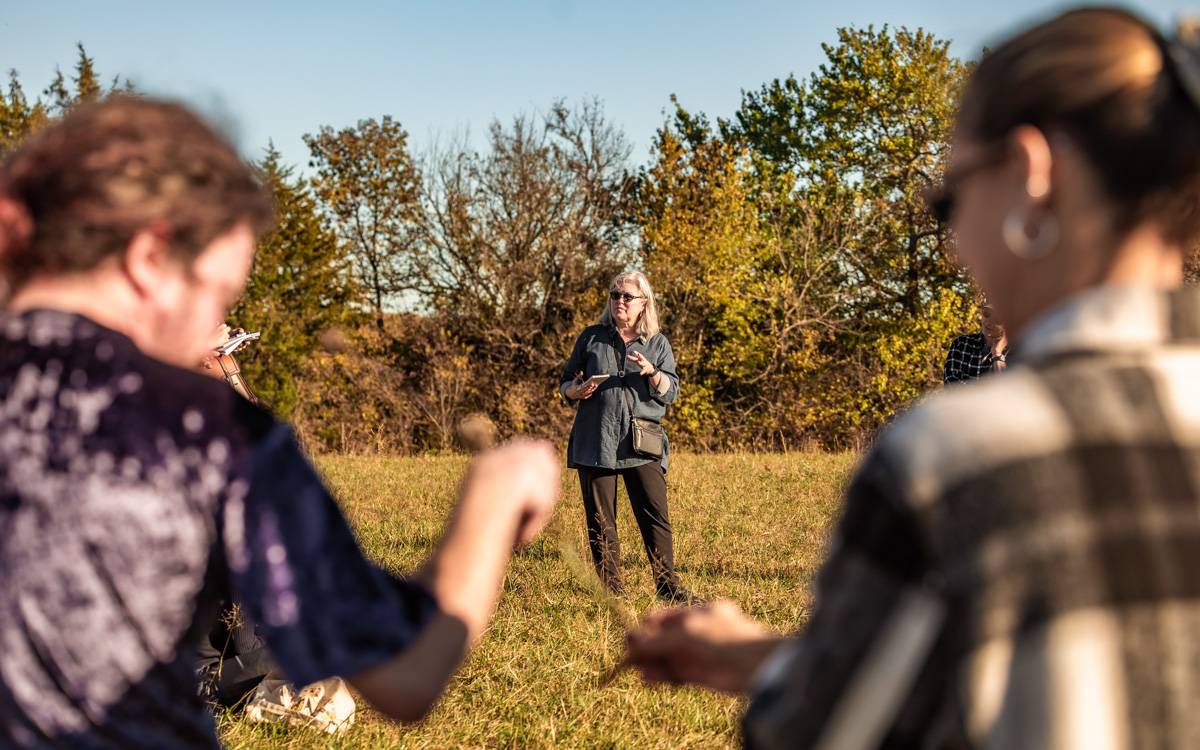
“We have, for a long, long, long, long time — at least since the 19th century (in literary history) — seen ourselves as in opposition to the natural world, as in some way the enemy to the natural world. And this is an error of thinking,” Renkl said. “… You want to remember and recognize that you are also a creature, and your body is going to tell you something crucial about the experience of the interface between you and the natural world.”
Don’t miss a beat … Click here to sign up for our email newsletters
Click here to learn more about our newsletters first
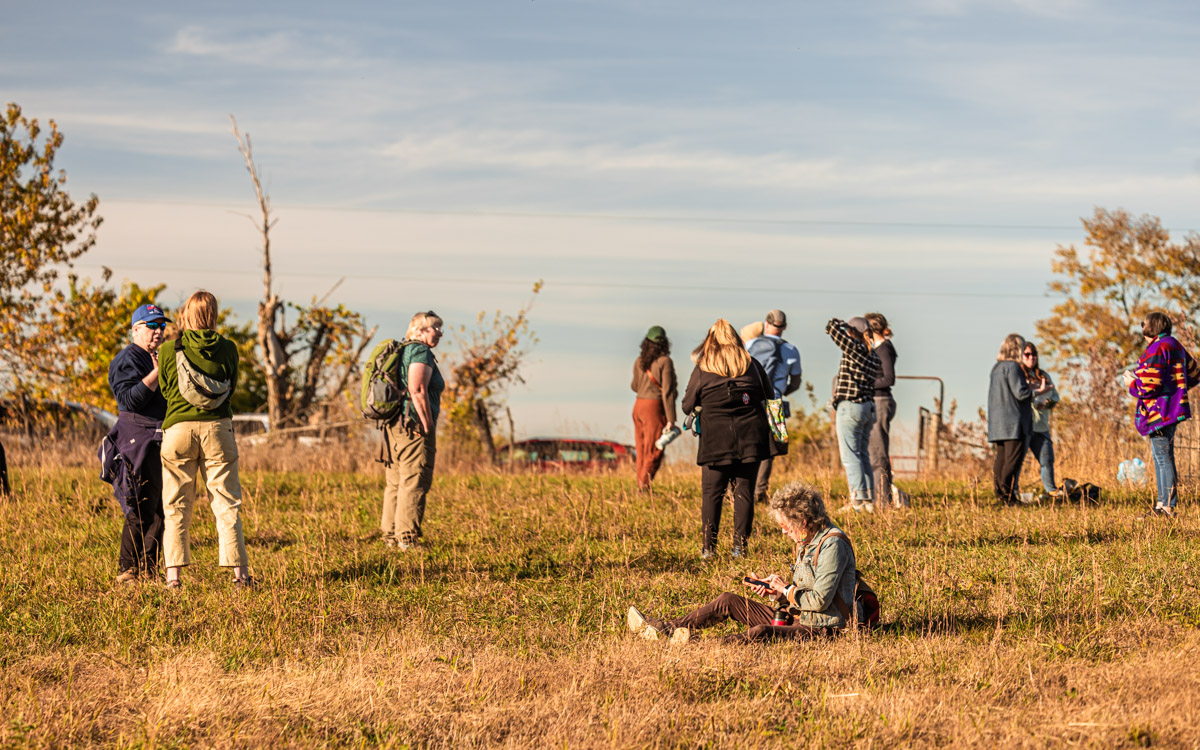
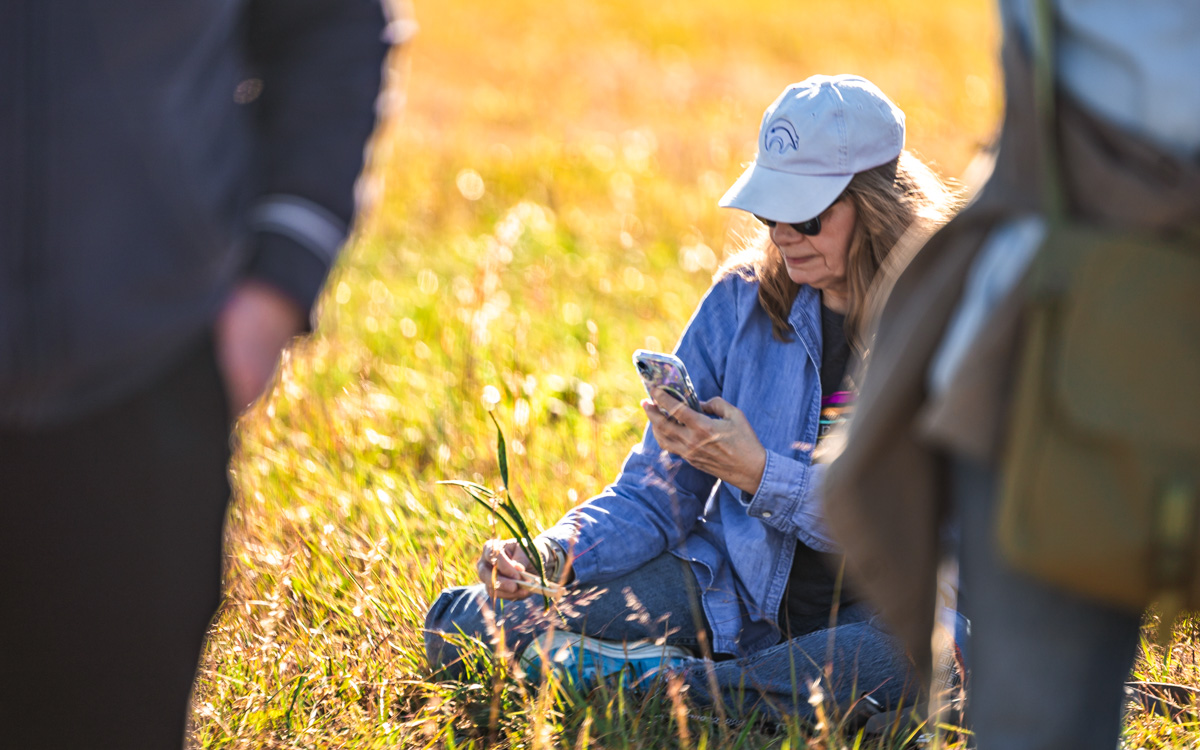
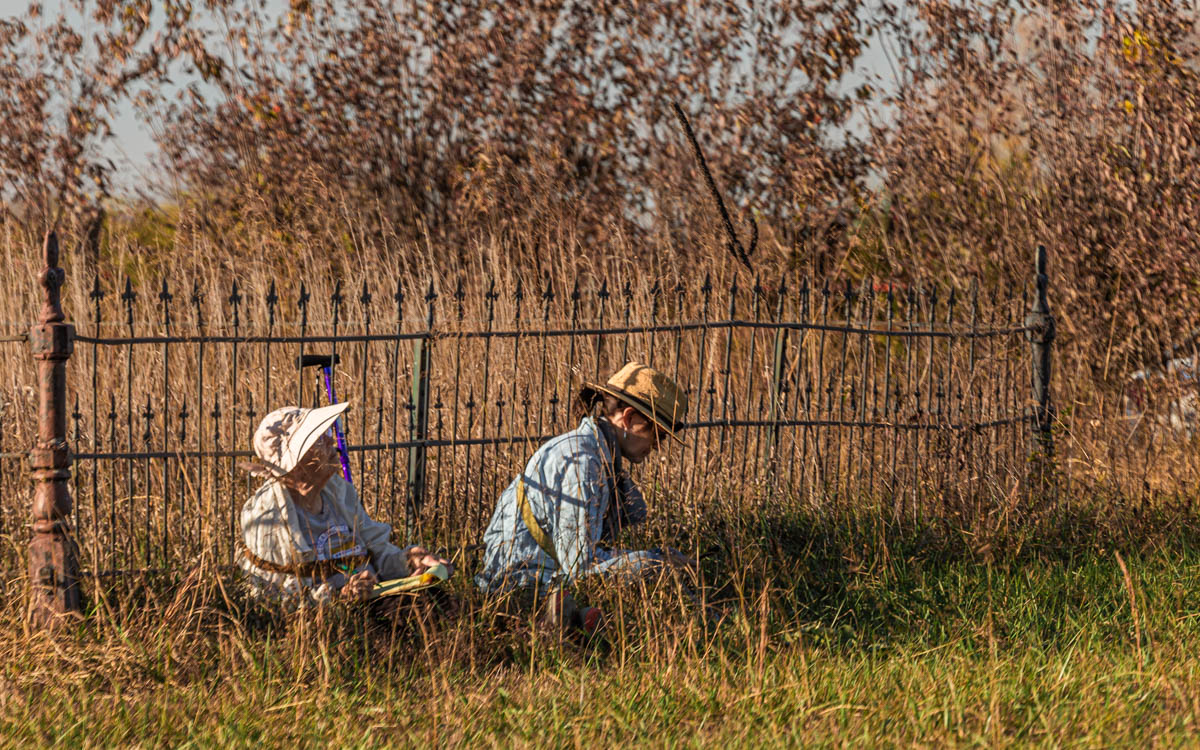
Renkl sent folks off to roam the 16 acres: to catch scents on the wind, to hear the donkeys braying at nearby farms, to collect decomposed goat skulls still ghosted with fur, to feel the differing textures of the native grasses or even to simply skygaze.
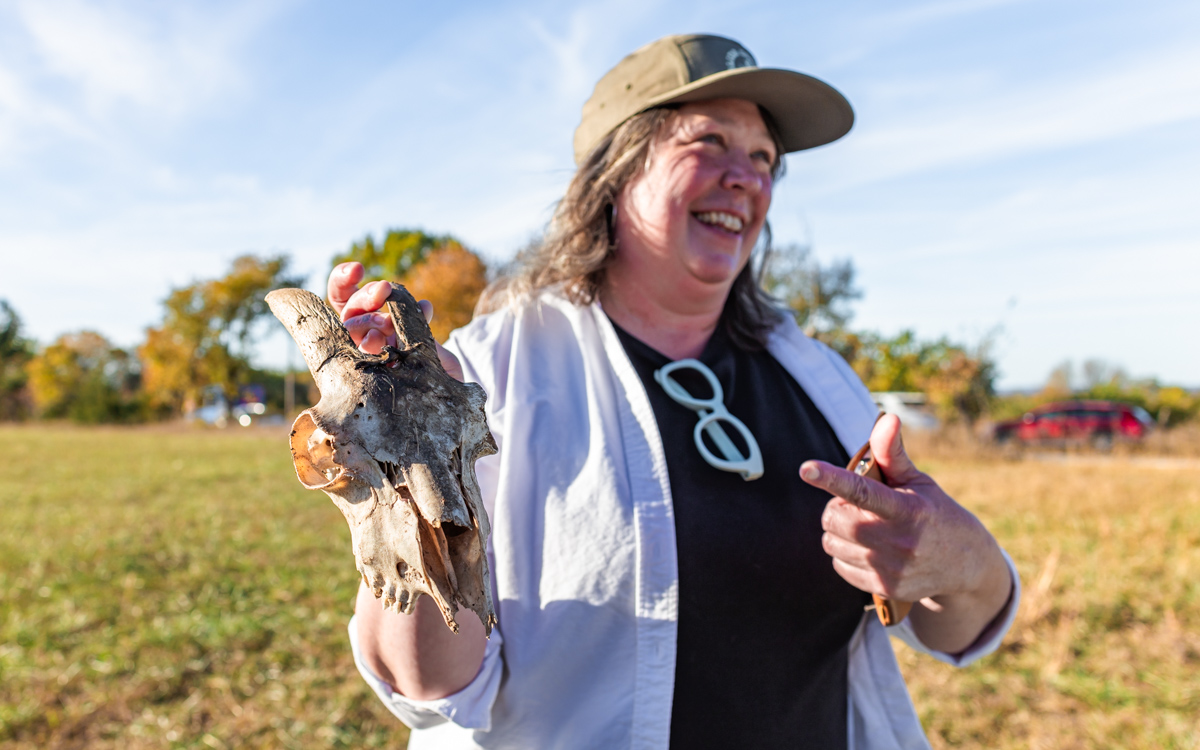
Attendee Hazlett Henderson used the Merlin app to identify bird calls. Henderson is a graduate student at KU taking a class with Megan Kaminski, community poet and KU professor of environmental studies, who helped coordinate the outing.
Henderson said they feel strongly about protecting our native ecosystems from development and expressed concern about the New Boston Crossing development, which has received significant community pushback.
“It seems like it’s for, at this point, for sports fields,” Henderson said. “Before, it was for affordable housing. I’m really interested in preserving both wetlands and prairies and focusing on infill development versus expanding our borders.”
Beedles said Akin was the first plot of land the organization protected with a conservation easement by KLT.
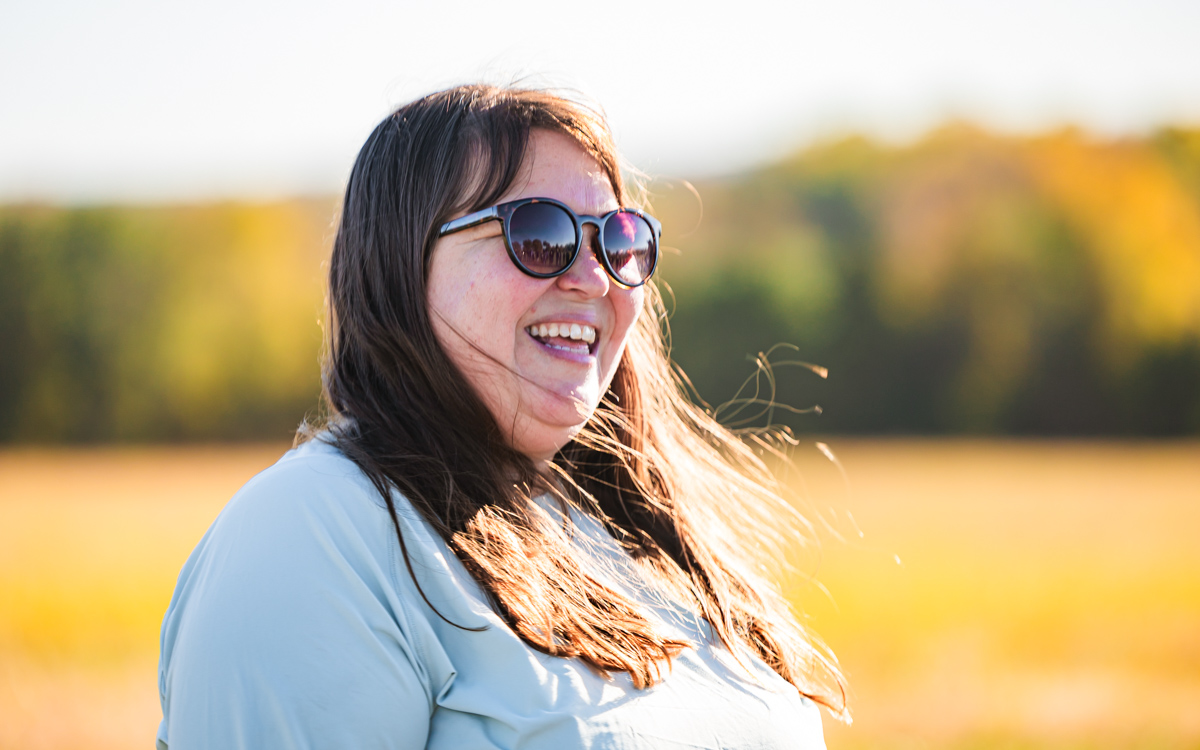
According to the organization, Akin alone carries more than 218 native species. Tallgrass prairies are also known for their deep root systems, which prevent erosion and flooding while improving soil health and water quality.
“It’s also one of the biggest ways that we can fight climate change,” Perdue said. “Because of those deep root systems, it’s actually one of the best carbon sinks, even better than trees.”
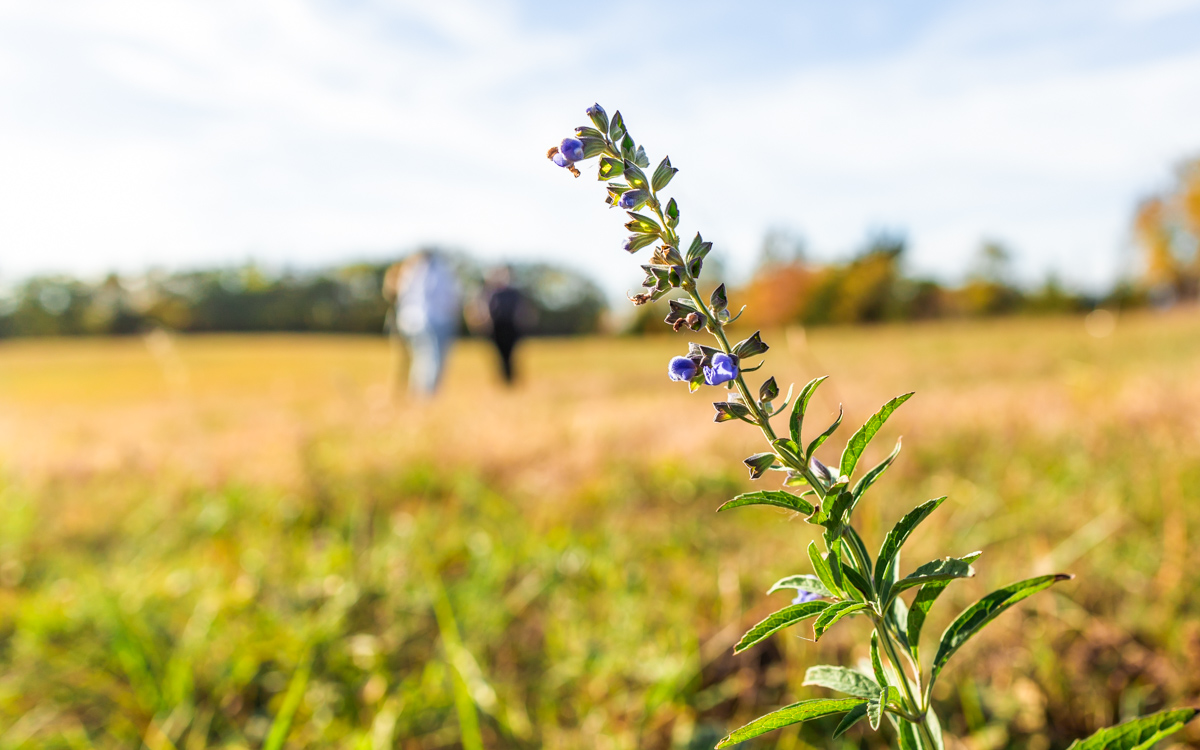
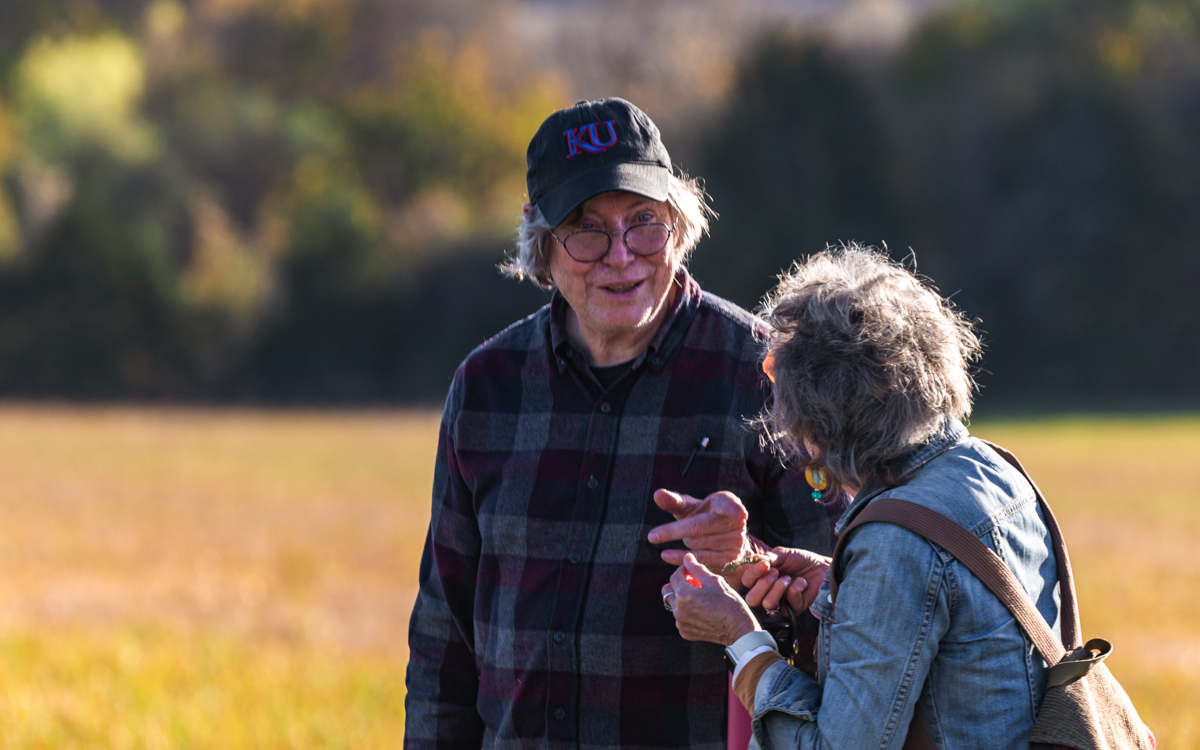
Beedles passed around clippings she collected from Akin. Folks held up slender mountain mint to their noses to catch the sharp scent and observed rattlesnake master, a plant with globe-like white flowers perfect for pollinators.
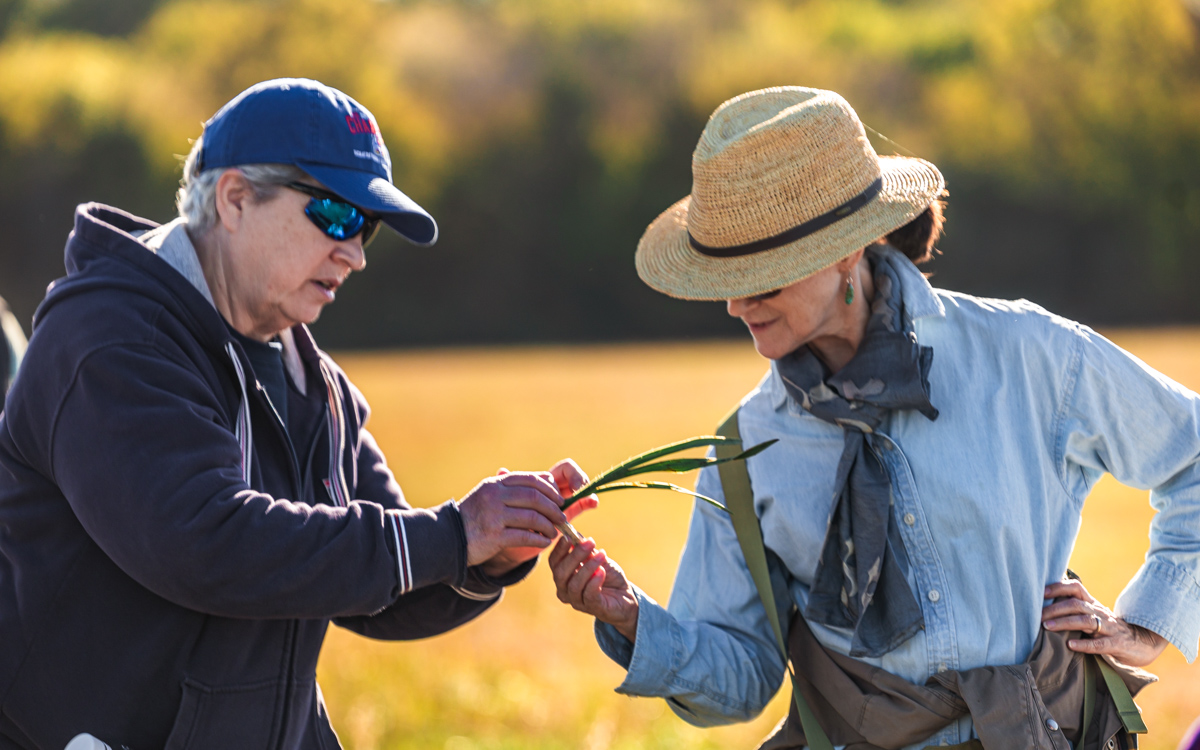
Guests also learned about Baptisia bracteata, a prairie tumbleweed that produces an indigo-like pigment, and echinacea, a pale purple cornflower that can be used medicinally as an immune booster.
Although many in Lawrence live on the cusp of restored or remnant prairies, venturing beyond the tightly packed buildings can prove intimidating.
Beedles recommended grabbing a buddy and starting at Prairie Park Nature Center, which is accessible by bus.
Kansas Land Trust also maintains a map of its protected properties throughout the state, which notes which locations are open to the public, as Akin is.
Workshop attendee Keith Penner said that his time wandering the land led him to think about interconnected networks of communication.
Penner figured that his son would be drawn to a space like Akin based on his upbringing. Lo and behold, when he checked iNature, a community app for sharing notes with fellow naturalists, he found that his son had logged more than 100 observations at Akin.
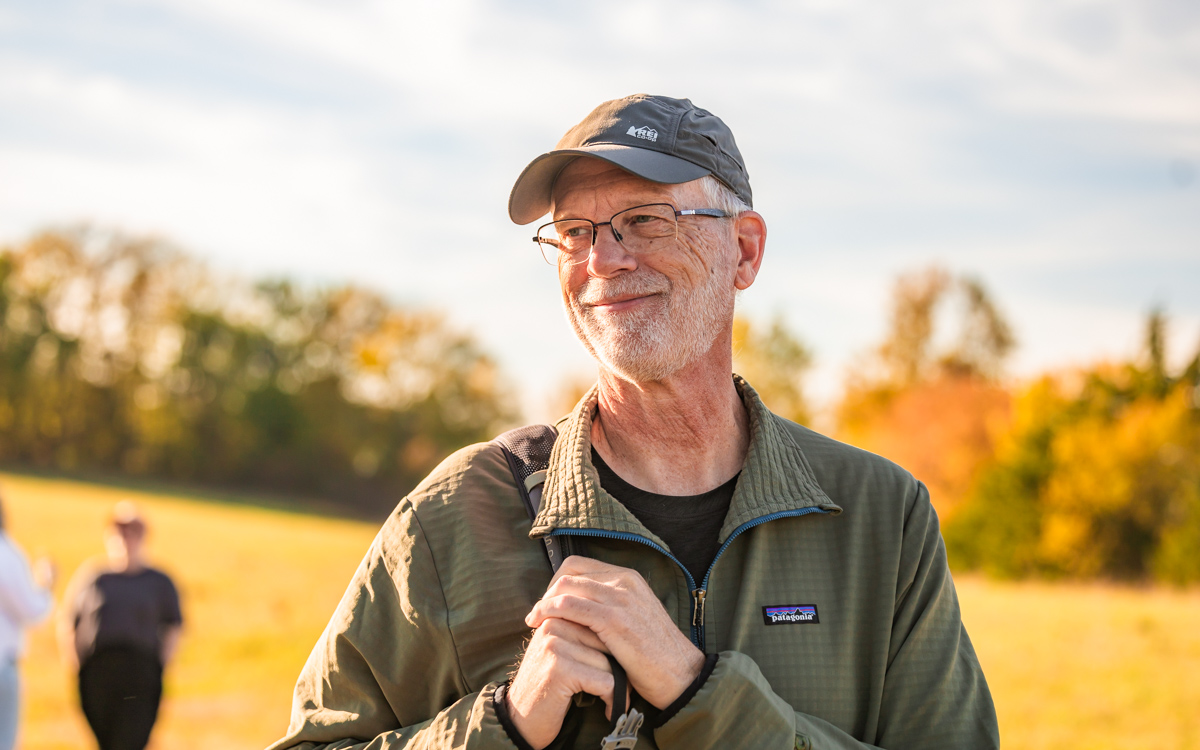
“I felt like I precipitated that in some fashion, and I was trying to think about how — that brought to mind the notion that the seeds are sending information from one generation to the next,” he said. “Then I started to wonder if there are ways in which these plants are sending information between individuals, down through generations.”
Poetry of the prairie
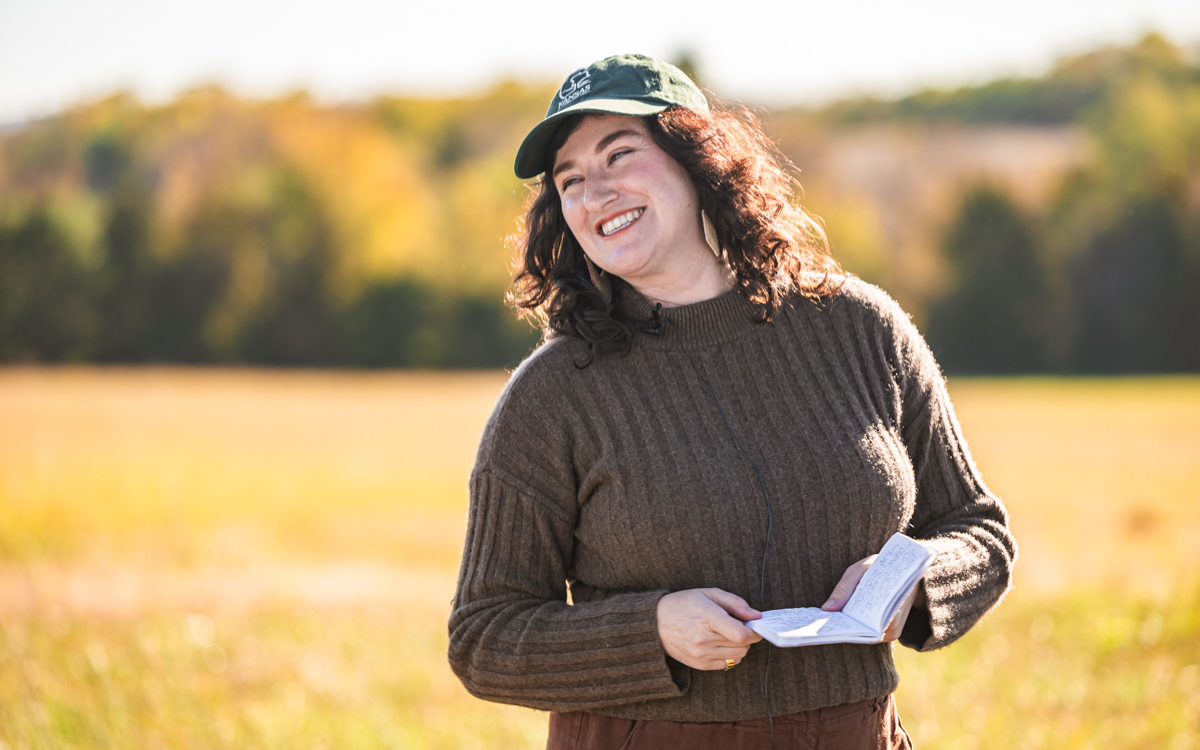
Kaminski capped off the afternoon with readings of poems created in collaboration with the plants at Akin.
Her work is supported by a grant through Outdoors Unscripted and will result in a series of geotagged poems. Once the project is launched, people will be able to walk around Akin and scan QR codes to read her pieces in the exact location where she created them.
A full presentation from Outdoors Unscripted grants awardees will take place Saturday, Dec. 6 in the upstairs portion of Sunflower Cafe. More details about the event are forthcoming.
If local news matters to you, please help us keep doing this work.
Don’t miss a beat — get the latest news from the Times delivered to your inbox:
Click here to learn more about our newsletters first

Wulfe Wulfemeyer (they/them), reporter and news editor, has worked with The Lawrence Times since May 2025. They can be reached at [email protected].
Read their complete bio here. Read their work for the Times here.

Molly Adams (she/her), photojournalist emerita, worked with The Lawrence Times from May 2022 through April 2026. Check out more of her work for the Times here.
Latest Lawrence news:
 Cuyler Dunn/Lawrence Times
 Cuyler Dunn/Lawrence Times
 Molly Adams / Lawrence Times
 Cuyler Dunn/Lawrence Times