

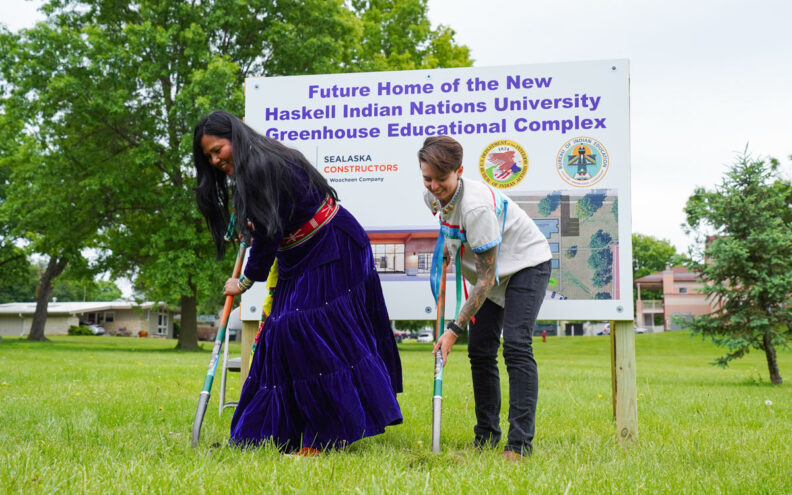
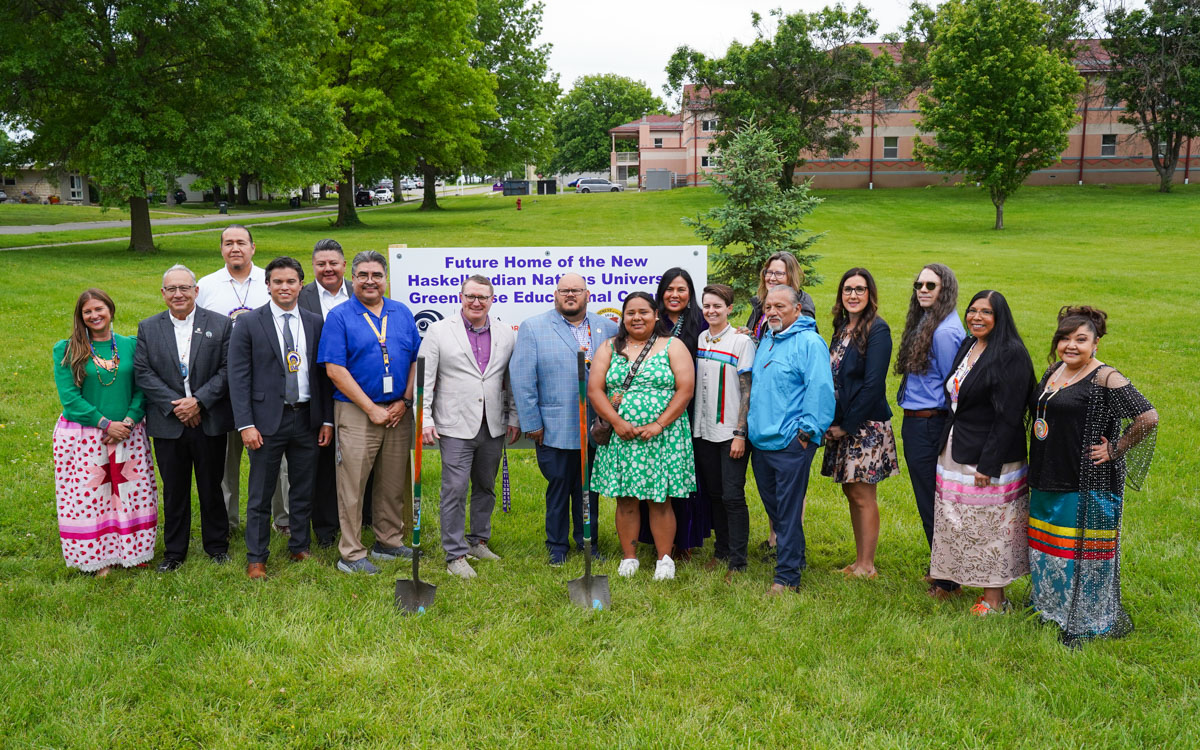
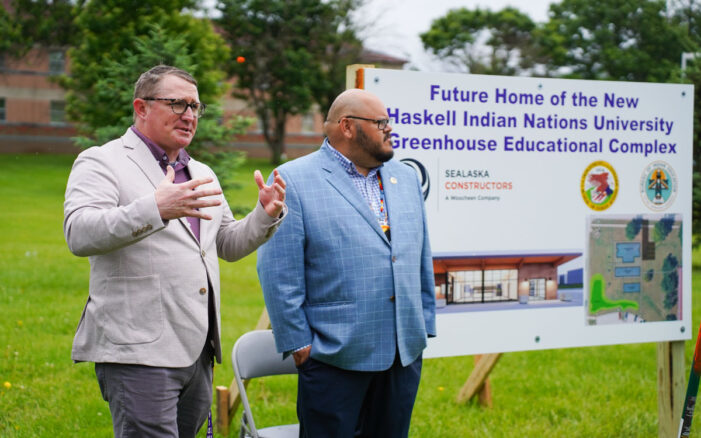
The Haskell community broke ground Friday on the campus’ new Greenhouse Educational Complex, which will advance students’ land stewardship, food sovereignty and land restoration initiatives.
Haskell instructors, students and members of the Board of Regents who gathered for the groundbreaking also discussed an impending 80-acre donation of land in western Douglas County.
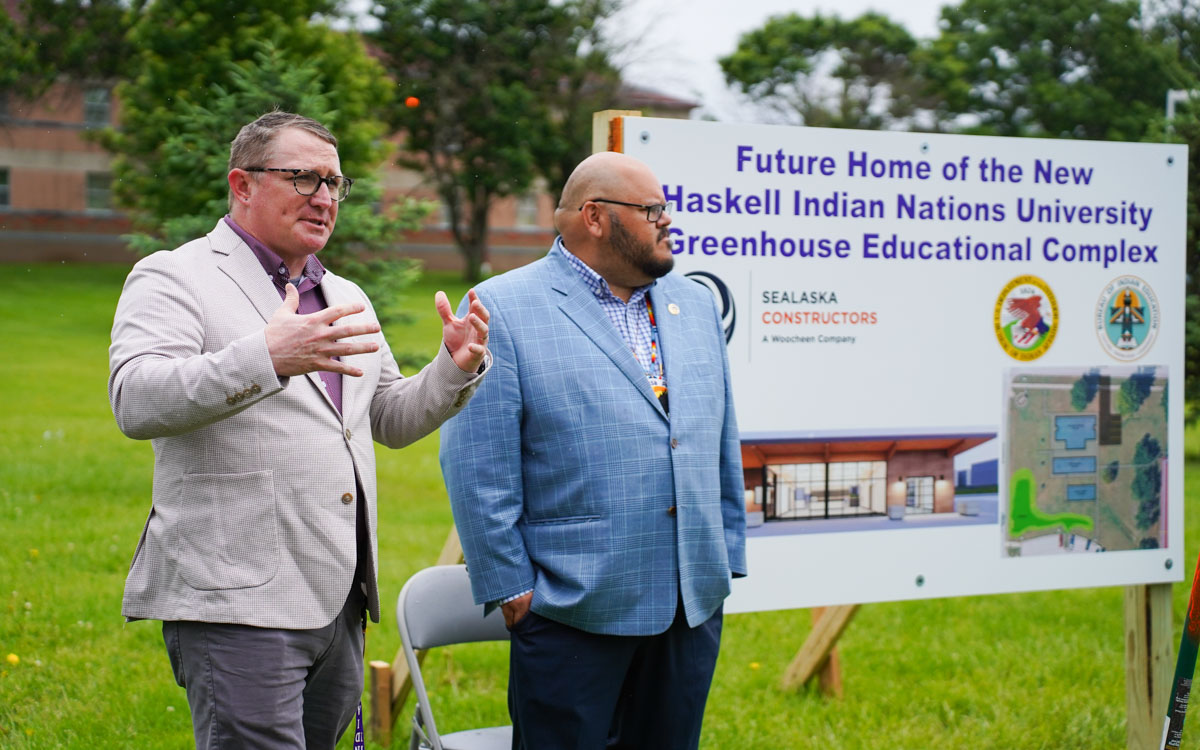
Mackie Moore, Cherokee Nation of Oklahoma and dean of the College of Business, said the 80 acres have multiple unique ecosystems that will allow students to use plots for prairie restoration, agricultural farming and regenerative agriculture.
By partnering with other institutions like Kansas State University and the University of Kansas, students can get more hands-on research opportunities on the acreage.

Currently, undergraduates from diverse majors — exercise science, American Indian studies, business administration and more — are involved in work at the longstanding Eric Allen Greenhouse.
“It’s an escape from the classroom, escape from the everyday academic rigor, to be able to get out and just do some of that stuff on the land and be peaceful and rebalance themselves,” Moore said.
Don’t miss a beat … Click here to sign up for our email newsletters
Click here to learn more about our newsletters first
Speakers at the groundbreaking said the complex, which includes a new greenhouse, learning center, and hoop tunnel, would empower students to take what they’ve learned home.
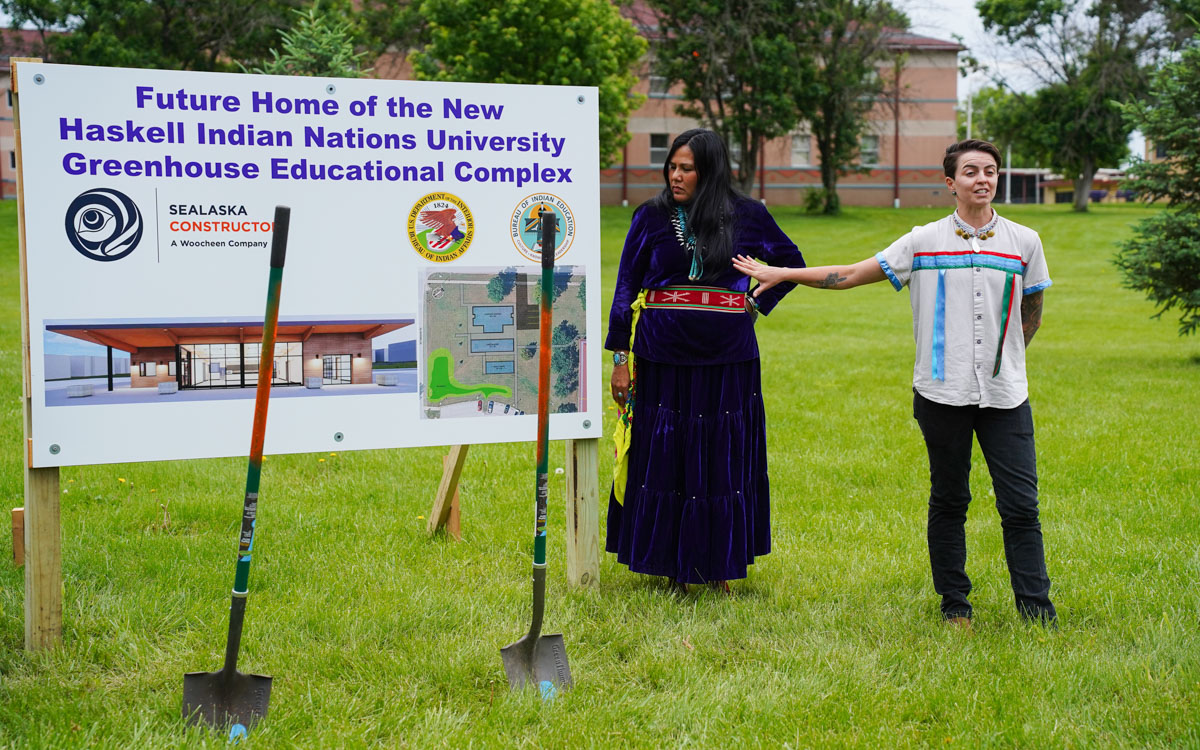
“(We are) reconnecting Indigenous peoples with the culturally significant plant species of our peoples, and learning various land stewardship initiatives and practices that they can take back to their tribal communities and do this healing work in other places,” Courtney King said. “It’s super important and something that drives me every single day.”
Please support
The Lawrence Times!
Subscribe here.
King, Peoria and Miami, is the program and land stewardship manager for the Haskell Greenhouse and a KU graduate student. She said the new greenhouse will be triple the size of the current building, which is getting overcrowded with the machinery and tools needed for the work King and her colleagues do on the land.
Nana Allison-Brewer, Navajo Nation, Diné, is the USDA Equity Grant director with the greenhouse. She said that, over time, the expanded facilities could open more degree pathways at Haskell and create opportunities for collaboration with other tribal colleges.

King also celebrated a new six-year burn plan that the Bureau of Indian Affairs approved in January. It encompasses almost 143 acres of Haskell’s campus, many of which haven’t seen fire in more than a decade.
“Kansas lands are fire dependent,” King said. “And historically, these lands would have burned approximately every one to three years due to natural lightning strikes and, of course, Indigenous peoples lighting fires intentionally.”
King said the practice of prescribed burns help both people and lands heal.
“We see the bolstering of biodiversity, healing of soils, the fixing of habitats that have degraded over time, removal of invasive and woody species and removal of dead biomass,” King said.
Joseph “Zeke” Rupnick, tribal council chairman for the Prairie Band Potawatomi Nation and member of Haskell’s Board of Regents, said his tribe has been making strides toward food sovereignty. He said that many native plants, foods and medicines have also been destroyed through tilling, and emphasized the importance of knowing where food comes from.
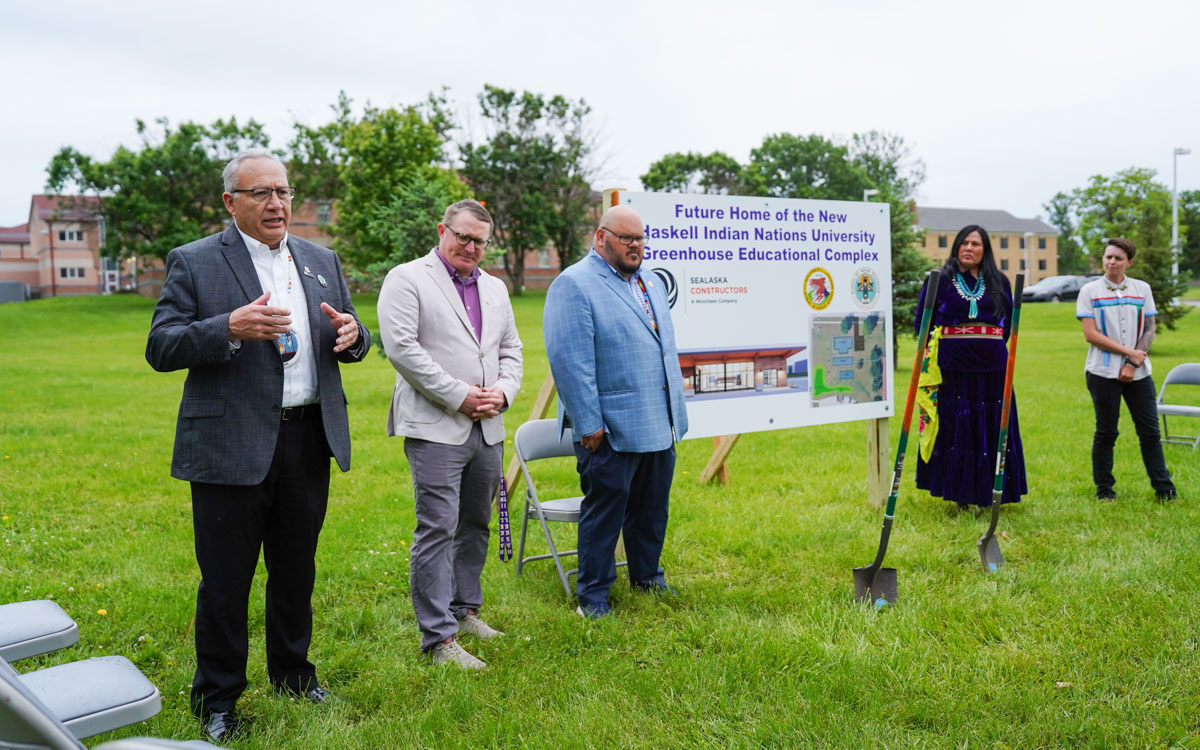
“Let’s work together and see what we can do to bring some of those foods back … that medicine that was there so that we can pass it on to our younger ones,” Rupnick said.
Food sovereignty efforts at Haskell have progressed from a raised bed in an orchard to the promise of multiple plots on 80 acres of land.
At the community bison harvest Haskell hosted in September, Moore had said students were growing seasonal crops to supplement their meals and the offerings at Curtis Hall, Haskell’s dining facility. At the time, he figured the school would still need to buy things like lettuce and spinach from external growers.
The new greenhouse, however, means they can get closer to growing enough spinach or lettuce to tide over the student body year-round. With the added 80 acres, he’s setting his sights higher, to crops like corn or carrots.

“It’s small steps but before long, it starts to create an impact, whether it’s in our food system here on campus, whether it’s taking the knowledge back to communities all over of our 140 tribes that are represented here,” Moore said.
The Greenhouse Educational Complex is primarily funded through a Department of Education Title III grant.
King and Allison-Brewer said rough estimates put the completion date for construction around the end of the year or spring of next year, but it hasn’t been set in stone.


If local news matters to you, please help us keep doing this work.
Don’t miss a beat — get the latest news from the Times delivered to your inbox:
Click here to learn more about our newsletters first

Wulfe Wulfemeyer (they/them), reporter and news editor, has worked with The Lawrence Times since May 2025. They can be reached at [email protected].
Read their complete bio here. Read their work for the Times here.

Jacob Rice (he/him), photo correspondent, has worked with The Lawrence Times since March 2026. He studied journalism and mass communications at Iowa State University, where he spent four years as the visuals editor for the Iowa State Daily.
Check out his photography for the Times here. Read his articles for the Times at this link.
More coverage — Haskell Indian Nations University:



Latest Lawrence news:

 Molly Adams / Lawrence Times
 Nathan Kramer / Lawrence Times