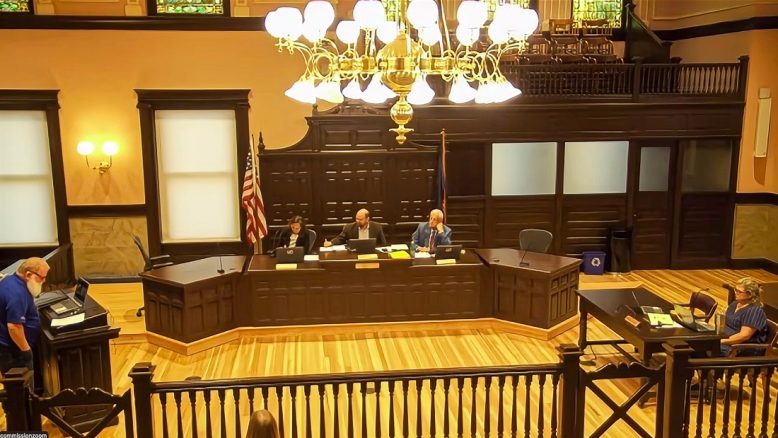

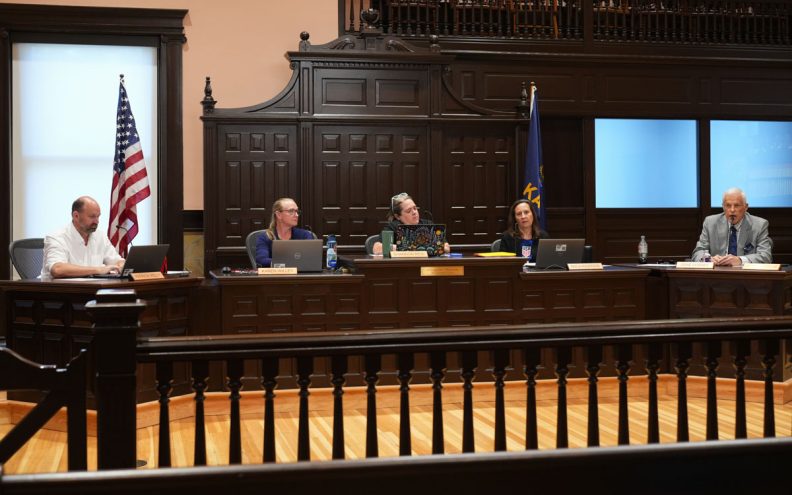
Douglas County Commissioners on Wednesday voted 3-2 to approve a new program to handle truancy for young learners in elementary and middle schools.
Commissioners had discussed the proposed changes in more depth during their May 27 meeting. Commissioners Shannon Reid, Patrick Kelly, Erica Anderson and Gene Dorsey were evenly split on whether to approve the change, so they ultimately opted to defer the vote until Commissioner Karen Willey was in attendance.
County youth services staff members had worked with the Center for Supportive Communities on truancy prevention for $150,000 annually since 2023.
During July 2025 budget discussions, commissioners directed staff members to explore what a truancy program for elementary and middle school students could look like. Staff presented an initial proposal to the commission during a January work session.
Don’t miss a beat … Click here to sign up for our email newsletters
Click here to learn more about our newsletters first
At the commission’s direction, staff continued to meet with school district administrators and others to refine the program, which they presented to the commission on May 27. Following hours of tense discussion at that meeting, the commission decided to table the vote.
Please support
The Lawrence Times!
Subscribe here.
The program commissioners have now approved, EveryDay Counts, will focus on case management but will not include a mentorship component that the Center for Supportive Communities had provided through its SupportEd program.
The estimated budget for the county’s truancy program is $113,467 for 2027, according to the meeting agenda materials. That will include hiring an additional truancy coordinator.
CSC staff had believed they were losing some of their federal funding around the time of the 2025 budget cycle. No CSC staff members spoke to commissioners on Wednesday; however, Kelsey Dachman, co-founder and executive director of CSC, told the commission in May that the center staff had found out fairly soon after that they were going to receive their funding, “and so we were all kind of still confused why this decision was still happening and why we weren’t included in the work session.”

Rick Cagan told commissioners he believed the development of the county’s new truancy program was flawed and didn’t include important voices.
“Consideration of the EveryDay Counts program should not replace in any way, shape, or form the CSC contract,” Cagan said.
Some parents who spoke to commissioners prior to their vote said the SupportEd program had made a huge difference in their kids’ lives and encouraged the commission not to end the partnership.

Jami Clark shared reasons why her son was refusing to attend school, including that he felt unsafe. She said their mentor through CSC’s SupportEd program called every night to check in, and he had helped them deal with situations that came up. Within three weeks, Clark said, her son had shown drastic improvement, and the mentor’s calls eventually became weekly instead of daily.
“I want to take it back to what is best for the children — impact versus unintended consequences,” Clark said. “I’m not the only family, but there are others out there that need the support of this program. We need advocacy.”
Maria Altimirano spoke to commissioners via Zoom. She spoke in Spanish, and then a translator shared her comments in English.
“Having Spanish-speaking mentors and staff mean everything to us,” the translator said. “Every week, they met with my children, built trust and relationships, taught them important social skills and encouraged them to explore their interests and become more involved in our community. … The support also extended to me as a parent. The mentors gave me practical tools and create routines and provide the structure my children needed to attend school consistently.”
Kelly asked Kate Holman, juvenile services officer, why she and county staff members “chose case management over mentorship.”
Holman said staff members were given the task of exploring any type of model that would put youths and families in a successful position to return to the school setting.
“I feel like I’m really being put in a position here because we were tasked to find an alternative,” Holman said. “I am not ever going to go against a need for mentorship. I am not ever going to go against case management. Both collaborate very well. That’s what Douglas County has been operating on for many, many, many years. I think both components are very important to the community, to our youth, and our families.”

Willey added that “What our youth services staff was tasked with was coming up with options within the dollar amount that we could afford, so it was not like, ‘Dream big, what’s on the table?'” Rather, it was an alternative to avoid anticipated increases in costs to continue operating the previous program.
Ultimately, Commissioners Reid, Kelly and Willey voted to approve the program change. Anderson and Dorsey voted against it.
The program will launch with the 2026-27 school year. Further details of next steps and how the program will function are included in the agenda item at this link.
If local news matters to you, please help us keep doing this work.
Don’t miss a beat — get the latest news from the Times delivered to your inbox:
Click here to learn more about our newsletters first

Mackenzie Clark (she/her), reporter/founder of The Lawrence Times, can be reached at [email protected]. Read more of her work for the Times here. Check out her staff bio here.
Latest Lawrence news:
 Jacob Rice / Lawrence Times

 Cuyler Dunn/Lawrence Times
 Wulfe Wulfemeyer/Lawrence Times