
As Haskell Indian Nations University researchers and collaborators wrap up a $20 million federal grant, a Lawrence instructor and Colorado MacArthur Fellow reflect on how they’re working with Indigenous knowledge-holders to address climate change.
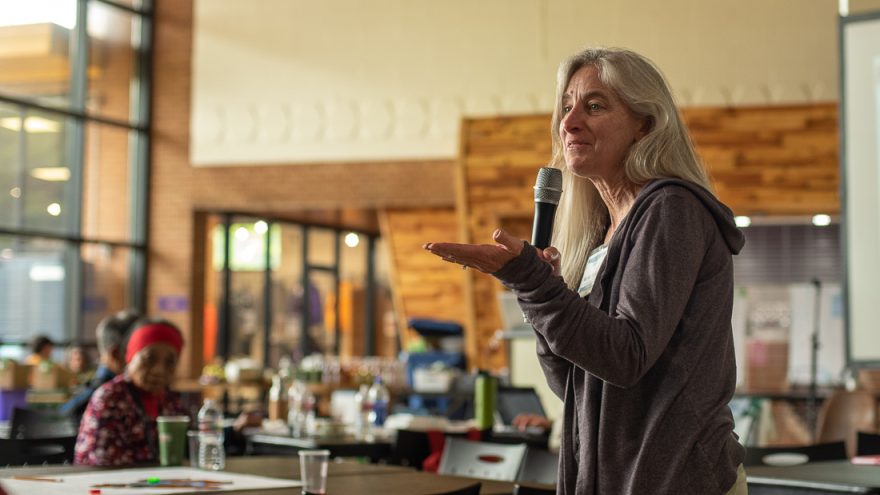
Marika Holland is the co-principal investigator for Rising Voices, Changing Coasts, a research project headquartered at Haskell that brings university-trained scientists to the table with Indigenous communities to understand and mitigate coastal climate change. Holland is also one of the newest MacArthur Fellows.
“I’m just incredibly grateful to be recognized in this way, and I think it’s much broader than me, honestly,” she said. “It’s about climate science and the value of understanding the Earth system.”
Holland is based at the National Center for Atmospheric Research in Boulder, Colorado, but makes yearly trips to Haskell for RVCC. She said Haskell’s meaning has made its imprint on the group’s research.
Don’t miss a beat … Click here to sign up for our email newsletters
Click here to learn more about our newsletters first
“The energy at Haskell is pretty amazing, and so I think that has — especially through these annual meetings — it’s infused a lot of our work,” Holland said.
As a climate scientist, Holland studies Arctic environmental systems, including how and why climate change affects them.
Please support
The Lawrence Times!
Subscribe here.
“RVCC is basically allowing me to work with others to understand what those changes mean, because the changes happening in the Arctic are enormous, and they have huge implications for the communities that live in the Arctic,” she said.
Haskell instructor Daniel R. Wildcat, Yuchi member of the Muscogee Nation of Oklahoma, is the lead investigator on the project. He landed a $20 million, five-year grant from the National Science Foundation to sustain the work in 2022.
The project was initially set to end in June. Wildcat said they’ll likely have enough funding to keep them going through 2027, and they have the will to keep the work alive long after the NSF money is gone.
“We’ve built too many good relationships, partnerships, and everyone just wants to continue the work,” he said.
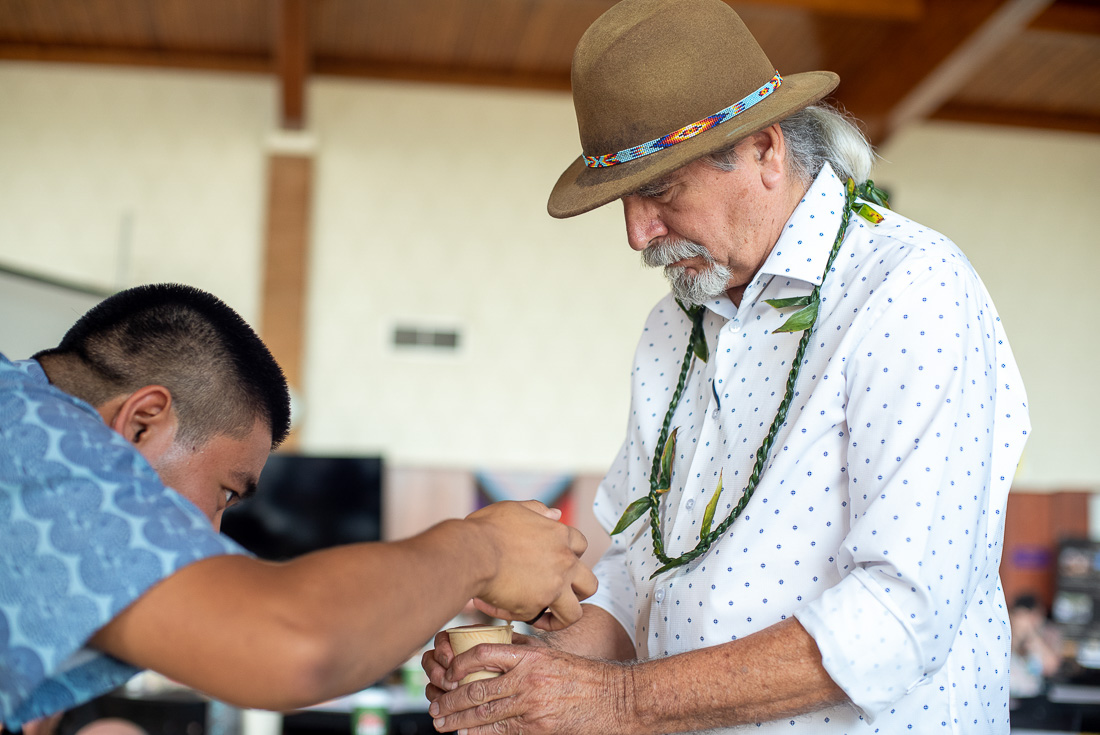
In addition to a center of operations at Haskell, RVCC has hubs in Alaska, Louisiana, Hawaii and Puerto Rico.
“We’re bringing Indigenous knowledge and wisdom together with some of the best information knowledge that we can get from modern science … and I think what we get is a much fuller and richer picture of what is going on with people who are living on coastlines today and now dramatically experiencing global climate change,” Wildcat said.
It’s been cool to see tribal leaders working alongside a MacArthur genius, he added.
Wildcat said RVCC has supported Indigenous communities with infrastructure they need to face climate change. A few of the hubs are developing sensing networks to monitor the land, air and water.
“Of course, they’re always monitoring what’s going on with the fish, what’s going on with the plants, the animals,” Wildcat said of the local communities. “They don’t need sensors for that, other than just the fact that they’re out there all the time and they can see changes that are occurring.”
Wildcat’s particularly proud of the RVCC team’s education work to create the next generation of Indigenous and community geoscientists. He also hopes they will set the gold standard for other scientists to work with Indigenous knowledge-holders.
“If you’re going to do this kind of work, it really means a heavy investment in communities and taking the time to build honest, trusted, responsible and respectful relationships,” Wildcat said. “And that’s something that … often in the past was not done in scientific research when people were working in Indigenous communities.”
He said it can be easy for climate scientists to get stuck behind their computers, removed from the human lives that their research impacts. In Holland’s case, a simple basketball game was the missing variable in the equation.
She traveled to Shishmaref, Alaska, with a group of RVCC researchers to work with the Alaska Native People who are Inupiaq. With the guidance of their cultural liaison, the scientists laced up their shoes and threw on their jerseys to join in the favorite local pastime of basketball. They got smoked by middle schoolers, Holland said, but that’s how they built trust.
Holland has been privy to knowledge and stories passed down for generations, which she said makes her work “impactful and useful.”
“It’s much more than just about the physics of sea ice. It becomes about people that rely on sea ice and use sea ice for hunting and subsistence activities, and what a loss of that ice cover means on a much more fundamental level,” she said.
Wildcat said RVCC intends to keep applying for federal support once the NSF funding ends while also seeking non-federal, philanthropic resources.
Those interested in contributing to this work can contact the Haskell Foundation about making a donation directly to RVCC.
If local news matters to you, please help us keep doing this work.
Don’t miss a beat — get the latest news from the Times delivered to your inbox:
Click here to learn more about our newsletters first

Wulfe Wulfemeyer (they/them), reporter and news editor, has worked with The Lawrence Times since May 2025. They can be reached at [email protected].
Read their complete bio here. Read their work for the Times here.
More coverage — Haskell Indian Nations University:
 Wulfe Wulfemeyer/Lawrence Times
 Jacob Rice / Lawrence Times
 Nathan Kramer / Lawrence Times
Latest Lawrence news:
 Wulfe Wulfemeyer/Lawrence Times