
Lawrence completed $1.9 million in repairs last year as part of plans to make sidewalks more accessible. Now, the city is turning to the Pinkney and Sunset Hill neighborhoods to evaluate hazards and necessary repairs.
Property owners along these corridors were initially alerted of the project earlier this year and should receive a follow-up letter summarizing hazards and repair options within the next month.
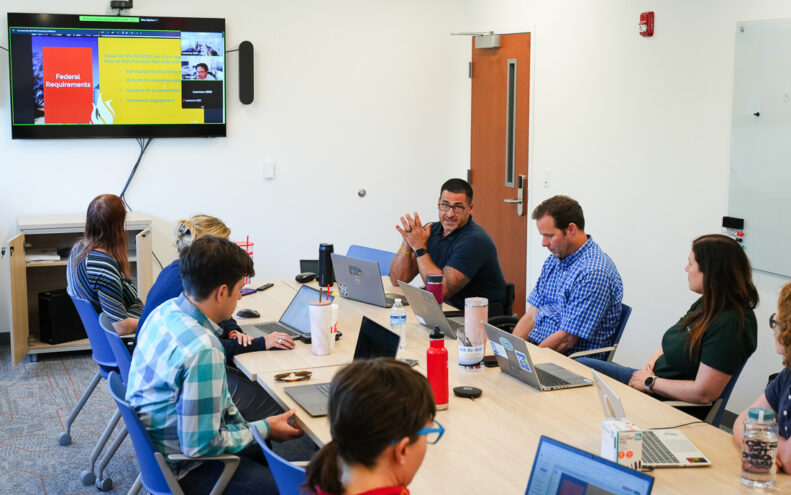
Connected City Advisory Board members met with Evan Korynta, the city’s ADA compliance administrator, last week to discuss details of the plan and what it means for property owners.
Federal Americans with Disabilities Act regulations require cities to have transition plans to improve the accessibility of city infrastructure.
While Lawrence’s ADA Right-of-Way Transition Plan will create more accessible infrastructure for people with disabilities, Korynta stressed that the plan has a “community for all” purpose.
Don’t miss a beat … Click here to sign up for our email newsletters
Click here to learn more about our newsletters first
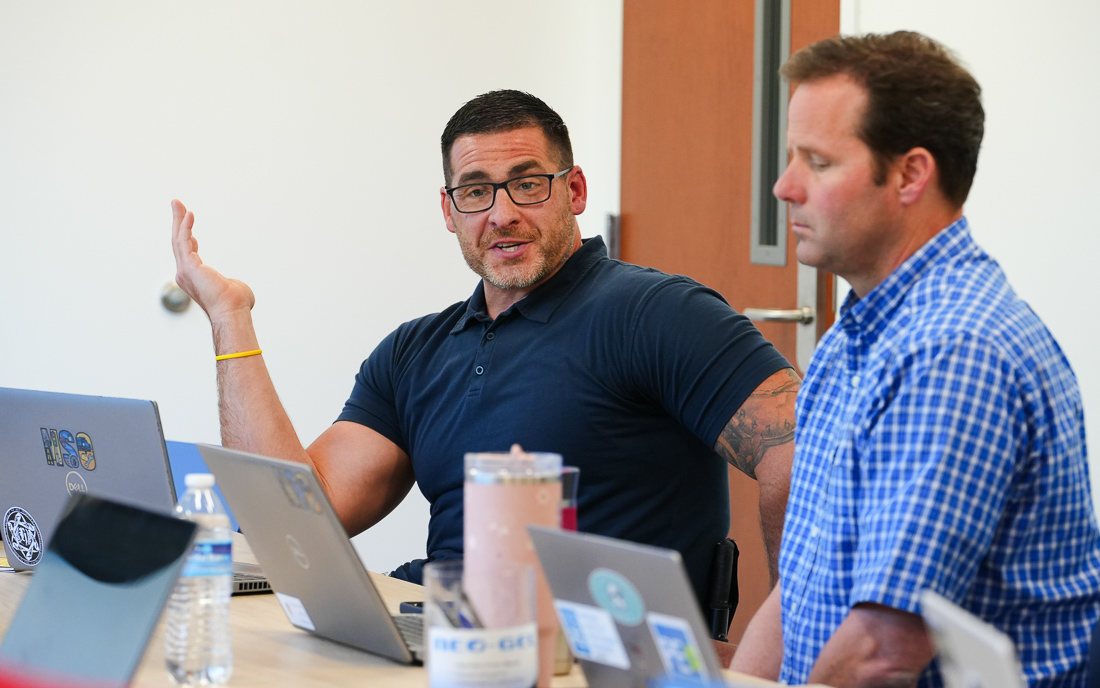
“One of the biggest assets and infrastructure that we have in our community is our sidewalks and our walking paths, and by making them safe and accessible, it not only improves pedestrian travel for people with disabilities, but kids walking to school and learning to ride bikes, our aging community, people that maybe have a temporary injury, parents pushing strollers,” Korynta said.
Please support
The Lawrence Times!
Subscribe here.
“This really is a plan that’s intended to improve infrastructure for everyone, because I’ve never heard anybody complain that a sidewalk is too accessible or in too good of shape,” he continued.
Lawrence began developing its ADA transition plan in 2021, starting with a condition assessment before taking into account factors such as pedestrian demand or the number of single-vehicle households and people with a disability nearby. However, route priorities may change if, for instance, a school opens or a large business shuts down, changing the number of pedestrians in an area.
As of 2024, when Lawrence city commissioners approved the plan, 4,500 curb ramps in Lawrence were in need of repair or replacement, according to the plan. Around 280 miles out of more than 425 miles of sidewalks needed repairs, and 92 miles needed to be replaced, meaning 87% of the city’s sidewalks needed work.
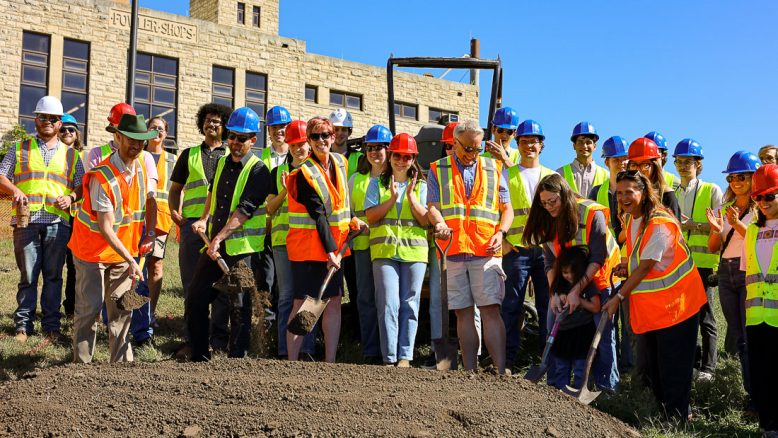
In 2025, two projects were completed: three blocks on Connecticut Street from Ninth to 12th streets, and along East 12th Street from New Hampshire Street to Oregon Street.
“I just hope that we have an infrastructure, particularly sidewalks, where people don’t have to risk being hurt, because that’s a real danger right now,” said Dot Nary, a wheelchair user and longtime Lawrence resident. “I know some people simply don’t go out a lot because they’re afraid of falling.”

Nary experiences difficulties navigating her neighborhood near Monterey Way and has been tossed out of her wheelchair as a result of inaccessible curb ramps.
“That’s an example of, frankly, paying taxes for 20-something years and not being able to use a basic thing like a curb ramp,” Nary said.
Korynta said the city will pay for about $90 million out of the $103 million total cost of the plan, with annual funding increasing each year. The city used $1.9 million in 2025.
“The hope is that we’re able to get more work done with the more funding that we have,” Korynta said. “We wanted to kind of slowly ramp up (funding), just to see, one, not only how long these projects were taking, but kind of what was the cost associated with those.”
Unless sidewalk hazards or repairs are due to city infrastructure, property owners will be responsible for funding repairs for the sidewalks adjacent to their properties. Property owners can choose to contract the project with the city, which is usually cheaper, or use their own contractor.
Depending on the hazard report, the city may cover part of the cost. Some property owners may also be eligible for financial aid, where the city will cover the total cost of repairs.
For areas that allow bricks, property owners can also choose if they want to use concrete or brick. Though the city has a supply of used brick, the labor costs are higher due to the longer time it takes to install. For the 2025 project along Connecticut Street, property owners did not have to pay for materials as the city supplied the bricks. Instead, they solely paid for installation and labor costs, Korynta told CCAB members.
Construction in the Pinkney and Sunset Hill neighborhoods is currently scheduled for late 2026 or early 2027.
Here are the priority routes:
2026-ADA-Priority-RoutesProperty owners can check for examples of hazards, assess repair and funding options, or view the ADA inspection map at this link.
If local news matters to you, please help us keep doing this work.
Don’t miss a beat — get the latest news from the Times delivered to your inbox:
Click here to learn more about our newsletters first

Hannah Loub (she/her), reporting correspondent with The Lawrence Times since January 2026, is a 2026 graduate of the University of Kansas who majored in journalism and global and international studies. She also served as lead digital producer for KUJH and worked as a beat reporter for the University Daily Kansan. Read her work for the Times here.
Latest Lawrence news:
 Cuyler Dunn/Lawrence Times
 August Rudisell/Lawrence Times
 Wulfe Wulfemeyer/Lawrence Times
 Cuyler Dunn/Lawrence Times