

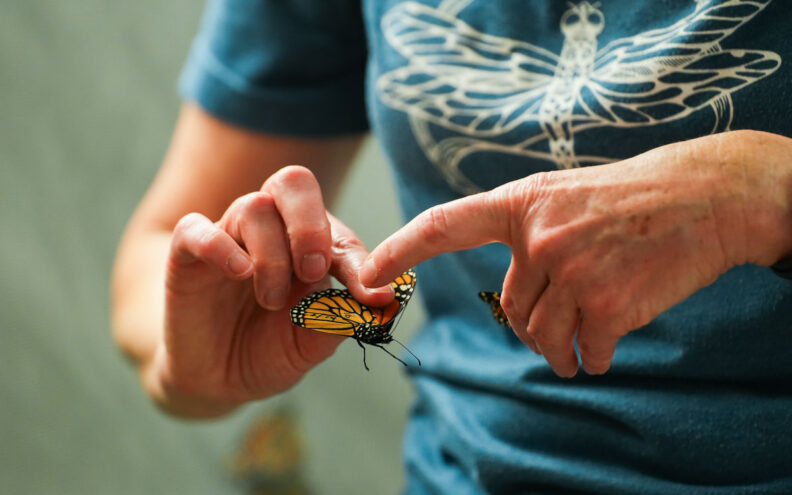
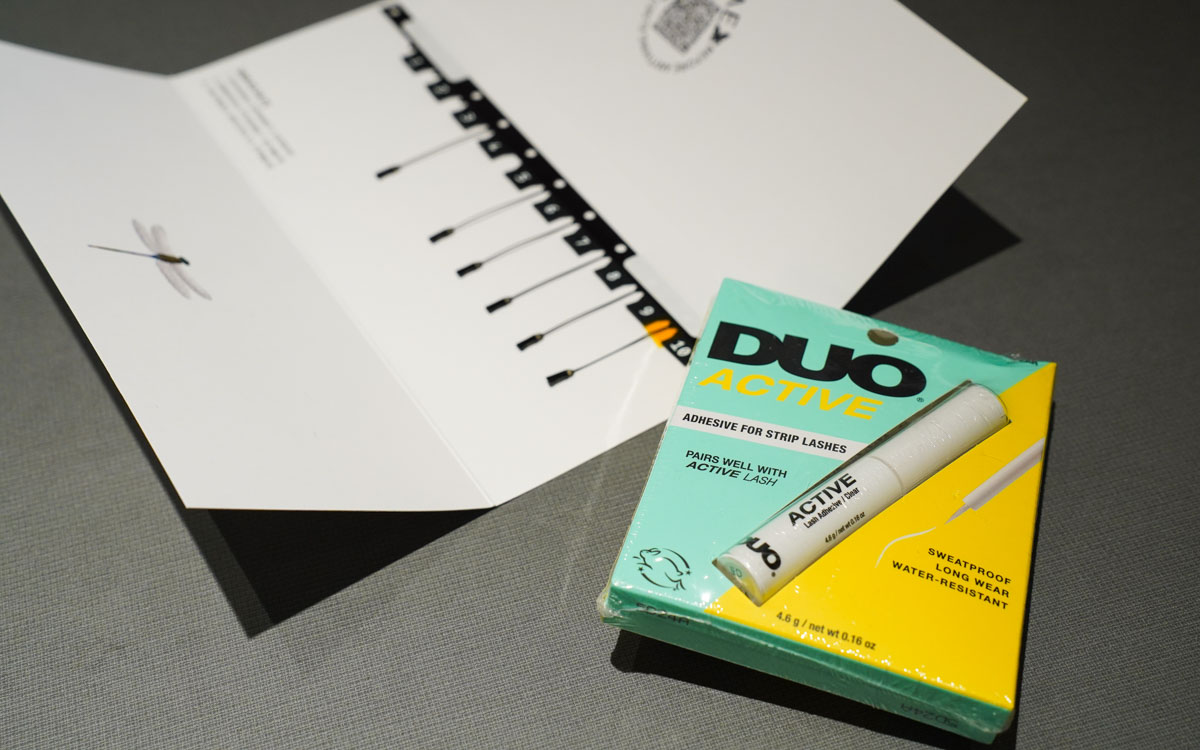
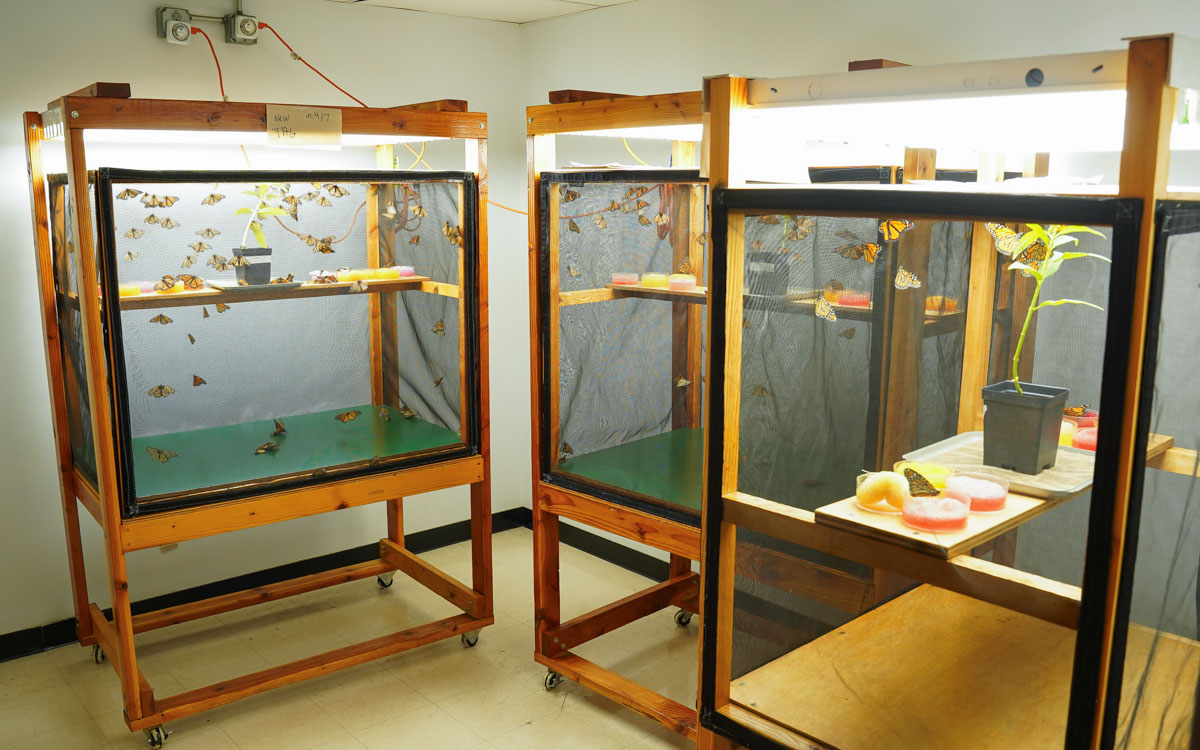
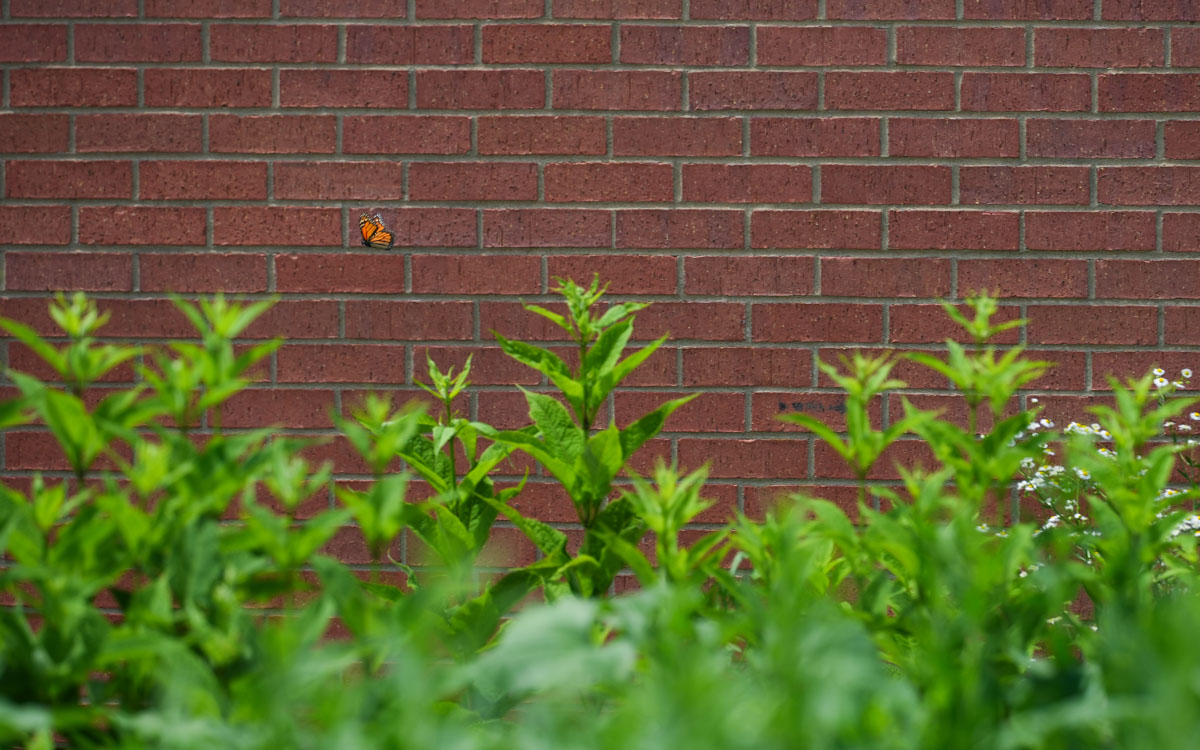
Outfitted with a little eyelash glue and tiny, solar-powered radio tagging devices, Kristen Baum will be able to watch the progress of a monarch butterfly that hatched from an egg laid in her backyard as it flies across the country.
Baum is a professor at the University of Kansas and the director of Monarch Watch, an education, conservation and research program connected to the university.
She and her team have joined the Project Monarch Collaboration alongside scientists through the United States, Canada and Mexico to solve long-standing puzzles about monarch migration.
Their current spring project was preceded by a fall initiative to place radio tags on monarchs headed south. Ten of the 30 butterflies Baum and her team tagged last year soared all the way to Mexico, with a handful making it to overwintering sanctuaries like the Monarch Butterfly Biosphere Reserve.
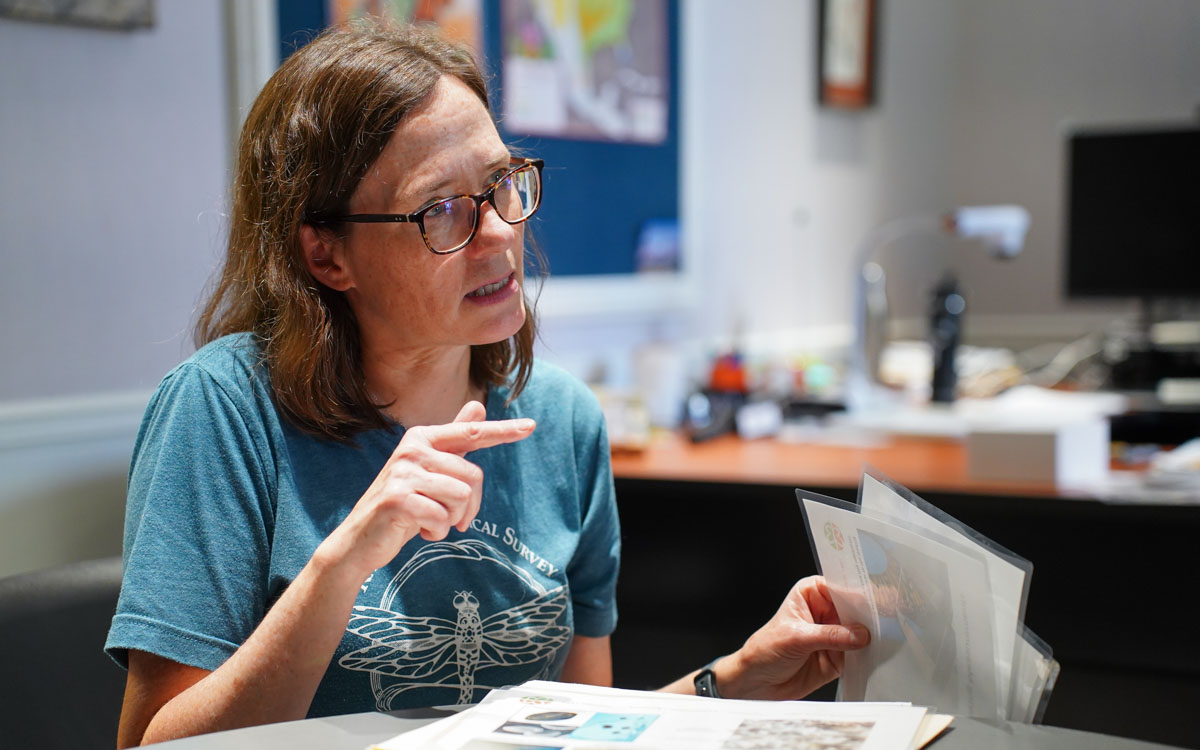
From hypothesis to fact
Baum pulled up the tracking software on her computer and played a time-lapse.
At the start of the fall project, a few dots begin to appear on the map in Texas, Oklahoma and Kansas, before sprouting offshoots, each representing the path of an individual butterfly.
Don’t miss a beat … Click here to sign up for our email newsletters
Click here to learn more about our newsletters first
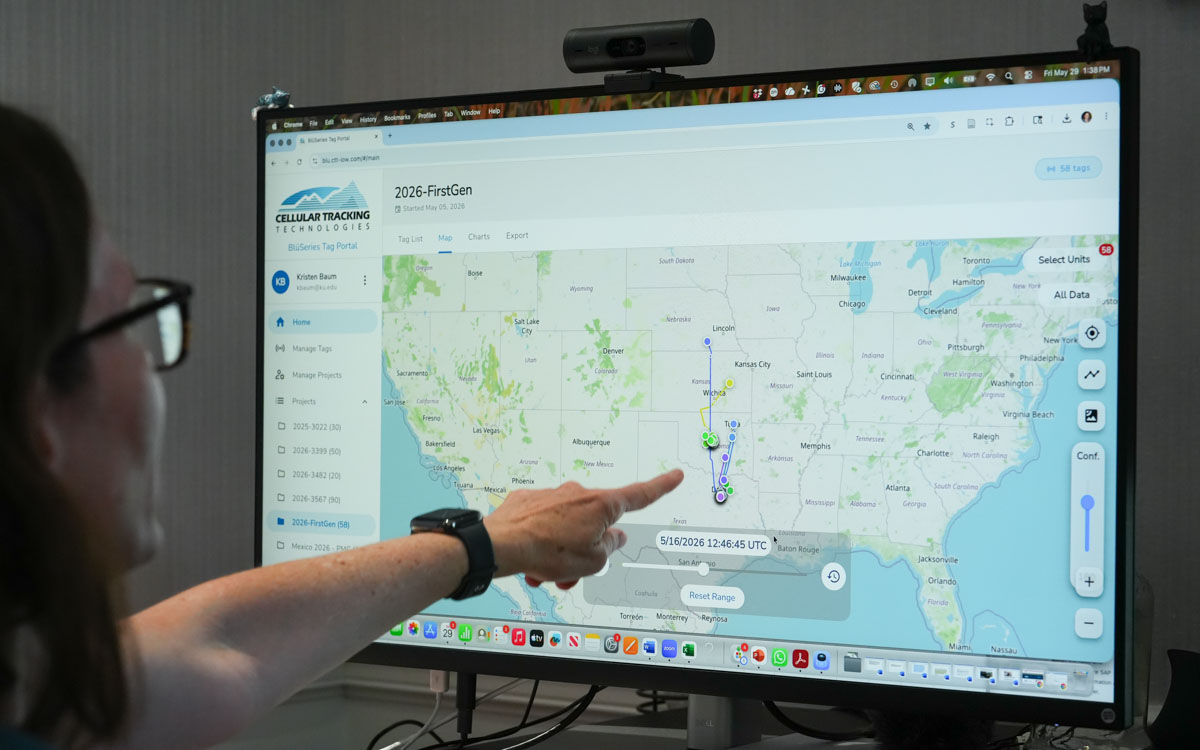
Baum pointed out one monarch that hadn’t shown up since October in Corpus Christi, Texas, but reappeared on the radar in January in an overwintering sanctuary.
Please support
The Lawrence Times!
Subscribe here.
The tagging technology, she said, doesn’t allow researchers to capture precise butterfly locations at any moment, but its capabilities far exceed other tagging methods that generally only capture the start or end point of a monarch’s path.
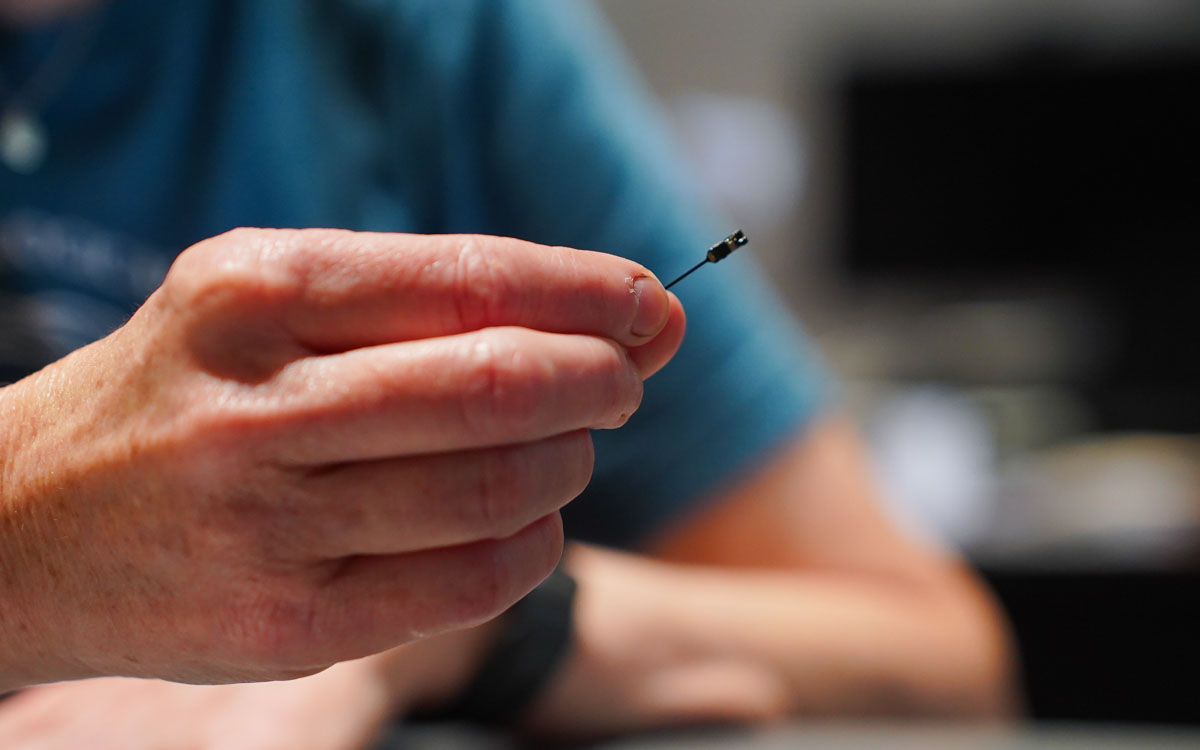
To the touch, each radio tag — just a few centimeters in length — feels like a slender, flexible piece of plastic with a harder node on the end. That node is a solar-powered transmitter with passive Bluetooth detection that will translate a butterfly’s approximate location to a dot on a digital map. The transmitter also relies on other types of receiver networks, like Motus stations.
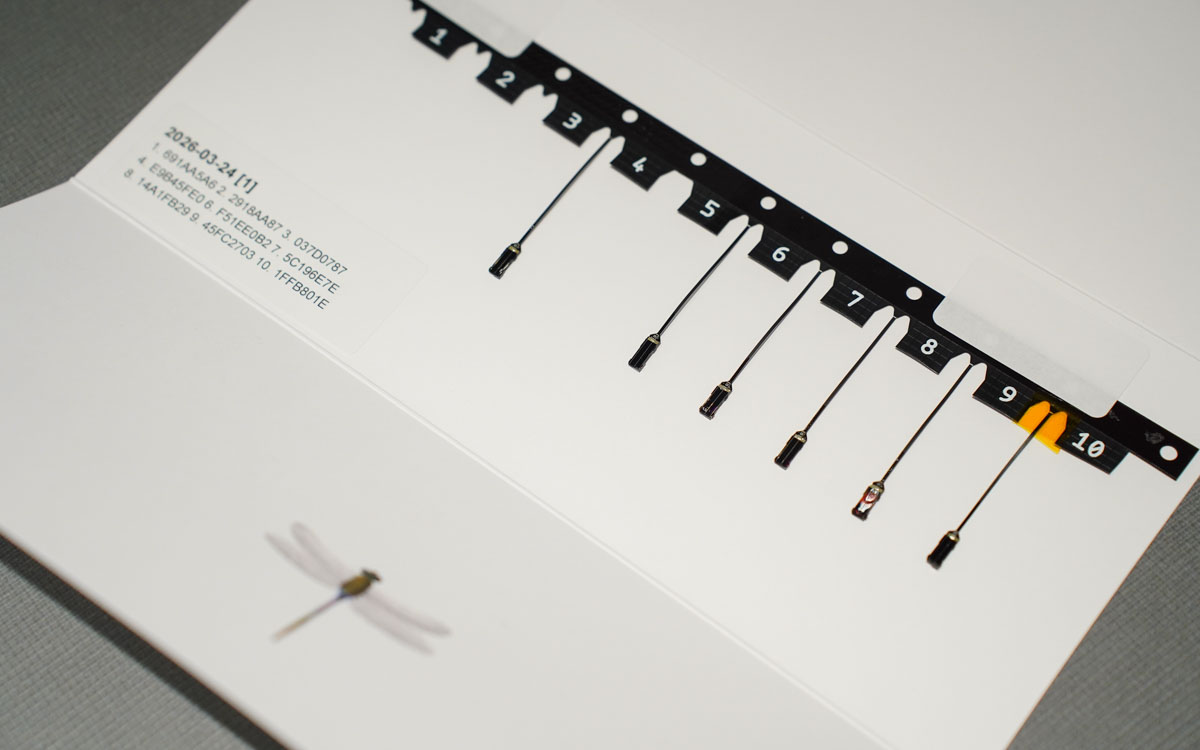
The dot on the map typically indicates the exact location of the device that caught the tag’s signal, rather than the insect. To be more precise about the butterflies, Baum and her collaborators would need to install arrays with three devices triangulating the signal.
“The game changer was being able to connect to all those Bluetooth devices and being able to pick up all the detections along the way,” she said. “And then you start thinking about, OK, so what are all the questions we can ask?”
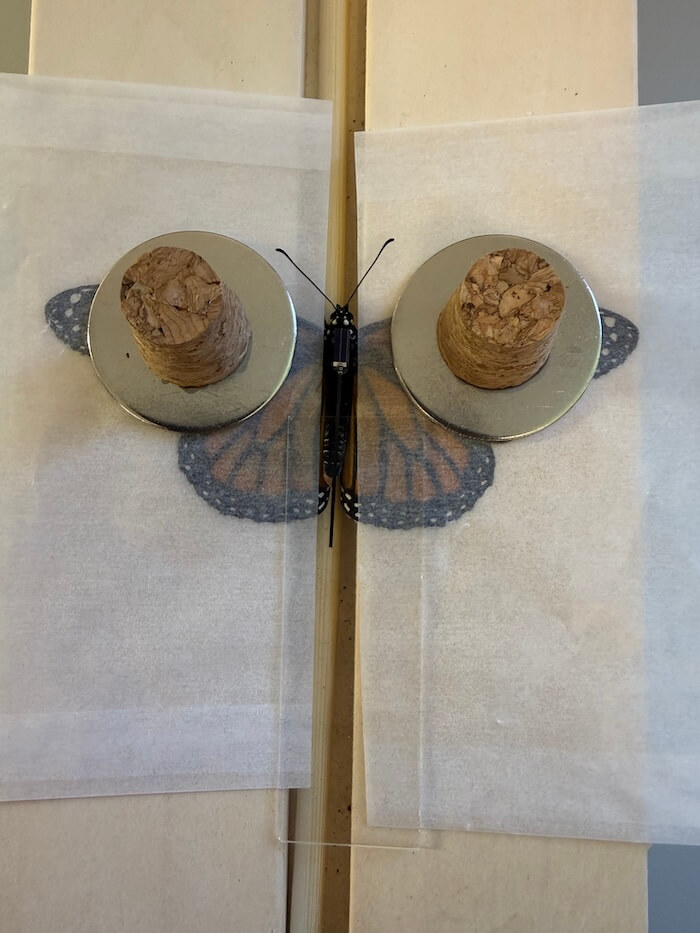
Now, Baum and her collaborators can identify consistent stopover locations.
“You could think of on-the-ground action where we could do more to support monarchs, so thinking about nectar resource availability and kind of things like that,” Baum said.
Researchers can also start solidifying hypotheses into facts.
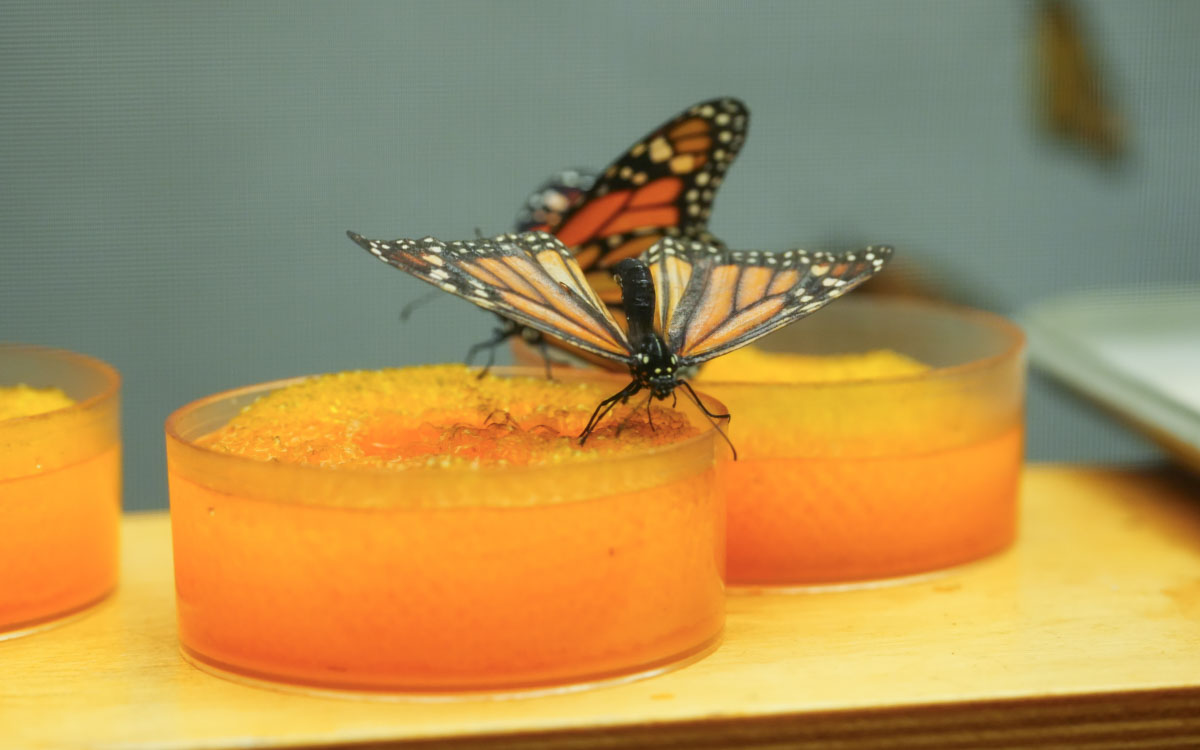
Orley “Chip” Taylor, the KU professor emeritus who founded Monarch Watch, had long wondered how daylength impacts when first-generation monarchs start moving north.
“There has not been an easy way to test this hypothesis until now,” an update from Baum on the organization’s website reads.
Tracing first-generation butterflies
Last weekend, Baum’s research team tagged first-generation monarchs for their spring dataset — so far, there are 11 from Kansas.
First-generation monarchs come from the first batch of eggs that females lay as they return north from Mexico, where they stay for the winter. The scientists want to see where that generation flies.
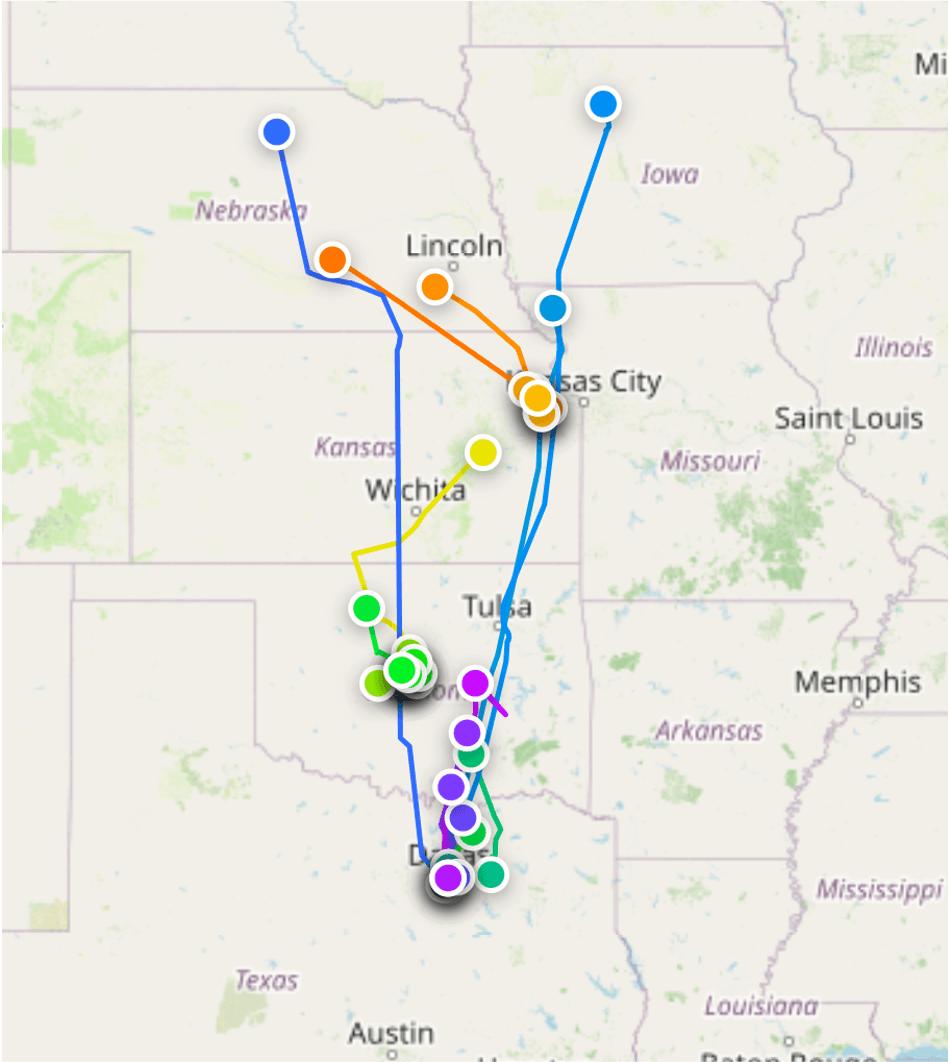
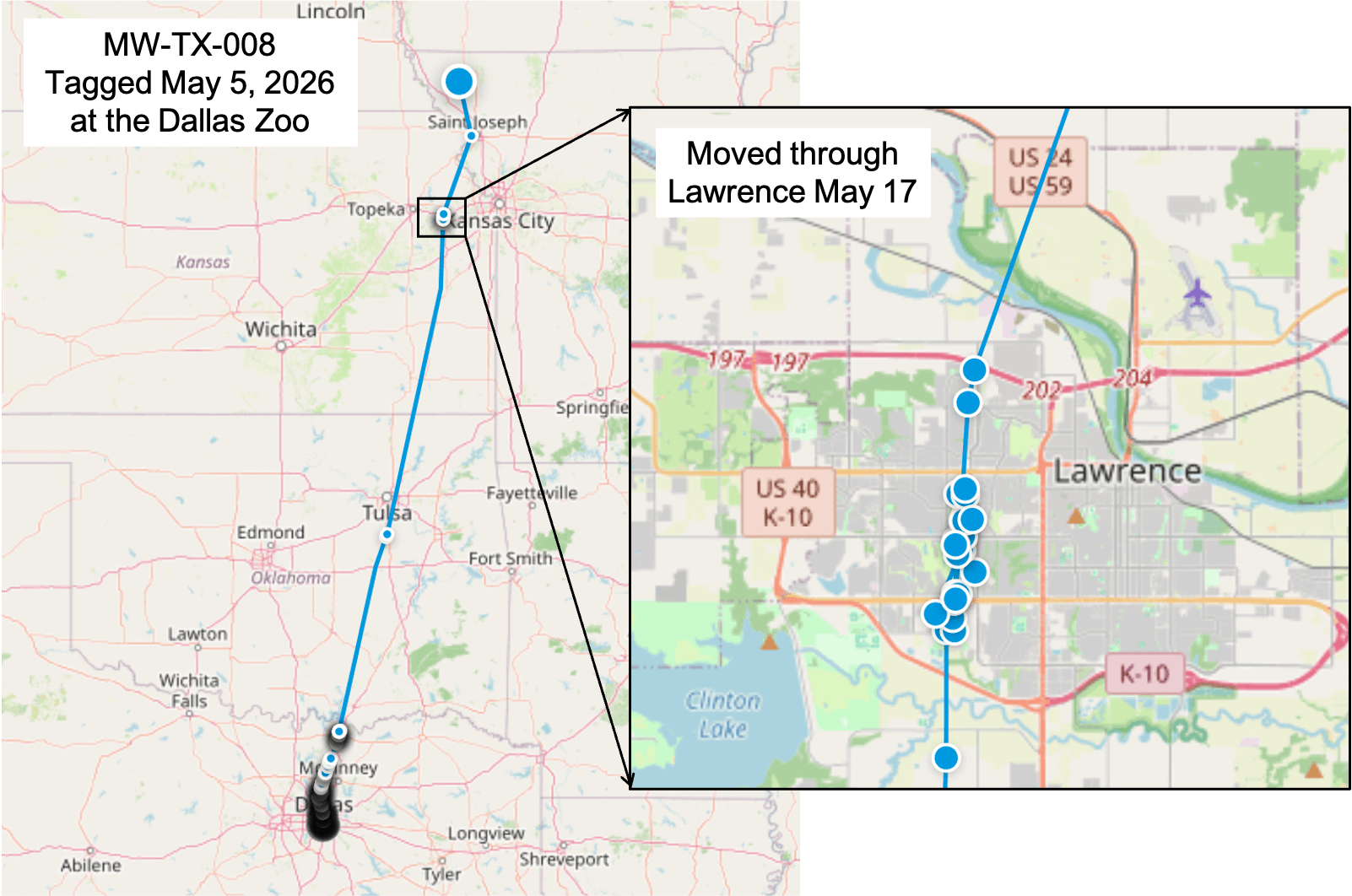
Baum is excited to overlay data sets from the radio tags and Monarch Watch’s community science project that allows folks across multiple nations to order tagging kits online for $15.
The program, which started in 1992 when Monarch Watch was founded, helps monarch-lovers learn how to place round sticker tags on butterfly wings.
The stickers adhere to the insect’s membrane, holding on even after its scales have fallen off, without impeding or damaging the butterfly. Each sticker has a unique code, and participants can report the specific code and location of any tagged butterflies they spot throughout the season.
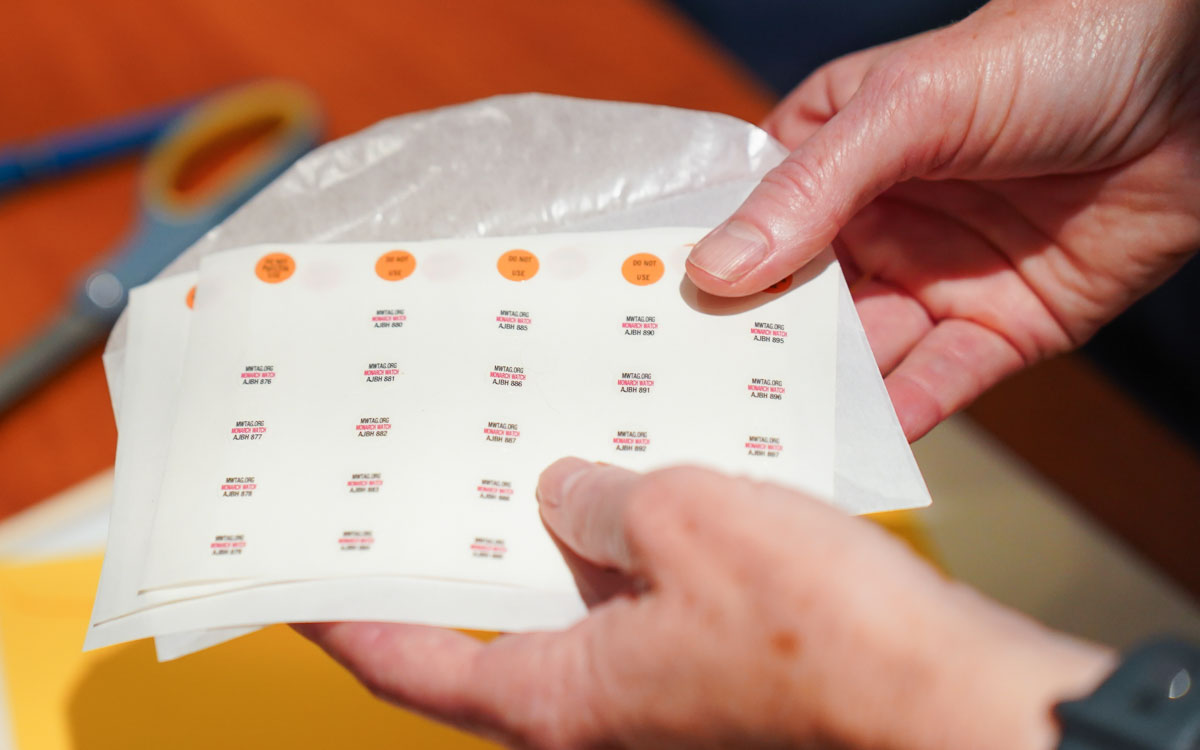
Baum hopes to include flexible, lightweight rulers in the kits in the future so participants can also measure wing length.
“I think that’ll even allow us to connect more the two different data sets, right, and to start to get a better idea, like, what does the population look like?” Baum asked. “Because size, you know, can reflect food restrictions.”
Connect with monarchs
Anyone can follow the progress of the radio-tagged monarchs by downloading the Project Monarch App, available for Android here and iPhones here.
According to the company that manufactures the tags, any smartphone or smart device with location services and Bluetooth enabled can become a passive receiver to help locate monarchs.
Baum wonders how the app might engage more or different people to connect with the butterflies that she cares for so deeply.
“What gets people interested in doing something on the ground to support monarchs?” she asked. “… I do think monarchs are a great connector of people to the environment, as well as people to people. I don’t know, they just have this way of, you know, everybody’s excited to see them.”
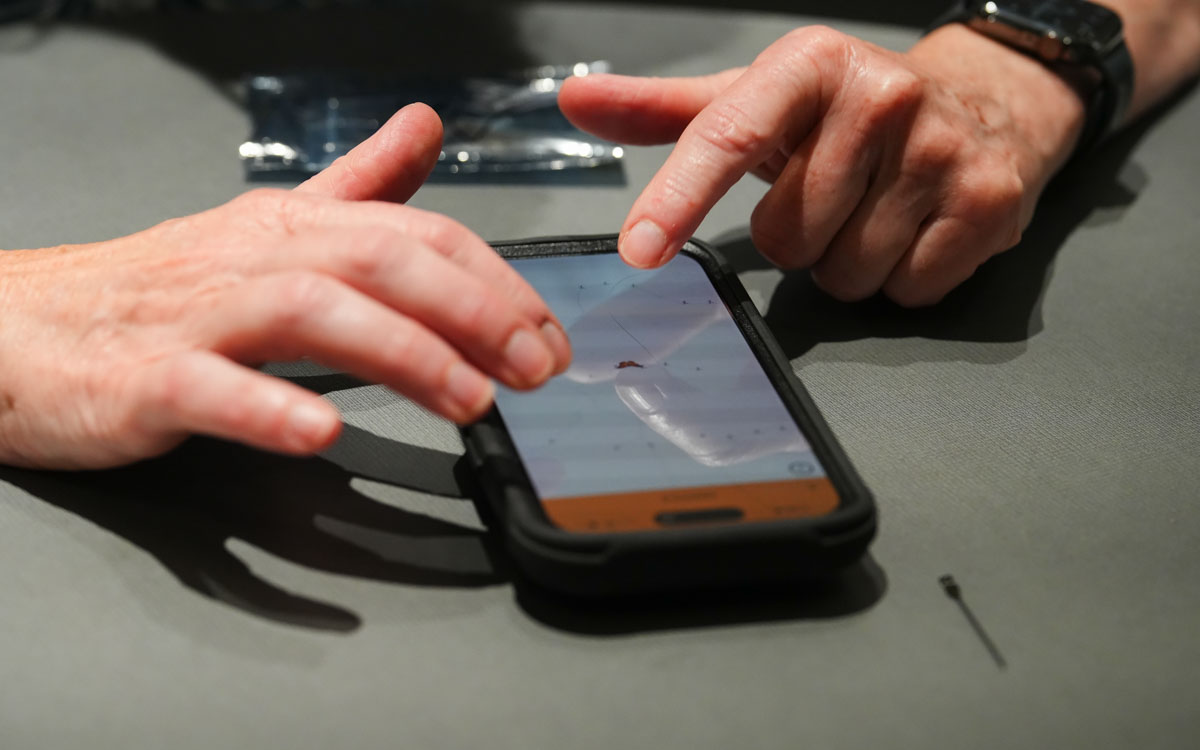
People can order Monarch Watch tagging kits at this link to help build more robust data sets on monarch migration. The organization’s website has instructions on how to catch, hold, tack and report butterflies.
Baum also encouraged folks to plant butterfly-friendly habitats, such as native species of milkweed. Even folks without yards can plant helpful flowers in pots on porches or balconies. Learn more about planting a butterfly garden at this link.
If local news matters to you, please help us keep doing this work.
Don’t miss a beat — get the latest news from the Times delivered to your inbox:
Click here to learn more about our newsletters first

Wulfe Wulfemeyer (they/them), reporter and news editor, has worked with The Lawrence Times since May 2025. They can be reached at [email protected].
Read their complete bio here. Read their work for the Times here.

Jacob Rice (he/him), photo correspondent, has worked with The Lawrence Times since March 2026. He studied journalism and mass communications at Iowa State University, where he spent four years as the visuals editor for the Iowa State Daily.
Check out his photography for the Times here. Read his articles for the Times at this link.
Latest Lawrence news:
 Cuyler Dunn/Lawrence Times
 Cuyler Dunn/Lawrence Times
 Debi Taylor/Contributed photo