

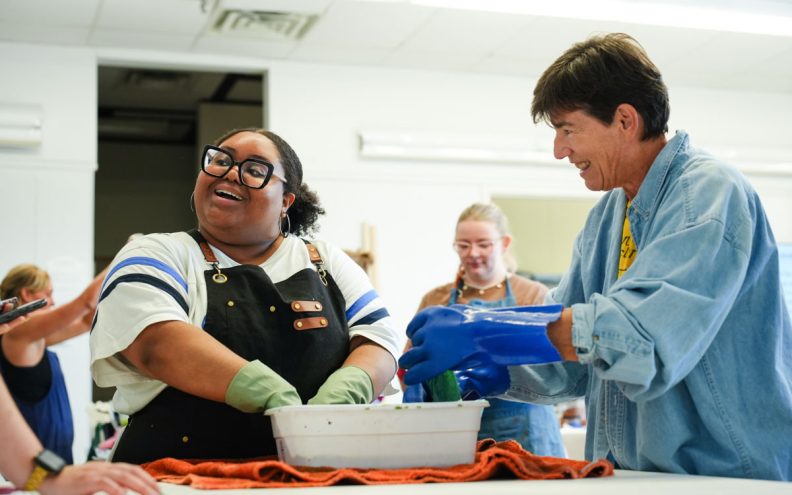
KU students harvested Japanese indigo from a campus dye garden, then transformed its crushed leaves into shifting shades of turquoise and blue on silk in Natural Dye Textiles class.
The liquid in the dish pan stayed the color of crushed leaves — murky green and cold enough to numb students’ fingers.
But as KU students massaged silk through the fresh Japanese indigo mixture and lifted it into the air, the fabric began to change: green at first, then turquoise, then blue.
The dyeing session was the next step after students in the University of Kansas’ Natural Dye Textiles class harvested Japanese indigo from the university’s medicinal garden two days earlier.
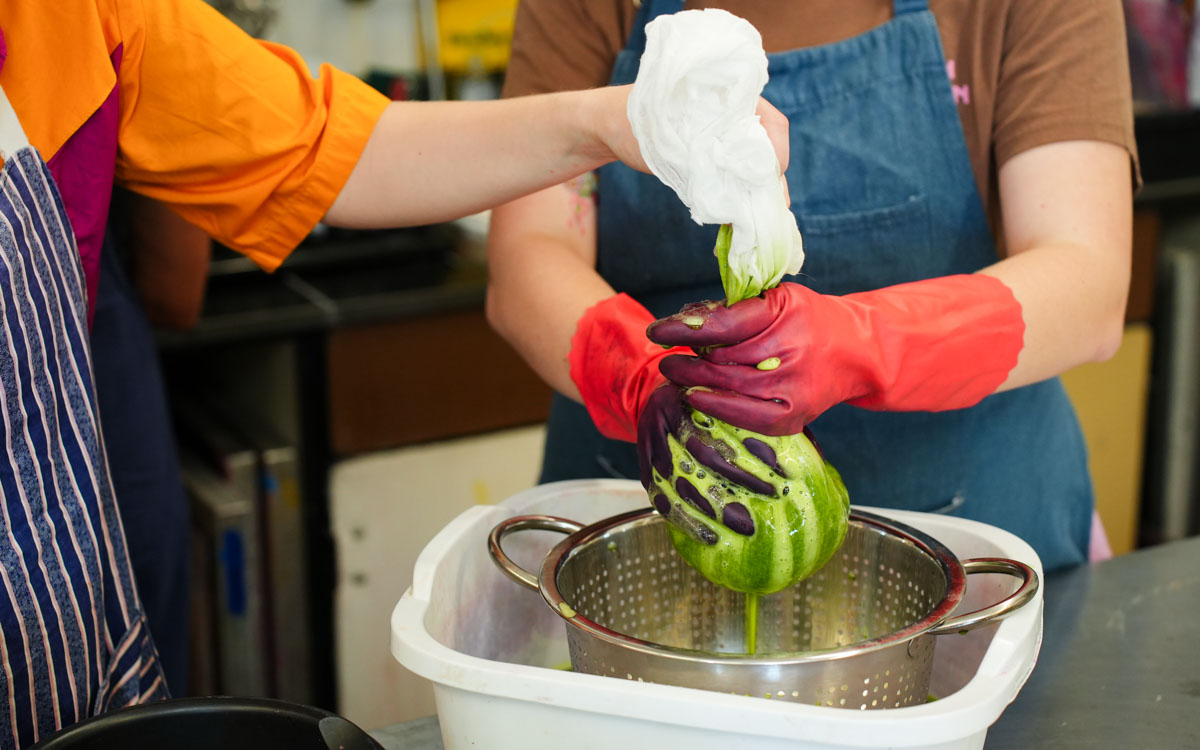
In the studio on Thursday, they weighed the leaves, blended them with ice-cold water, strained the plant material and soaked silk fabric through the resulting liquid.
Don’t miss a beat … Click here to sign up for our email newsletters
Click here to learn more about our newsletters first
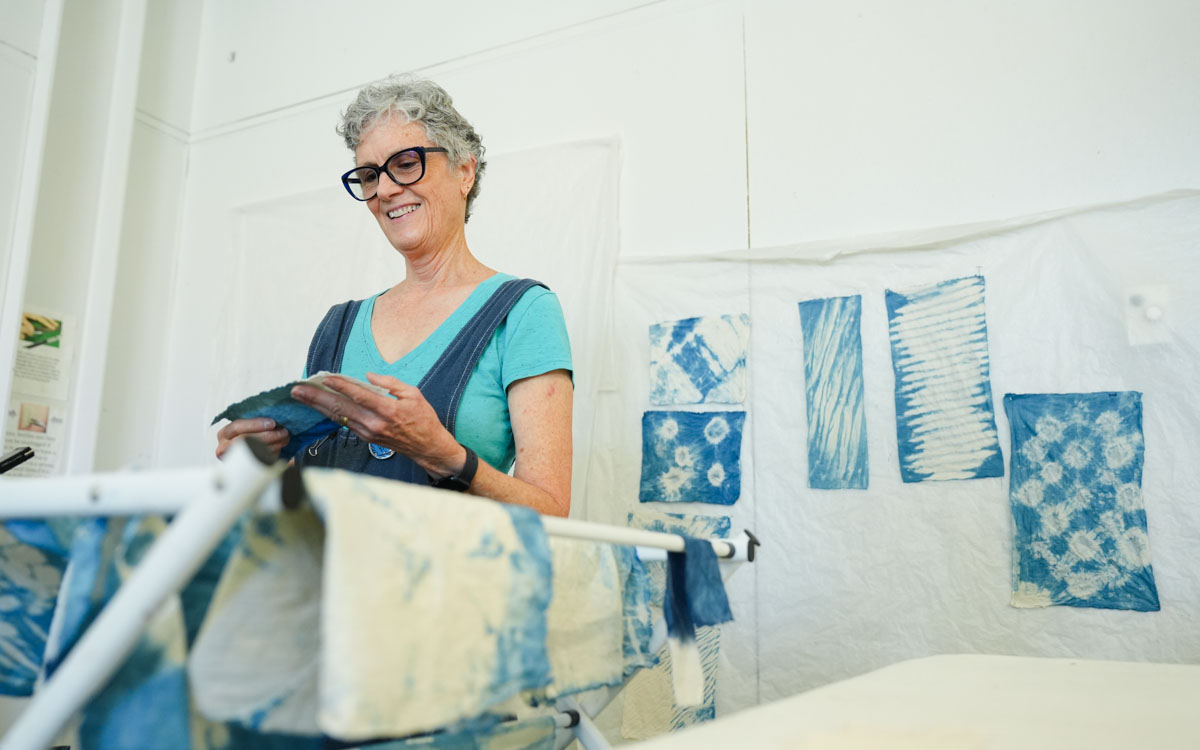
“When you dip it in and pull it out, it’s green and it oxidizes and it turns a beautiful blue, and you can do that over and over,” said Mary Anne Jordan, professor of visual art in textiles and fiber. “It’s magical.”
The class of 11 students is learning to make dye from plants, but Jordan said the work expands beyond fabric dyeing.
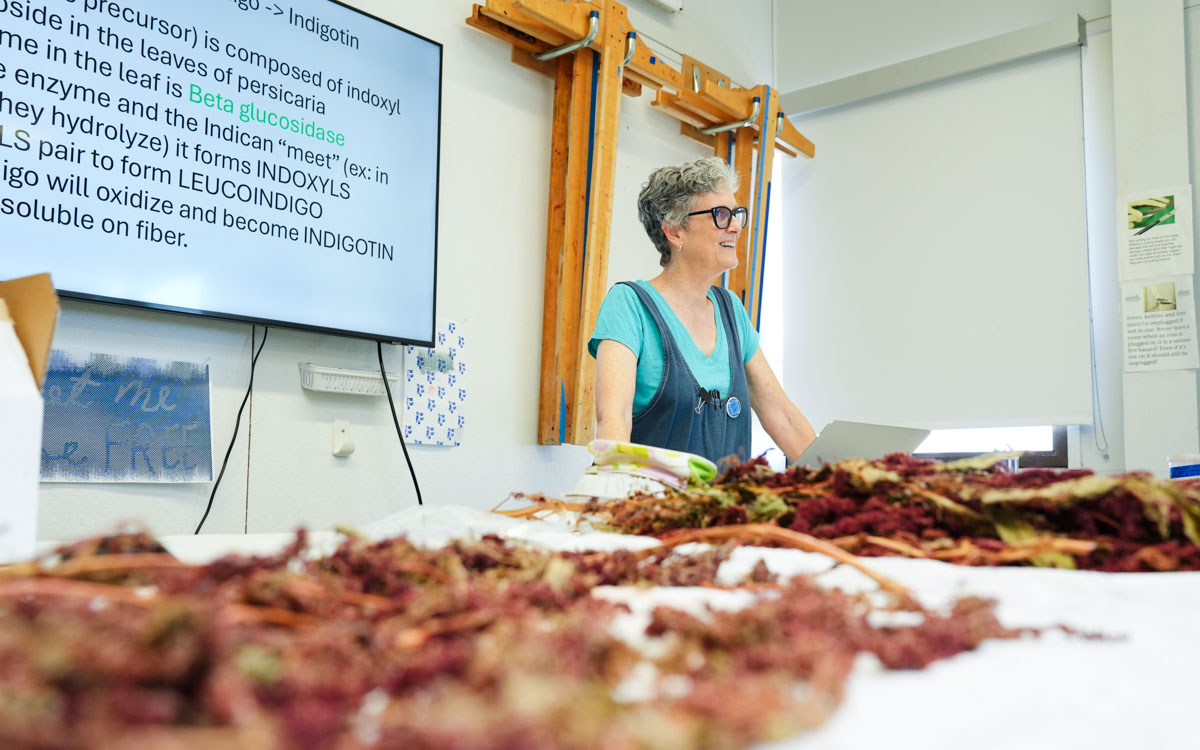
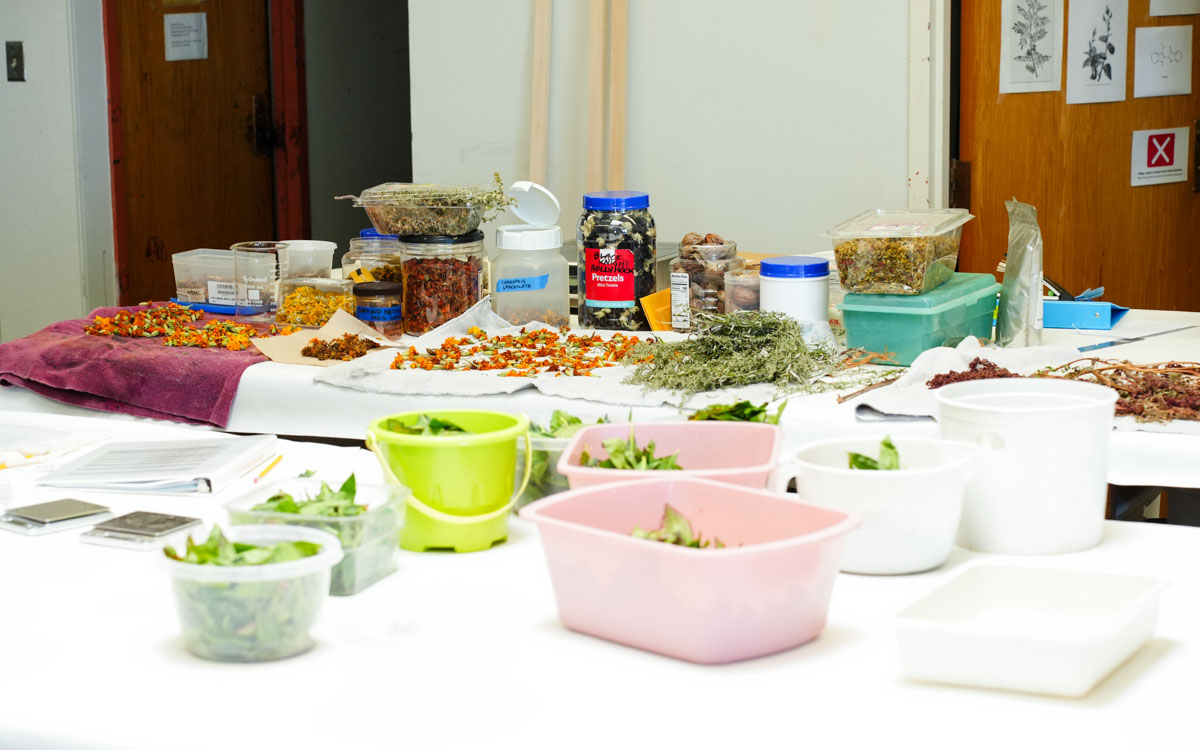
The garden supports work with textile dye, ink, paint and printing on paper.
It also gives students a tactile lesson in the labor, timing and chemistry that can be easy to miss when color comes from a store-bought packet or a finished garment.
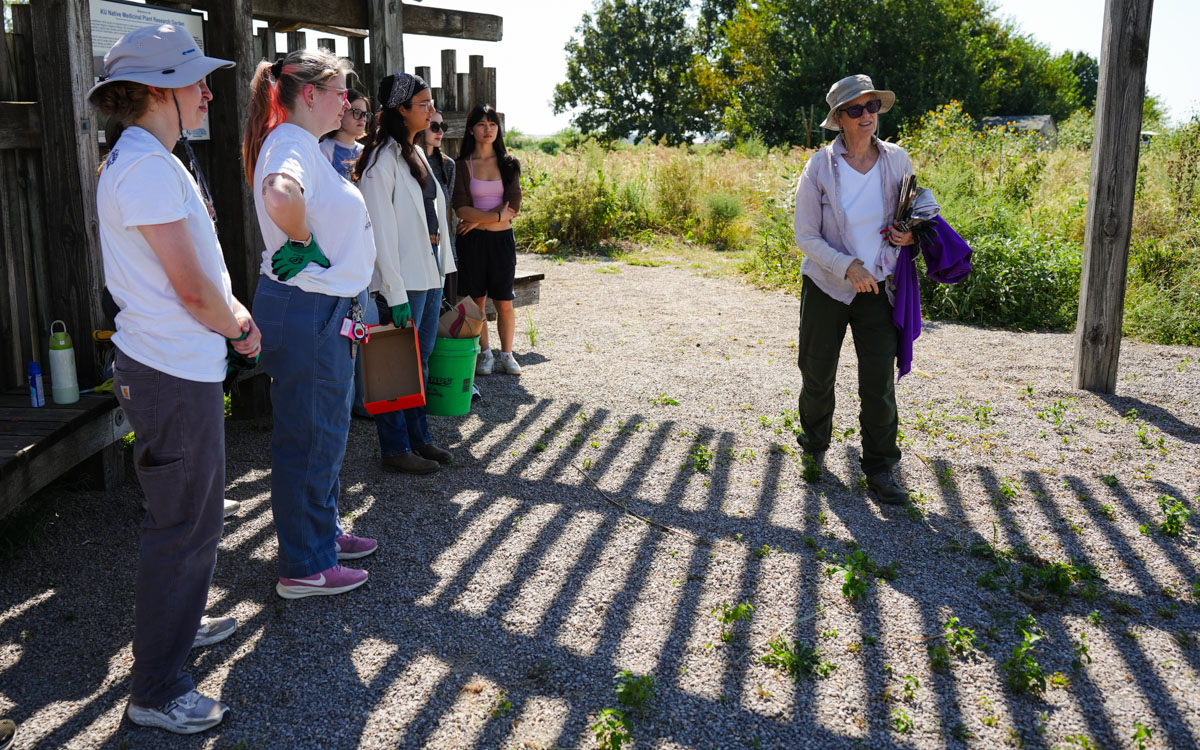
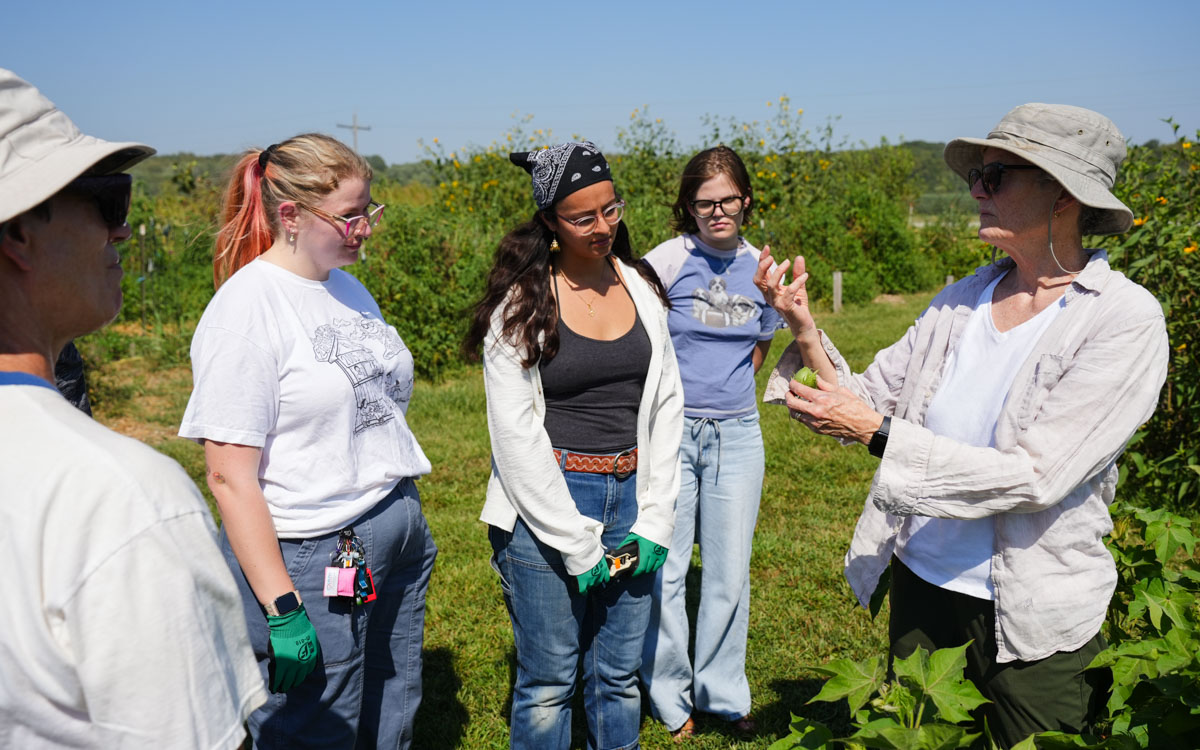
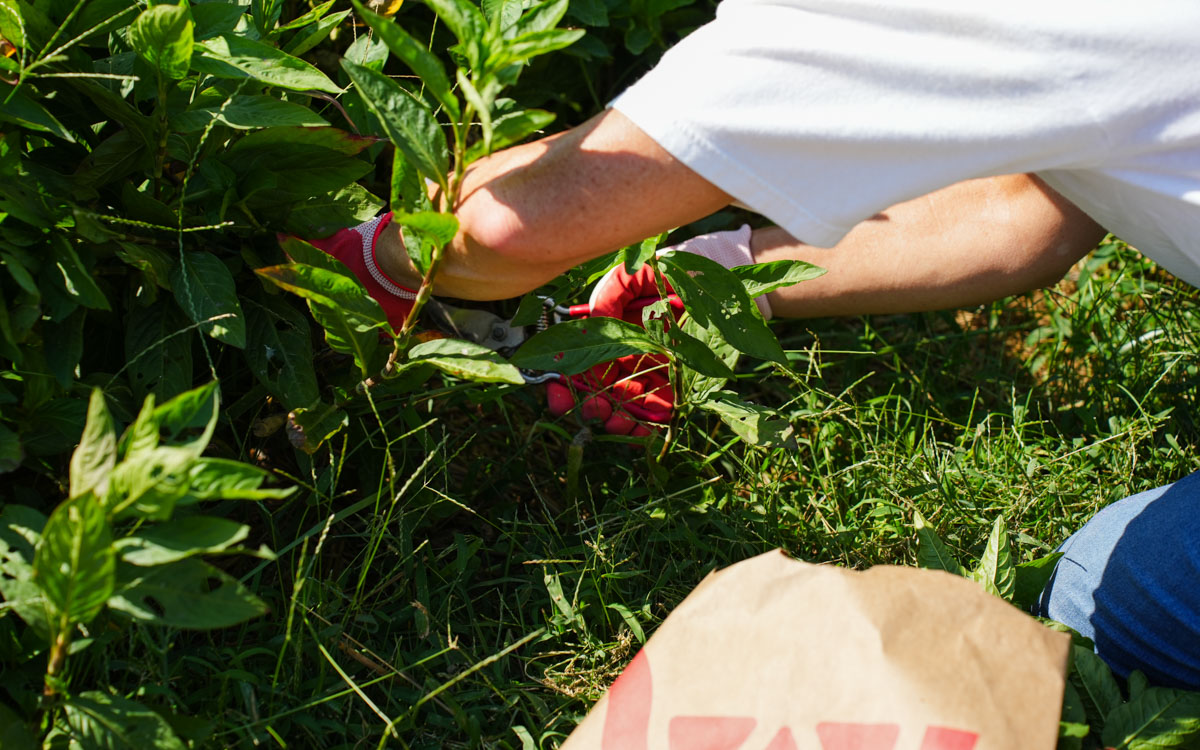
The Japanese indigo, Persicaria tinctoria, had been growing in KU’s dye garden, where students harvested stems Tuesday as late-summer heat beat down on the plants.
Every two students had about 100 grams (about 3.5 ounces) of leaves.
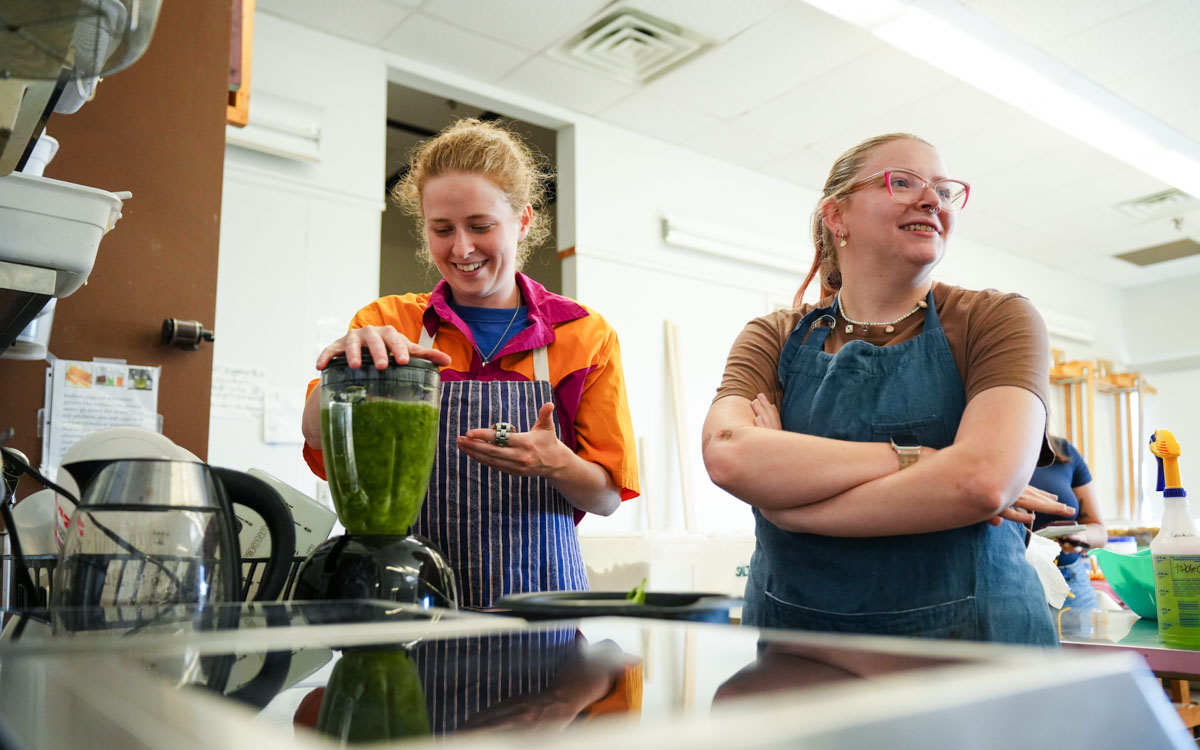
They blended the leaves and cold water for about a minute, then strained the mixture through a cheesecloth into dishpans that became temporary dye baths. Jordan instructed students to keep the mixture cold because it slowed the reaction and gave them more time to work before the color changed.
Jordan said the indigo can be harvested several times during a growing season, though the leaves used in Thursday’s class had been picked late in the season and had sat for two days before processing.
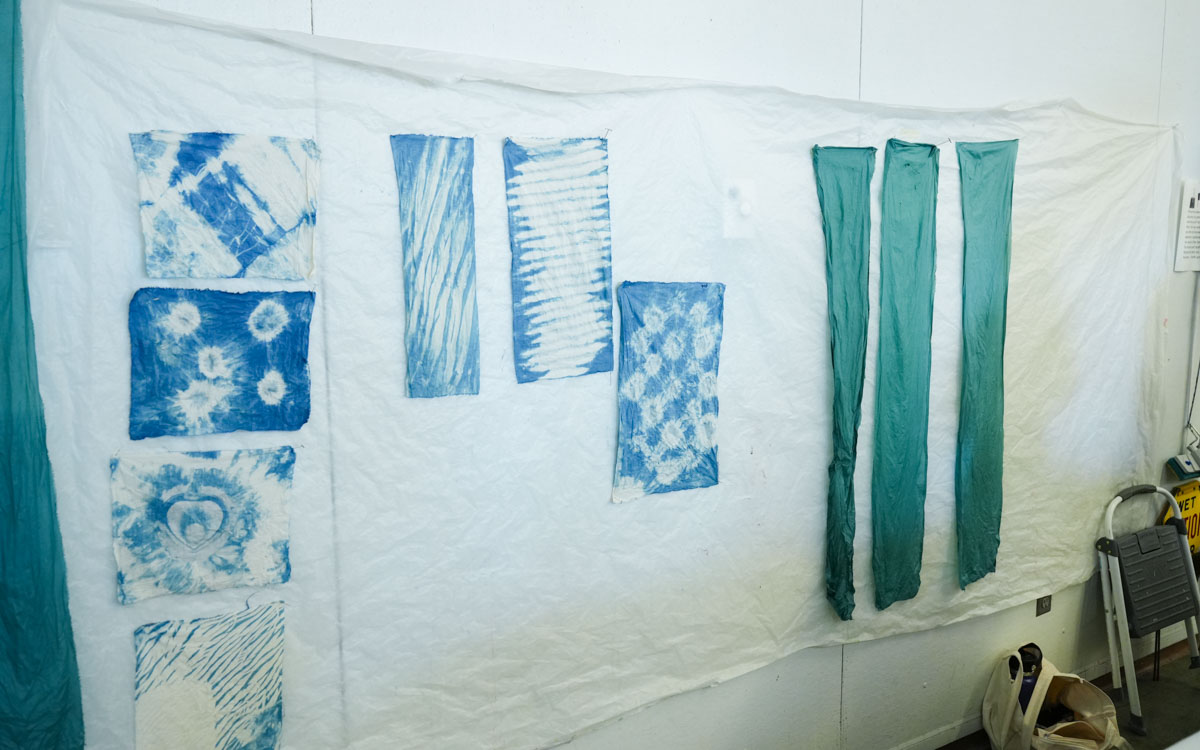
That timing affected the results. Instead of the deep blue many people associate with indigo-dyed denim, students’ silk samples emerged in softer, warmer shades of teal and turquoise. They could watch their silk darken in the air, then decide whether to dip it again for a deeper shade.
“I thought the liquid would turn blue more than it has,” said Em Thomas, a senior textile major. “Like it’s staying green, and the color only really coming out in the fibers is really interesting.”
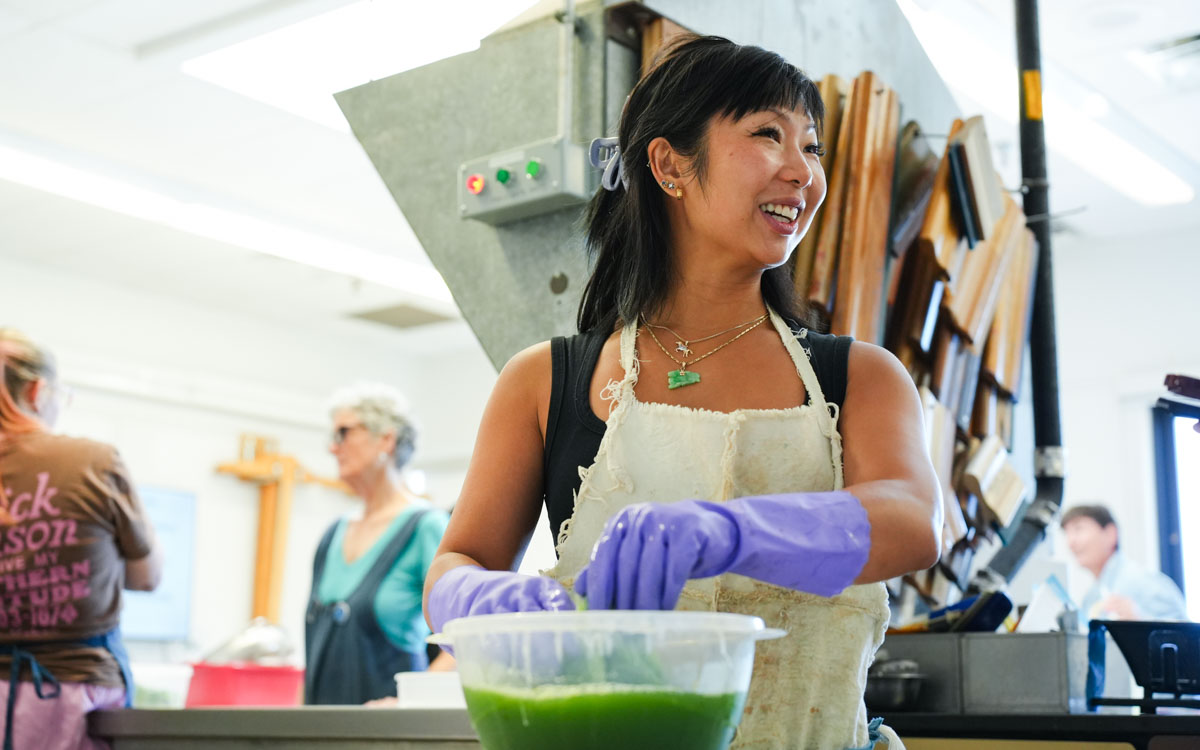
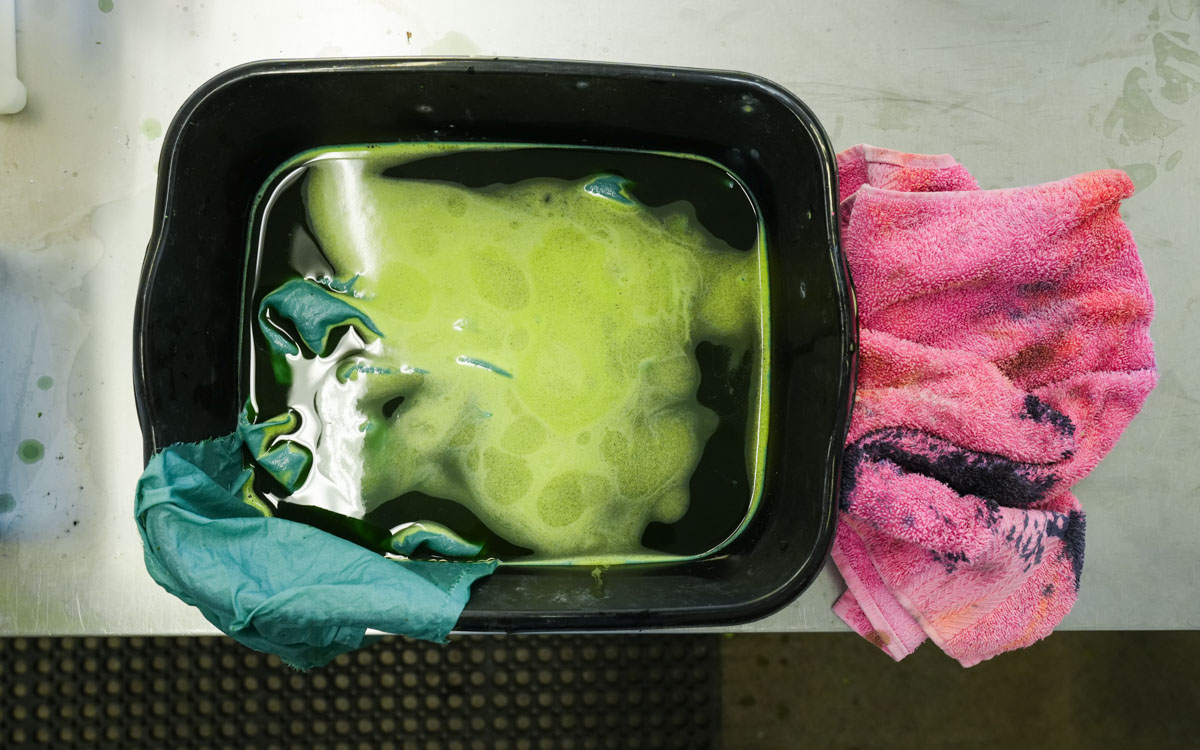
Inside the leaf, a colorless precursor called indican begins a chain of reactions when the cells are broken down. An enzyme called beta-glucosidase helps convert indican to indoxyl, which forms leucoindigo. When exposed to air, leucoindigo oxidizes into indigotin, the blue pigment associated with indigo dyeing.
This is similar to how iron reacts with oxygen when water is introduced to form rust.
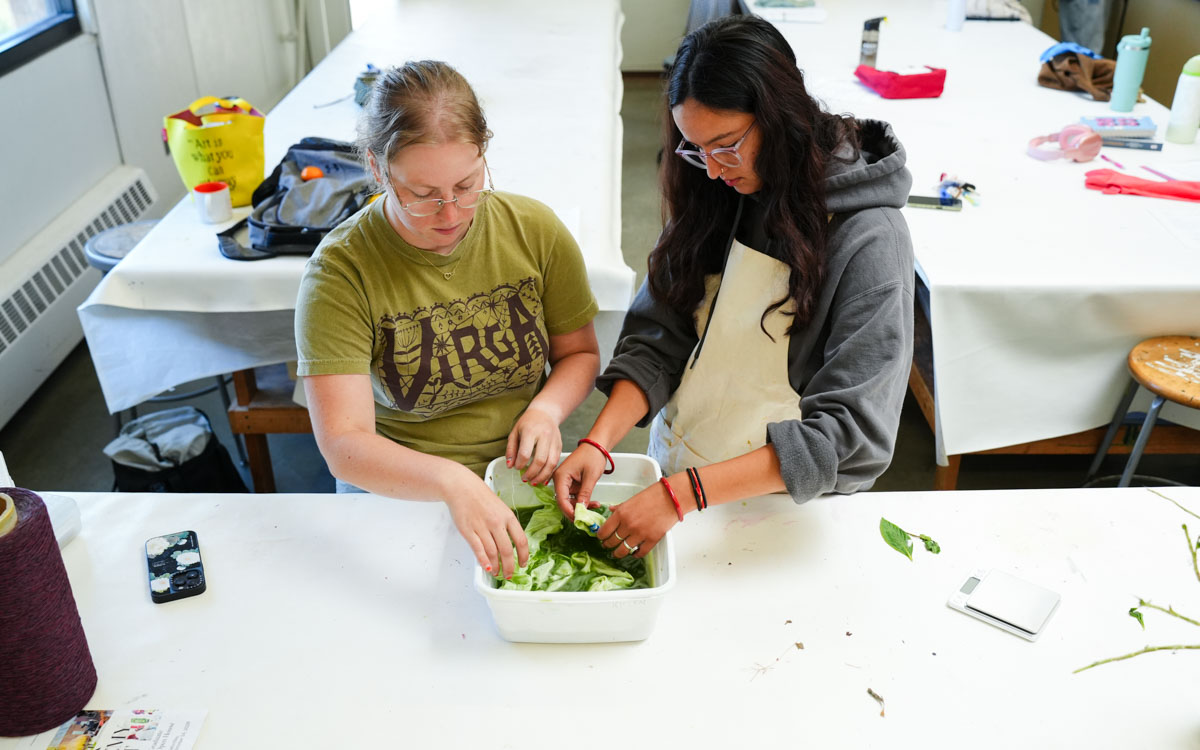
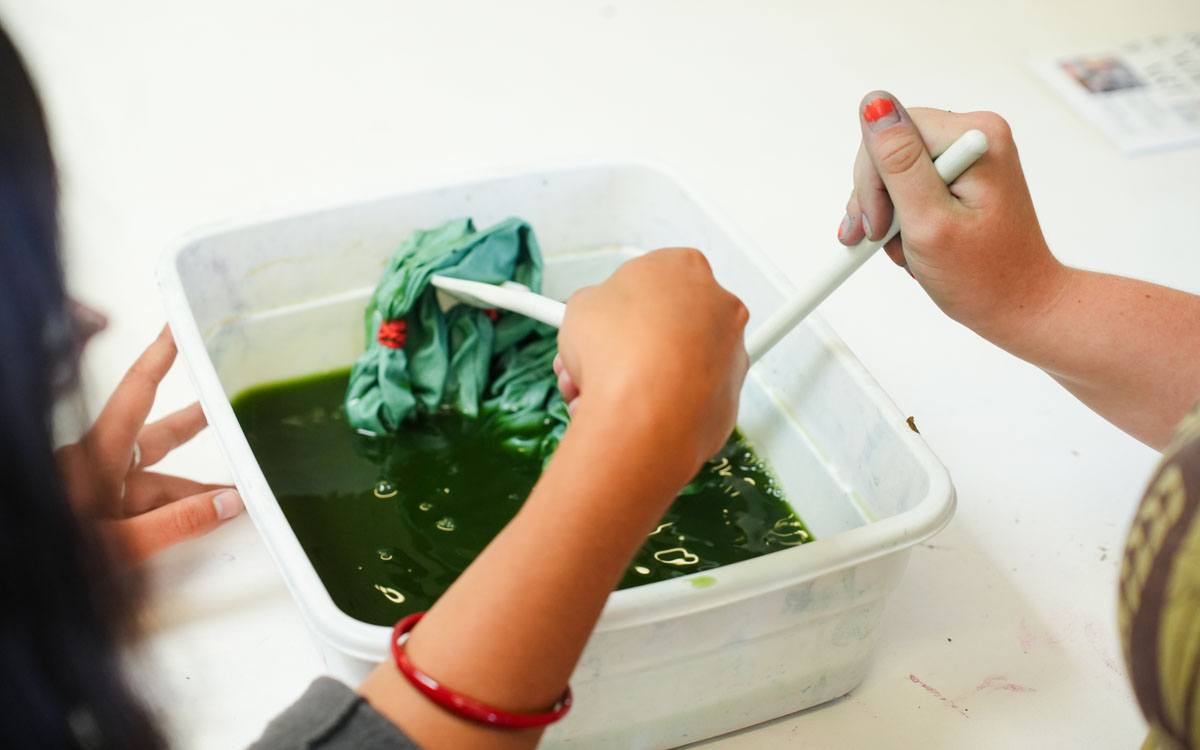
“It makes you realize how much is involved with doing stuff like this,” Thomas said.
The process is a long one, from the months it takes for the plants to grow to the harvesting, leaf stripping, grinding and dye extraction that are all needed before the silk reaches the dye bath.
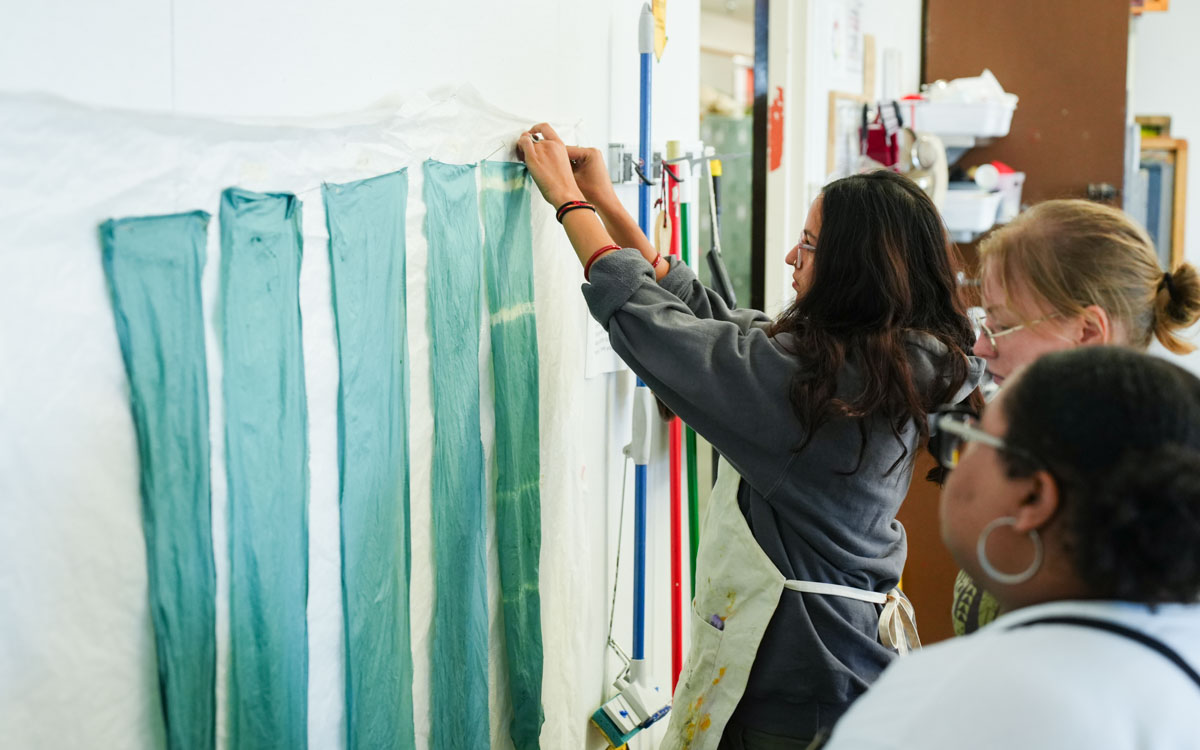
The technique was new for some students who had previously worked with synthetic dyes, which can be mixed with water and other materials more directly.
Thomas said the class made her want to incorporate more natural dyes into their art practice “just because of the microplastics and stuff that come along with using synthetics and their manufacturing.”
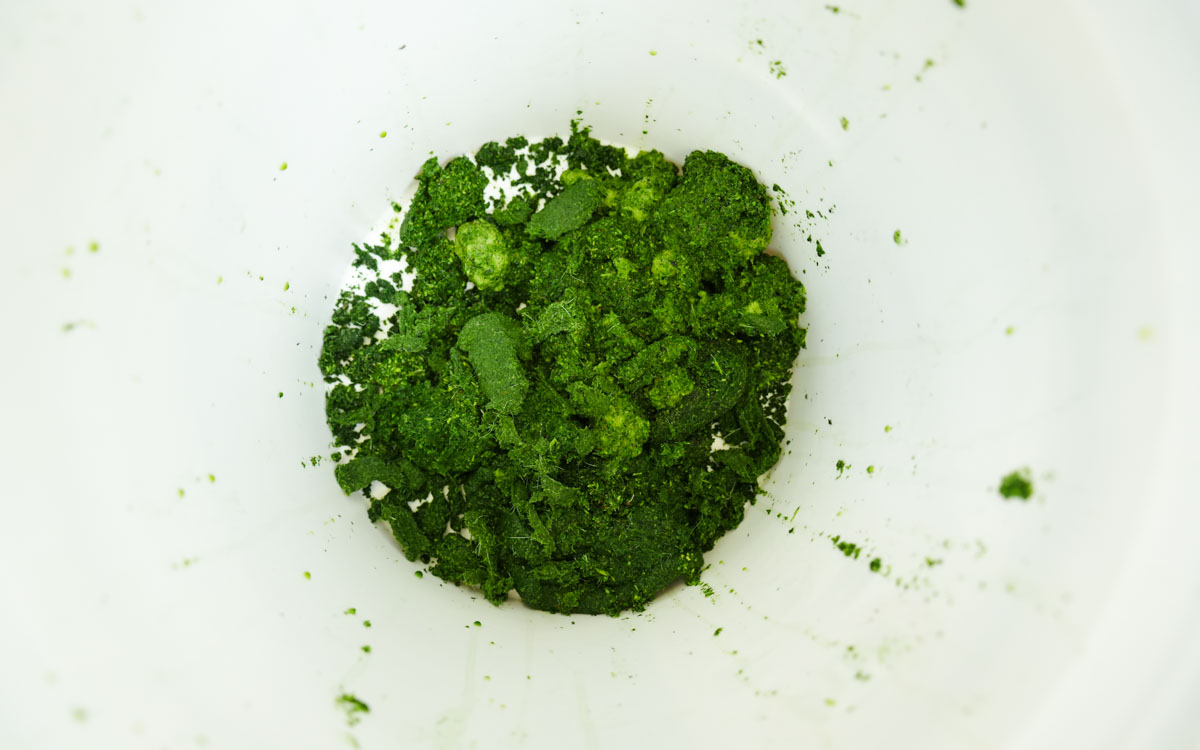

Jordan said the small garden is a teaching resource and that it doesn’t produce very much powder. Of the approximately 1,500 grams, or 53 ounces, of indigo leaves students harvested on Tuesday, she said they may only get a couple of tablespoons of powder. She said for her own practice and many others, they would need about an acre of indigo. The indigo powder that she uses in class is purchased from India.
The fresh-leaf exercise also left students with materials for later experiments. Jordan planned to turn leftover plant material into a separate vat that could dye cotton, and to soak additional leaves for several days before aerating the mixture and collecting the indigo pigment.

If local news matters to you, please help us keep doing this work.
Don’t miss a beat — get the latest news from the Times delivered to your inbox:
Click here to learn more about our newsletters first

Courtney Lane (she/her), reporting correspondent, has worked with The Lawrence Times since April 2026. Originally from Arkansas, she’s a graduate of KU’s Journalism school, where she worked as a reporter, opinion section editor, and eventually editor-in-chief for The Kansan.
Read her work for the Times at this link, and see her photography for the Times at this link.

Jacob Rice (he/him), photo correspondent, has worked with The Lawrence Times since March 2026. He studied journalism and mass communications at Iowa State University, where he spent four years as the visuals editor for the Iowa State Daily.
Check out his photography for the Times here. Read his articles for the Times at this link.
Latest Lawrence news:

 Cuyler Dunn/Lawrence Times

 Nathan Kramer / Lawrence Times