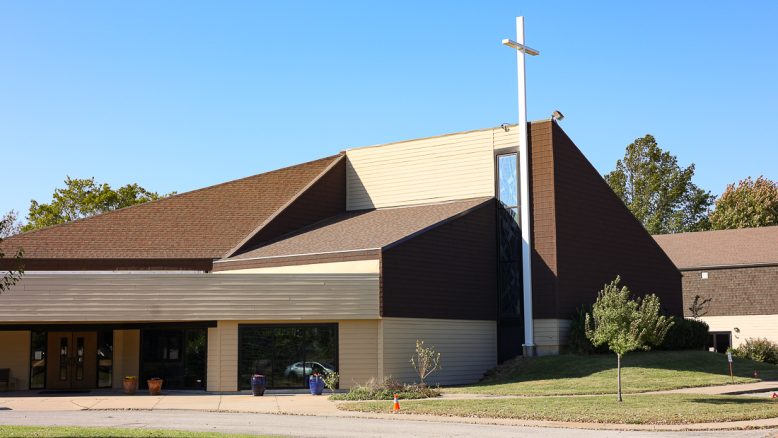


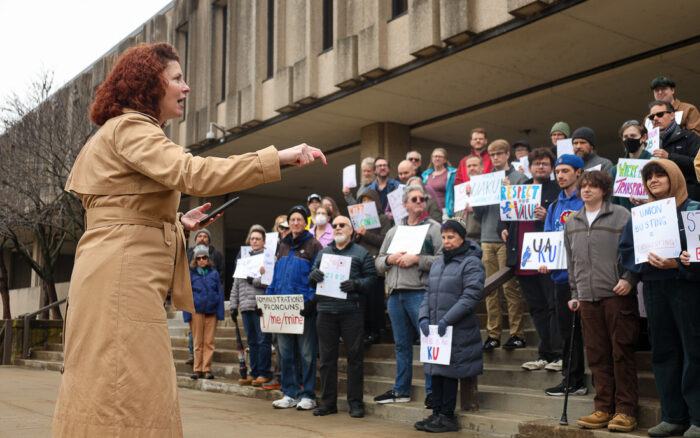
The Lawrence Coalition for Safe Streets is advocating for a city-funded study to make Tennessee and Kentucky streets safer, and the group heard from experts Sunday evening about initiatives and strategies to approach the issue locally.
The coalition hosted a panel following a screening of “Changing Lanes,” a documentary about a New York community’s efforts to redesign a busy road into a safer, two-lane street with protected bike lanes after a local teacher was killed in a hit-and-run crash.
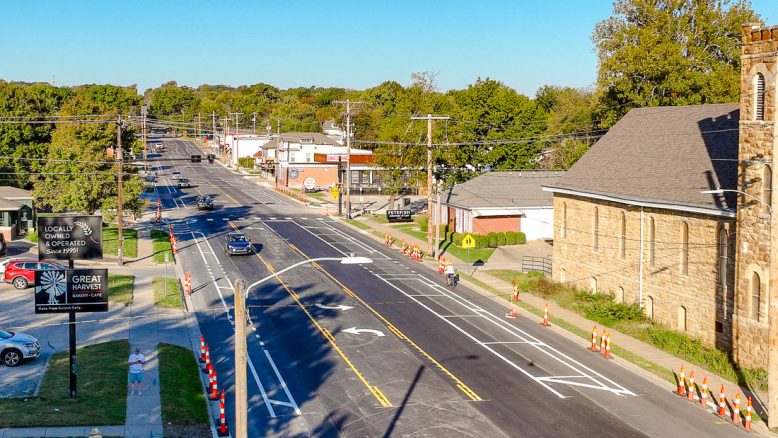
Event organizers said the coalition is advocating for a redesign of Tennessee and Kentucky streets, citing 24 total crashes in 2025 on the two streets.
“This is a universal conversation, no matter where we are,” said Hilary Carter.
Don’t miss a beat … Click here to sign up for our email newsletters
Click here to learn more about our newsletters first
Carter is a member of the coalition and the Connected City Advisory Board.
“Kids don’t feel safe crossing the street and getting to school, so it’s about how we can reimagine the street,” she continued. “We’re not taking something away from the community. We want to add benefit to the community.”
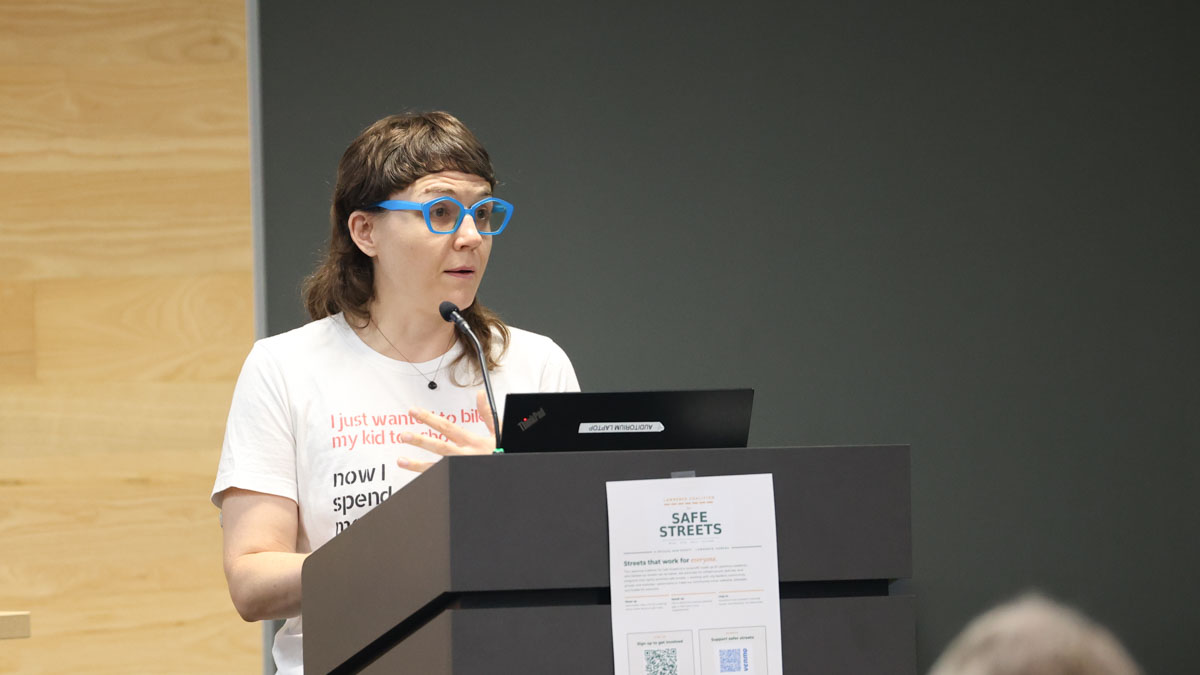
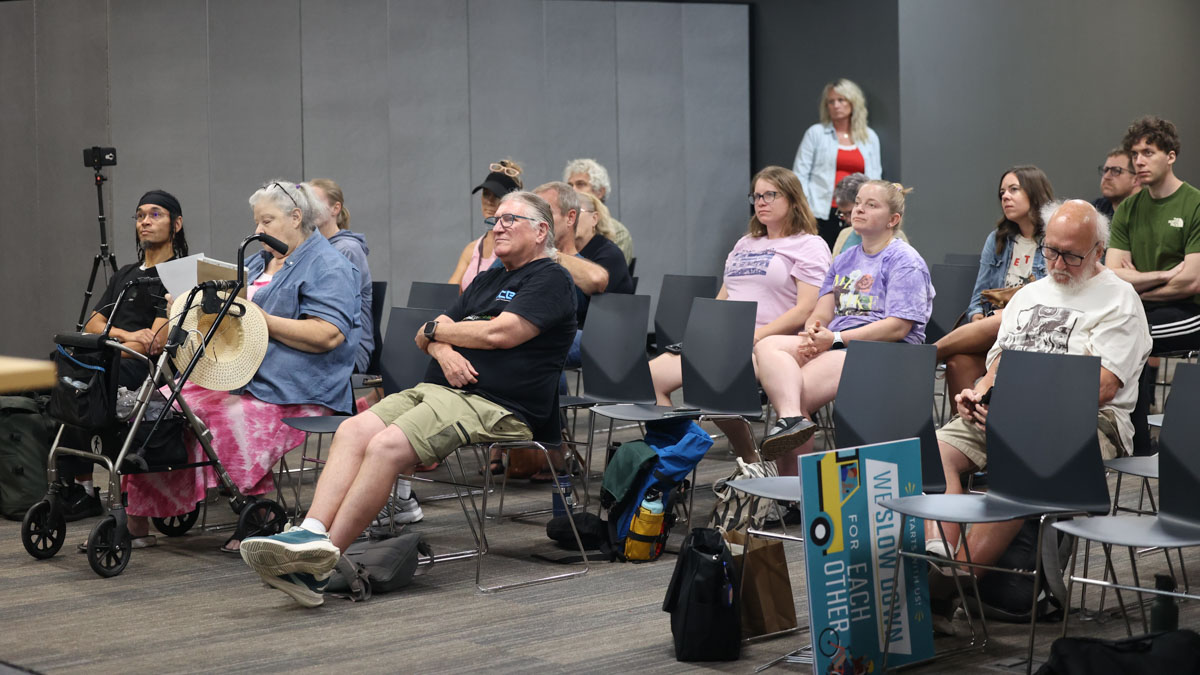
Carter and other coalition members say they want to see the city pay for a study for safer street designs on Kentucky and Tennessee.
“We’re not engineers. But I think we know from data that two lanes of traffic on those streets is really dangerous,” Carter said.
Please support
The Lawrence Times!
Subscribe here.
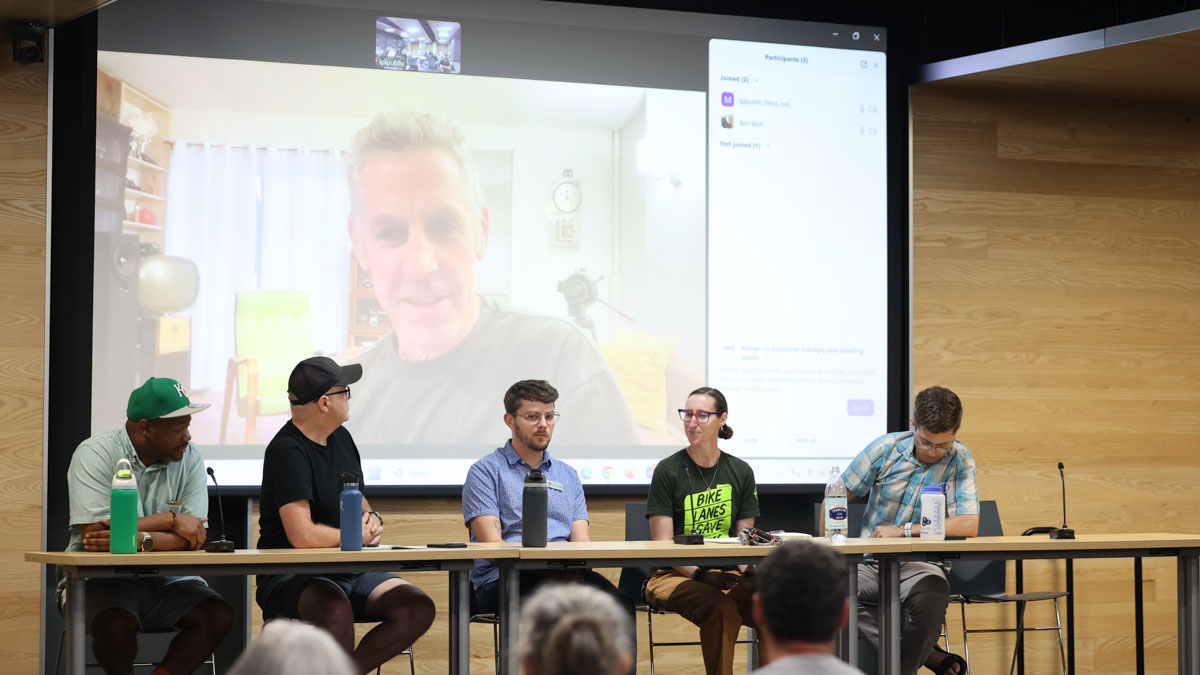
Sunday’s event welcomed panelists from transportation planning and biking and walking advocates throughout Kansas City, Missouri, Wichita and Topeka. “Changing Lanes” director Ben Wolf and Brooklyn organizer Kevin LaCherra joined the panel via Zoom.
The group shared experiences advocating for safer streets and bike lanes, and how those interested can organize and work as a community to find solutions.
“With regards to building and sustaining a coalition, it’s very important to think about who the players are in your community,” said Michael Kelley, Missourians for Responsible Transportation policy director. “It has to start with thinking intentionally about the people experiencing the issue. It’s not just residents, it’s also school kids who have to get to school, or people who are trying to survive very challenging circumstances.”
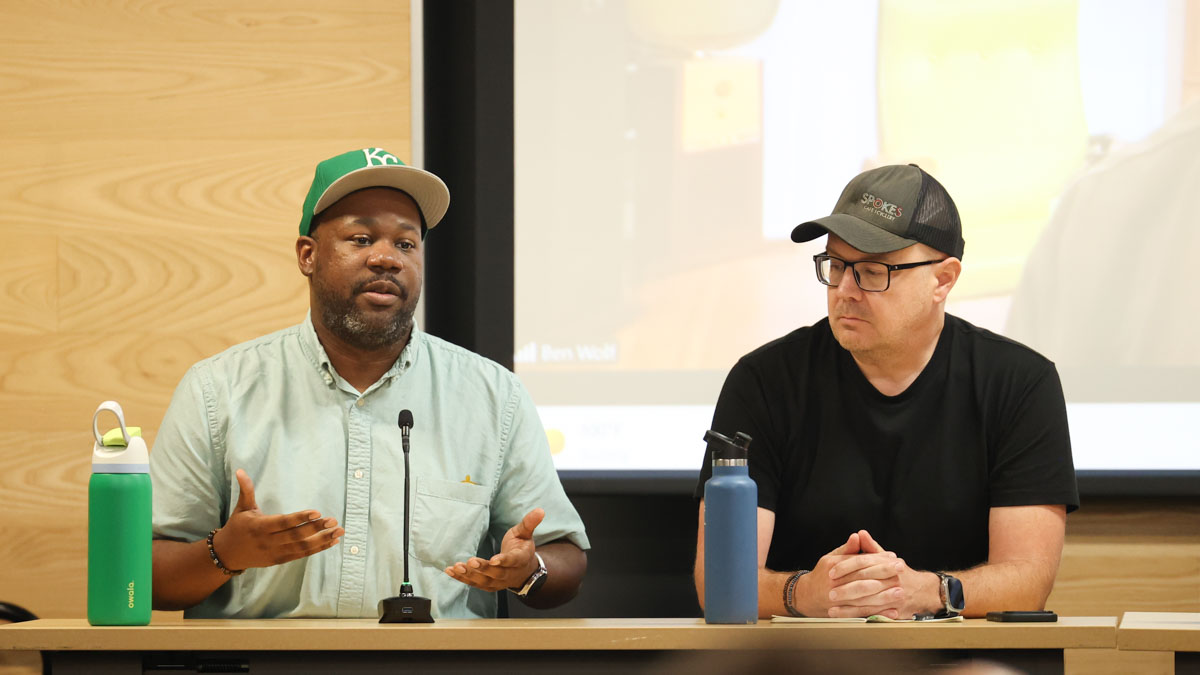
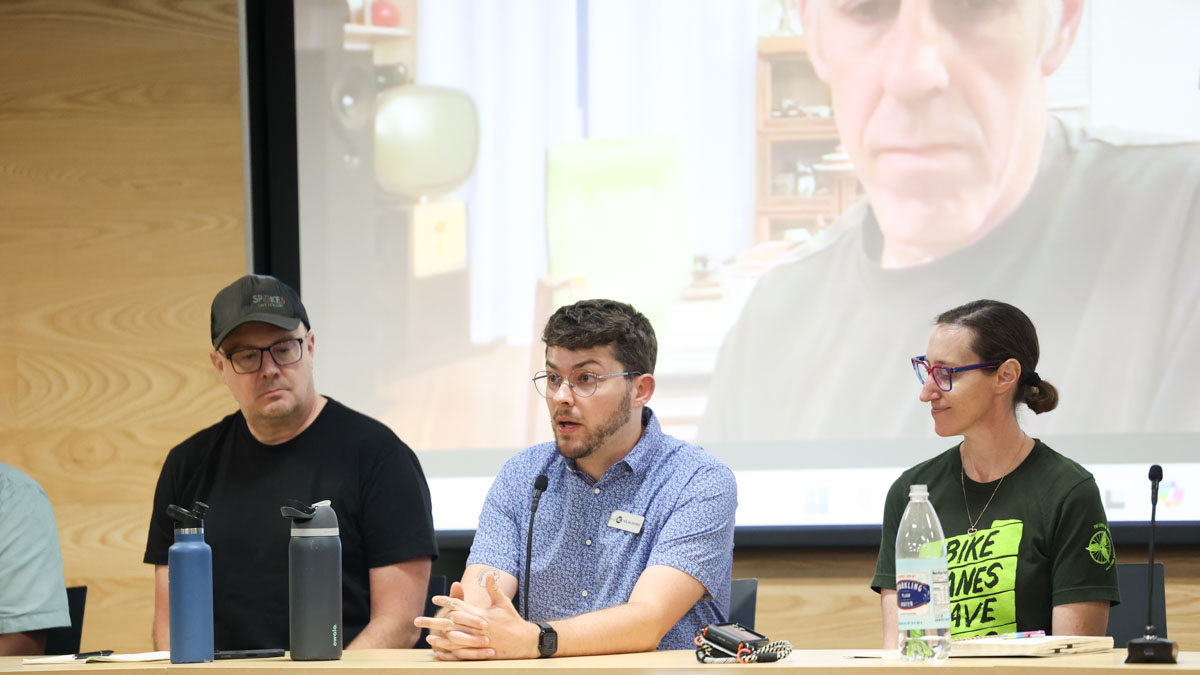
Although the documentary was centered around New York traffic, panelists talked about how places like Lawrence can take inspiration from other cities’ solutions.
“We’ve been designing our streets one way for the last almost 100 years,” said Nolan Oehrke, BikeWalkKC education director. “It’s going to take a long time to fix that. I think perseverance and stamina are absolutely part of it.”
Another discussion point was how to approach a conversation with someone who is against changing streets for bikes and pedestrians.
Wolf said although conversations on the topic can be difficult, he says it’s always good to try having open-minded discussion.
“There are going to be people who won’t budge and will keep spewing misinformation to achieve their goals, but there’s a lot of people caught in the middle when it isn’t a terribly important issue to them,” Wolf said. “… I think a lot of people can still be reached with good information presented in a compelling way.”
If local news matters to you, please help us keep doing this work.
Don’t miss a beat — get the latest news from the Times delivered to your inbox:
Click here to learn more about our newsletters first

Maya Smith (she/her), reporting intern, has worked with The Lawrence Times since February 2026. She was born and raised in Lawrence and is a journalism student at the University of Kansas. She works at the William Allen White School of Journalism and Mass Communications as a communications assistant and has been a freelance reporter for the Kansas Reflector since 2024. Read her work for the Times at this link.
More coverage: Getting around Lawrence
 August Rudisell/Lawrence Times
 Jacob Rice / Lawrence Times
Latest Lawrence news:
 Wulfe Wulfemeyer/Lawrence Times
 August Rudisell / The Lawrence Times