

As Haskell Indian Nations University approaches the 100th anniversary of its football stadium and arch dedication, staff envision a bright future for the structures and the campus as a whole.
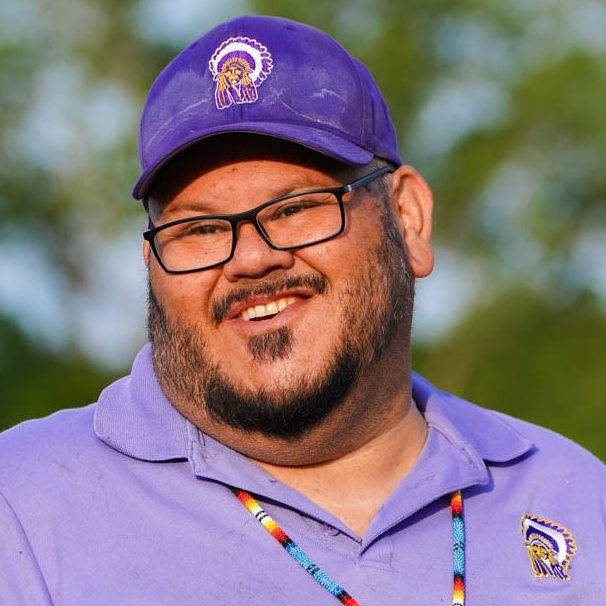
Mackie Moore, Cherokee Nation of Oklahoma and dean of the College of Business at Haskell, said the landmarks were “built by our ancestors for us.”
“Everything else on the campus, the government created. The government built these things. But not that stadium and that arch,” he said.
The $250,000 to build the stadium came entirely from the pockets of the Native community and Indigenous tribes. It was the first field this side of the Mississippi with lights, allowing for nighttime games, and helped cement football as a core element of Haskell’s culture.
Don’t miss a beat … Click here to sign up for our email newsletters
Click here to learn more about our newsletters first
The arch, which long beckoned fans into the stadium, was funded by the donations of two Quapaw women: Agnes Quapaw-Hoffman and Alice Beaver-Hallam.
They funded the arch in memory of their friends and classmates who served in World War I.
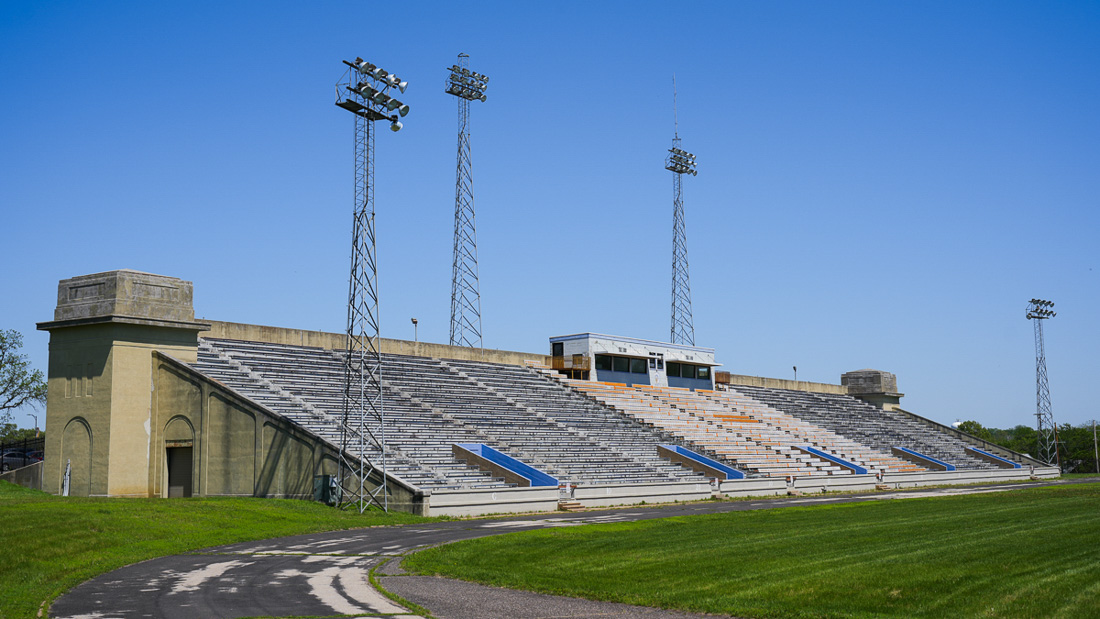
This year marks 100 years since the dedication ceremony for the stadium and the arch. To celebrate, Haskell is hosting a Centennial Homecoming Celebration, welcoming alumni and the broader Douglas County community to honor and learn about Haskell’s history.
The festivities will run from Friday, Sept. 18 through Saturday, Sept. 19 throughout campus. See the full calendar of events at this link.
Moore hopes the centennial will be one step toward seeing the stadium restored to full glory. It has been out of use for just more than a decade after the football team was felled by budget cuts in 2015.
“Let’s figure out a way as a community … to fix what our ancestors left for us, because I don’t really like seeing it” in the shape that it is, he said.
In October of 1926, the stadium and arch were newly minted. Moore said the Chamber of Commerce threw a parade downtown. 2021 reporting from Eric Anderson, Citizen Potawatomi Nation and faculty member at the university, showed that representatives from around 70 Indian Nations and approximately 12,000 visitors came to campus.
Organizers of the centennial event also hope to draw broad crowds, from faculty and students to alumni and community members.
“So many people have those memories (of the stadium) across not just this campus, but across the country, across Indian country, but also the Lawrence community,” said Alex Red Corn, citizen of the Osage Nation and interim president of Haskell.
Lawrencians long flocked to the stadium to see the old pigskin thrown around.
Lawrence High School’s football team held court at the Haskell stadium for years, and Free State’s team hosted home games there in its early years. The University of Kansas benefited, as well, borrowing the stadium lights to host its first home game.
The centennial celebration will feature a stick ball game, documentaries about Haskell and an alumni lounge where folks can bond over stories from their golden undergraduate years. The two spotlight events — the community bison harvest and a powwow — harken back to gatherings that the Haskell and Indigenous community hosted in 1926 and many times since.
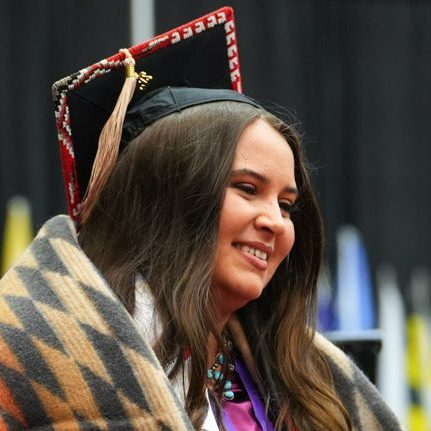
Tara Roanhorse, Diné Asdzáán, is particularly excited to recreate the first formal Fancy Dance Championship from the 1926 festivities.
Roanhorse, a 2026 Haskell grad who is handling communications for the event, said Gus McDonald, Ponca, won that first title.
There will be two powwow grand entries during the centennial celebration — one at 1 p.m. and another at 6 p.m. Saturday, Sept. 19.
Moore and Melissa Holder, citizen of the Winnebago Tribe of Nebraska, helped to restore the longstanding bison harvest tradition to Haskell in 2024 and again in 2025.
This year’s bison harvest will start at noon Friday, Sept. 18 at Haskell Powwow Grounds, 2535 W. Perimeter Road. The community feed, utilizing the meat of the bison, will take place from noon to 2 p.m. Saturday, Sept. 19 at the Coffin Sports Complex, 155 Indian Ave. The bison will be contributed by the Winnebago Tribe and Osage Nation.
Red Corn said Haskell is asking, “What do the next 100 years look like for us to leave for our descendants?”
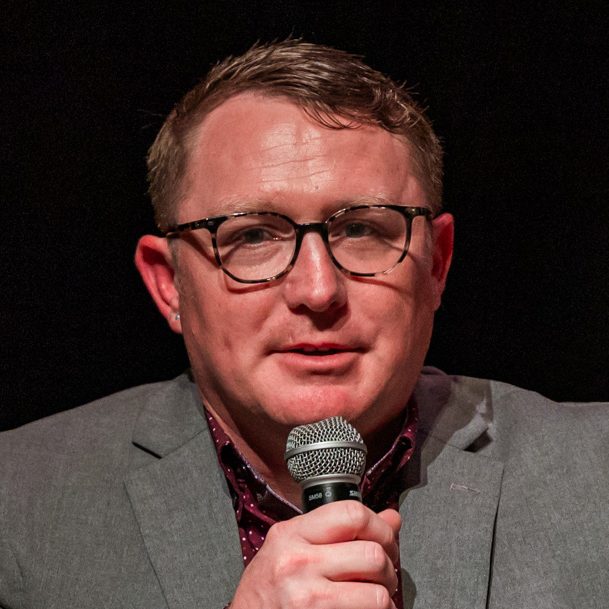
“And so the bison harvest is really unique in the fact that we’re actively exploring ways that we can grow our agricultural programming, and do so in a way that’s very focused on food sovereignty and Indigenous land stewardship,” he said.
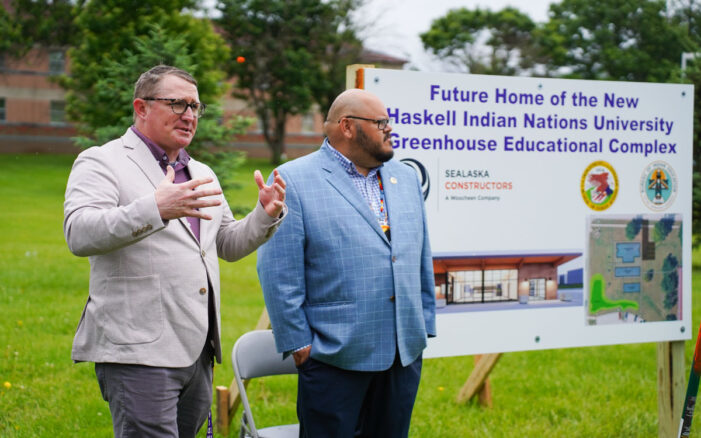
The Haskell community broke ground on a major new Greenhouse Educational Complex on the campus in May, where they discussed an impending 80-acre donation of land in western Douglas County for agriculture education.
Simultaneously, Indigenous scholars at KU are planning a food sovereignty summit, as the countywide Indigenous Food Systems study and Action Plan group looks at improving access to and preservation of Native foodways.
Haskell and the Indian Health Service program also recently announced a new, multimillion-dollar health facility that the government agency will build on the northeast corner of campus. Red Corn said in July that the facility connects the stadium to a larger conversation about wellness, encompassing physical and mental health.
“Haskell wants to be more active and proactive as we look to our next 100 years on how we can build academic programming,” he said.
If local news matters to you, please help us keep doing this work.
Don’t miss a beat — get the latest news from the Times delivered to your inbox:
Click here to learn more about our newsletters first

Wulfe Wulfemeyer (they/them), reporter and news editor, has worked with The Lawrence Times since May 2025. They can be reached at [email protected].
Read their complete bio here. Read their work for the Times here.
More coverage — Haskell Indian Nations University:
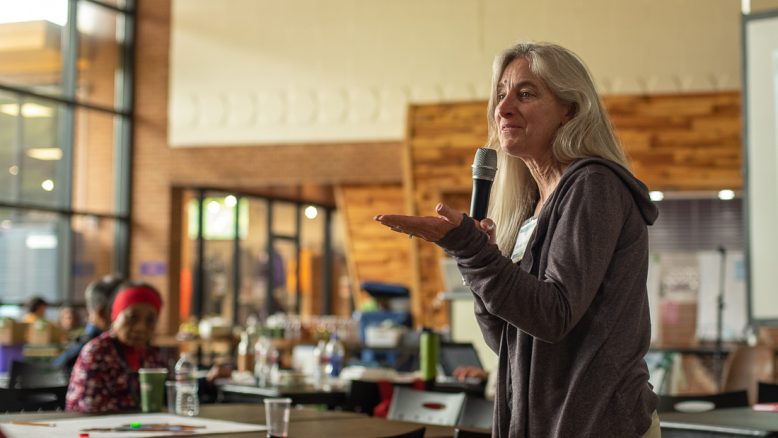 Brandon Colbert / Contributed photo

Latest Lawrence news:
 August Rudisell/Lawrence Times
Brandon Colbert / Contributed photo
August Rudisell/Lawrence Times
Brandon Colbert / Contributed photo
 Molly Adams / Lawrence Times